Frederick Holmes Celebrates 10 Years of Expanding Seattle’s Art World
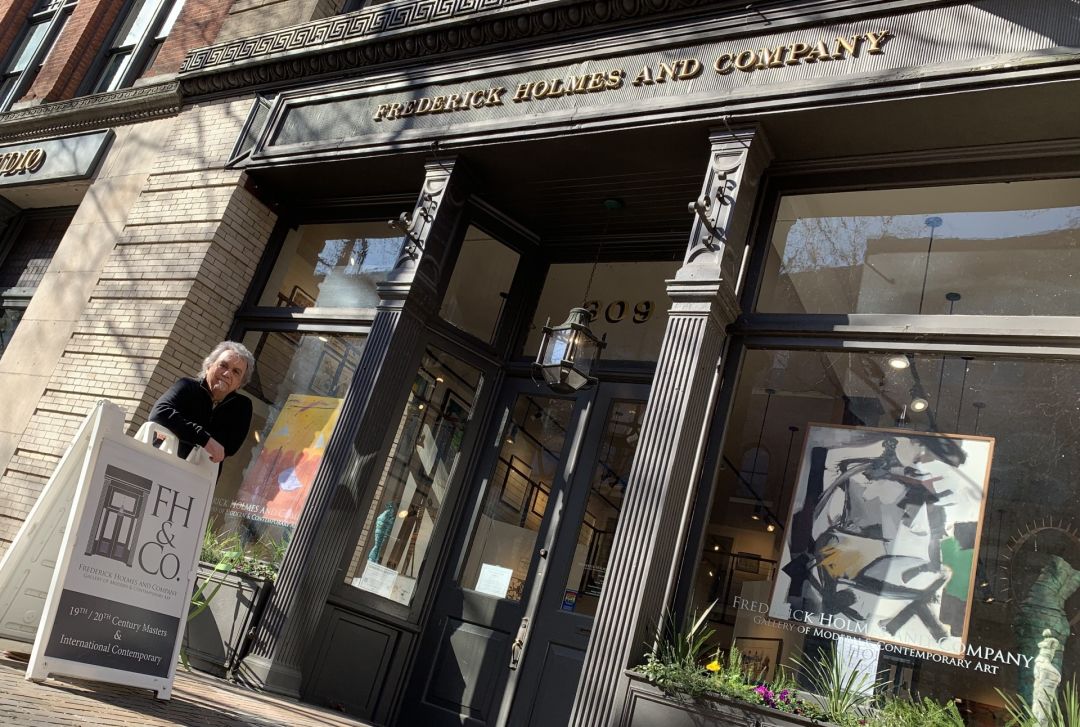
Frederick Holmes stands outside his Pioneer Square art gallery.
Asked for his proudest moments since opening his eponymous gallery in 2013, Frederick Holmes has plenty of illustrious accomplishments to point to. (Being the first modern gallerist to show works by Walter Quirt, an American surrealist painter and contemporary of Jackson Pollock who was once lost to history, comes to mind.)
But it’s the moments others have had at the gallery that Holmes feels especially eager to share: the young woman who saved for years to purchase a sculpture she saw when he first opened his doors (and became a ceramics instructor herself in the meantime). The artist who’d been painting since the 1960s but had never shown his work until Holmes requested it. The Seattleites who wandered into his space mid-pandemic, when museums were still closed and other galleries only opened by appointment, to find a moment of beauty amid the upheaval.
Each anecdote illustrates part of Holmes’s goal as one of Seattle’s few private gallery owners: He wants to create a place of discovery, where longtime collectors and those who have never set foot in a space like his can all learn something new about art.
“The art world has done a really good job” of making itself “almost unapproachable to a lot of people,” Holmes says. “As if it’s some kind of a sacred cow…that you have to earn your way into. And you really don’t." He bought his first art piece in Carmel, California, in the early 1980s—an etching by Santa Barbara artist Margaret Singer that ran him about $300. He put it on a payment plan, and still has it to this day. "You buy [art] because you love it,” Holmes says. “You buy it because it's something you want to live with for the rest of your life.”
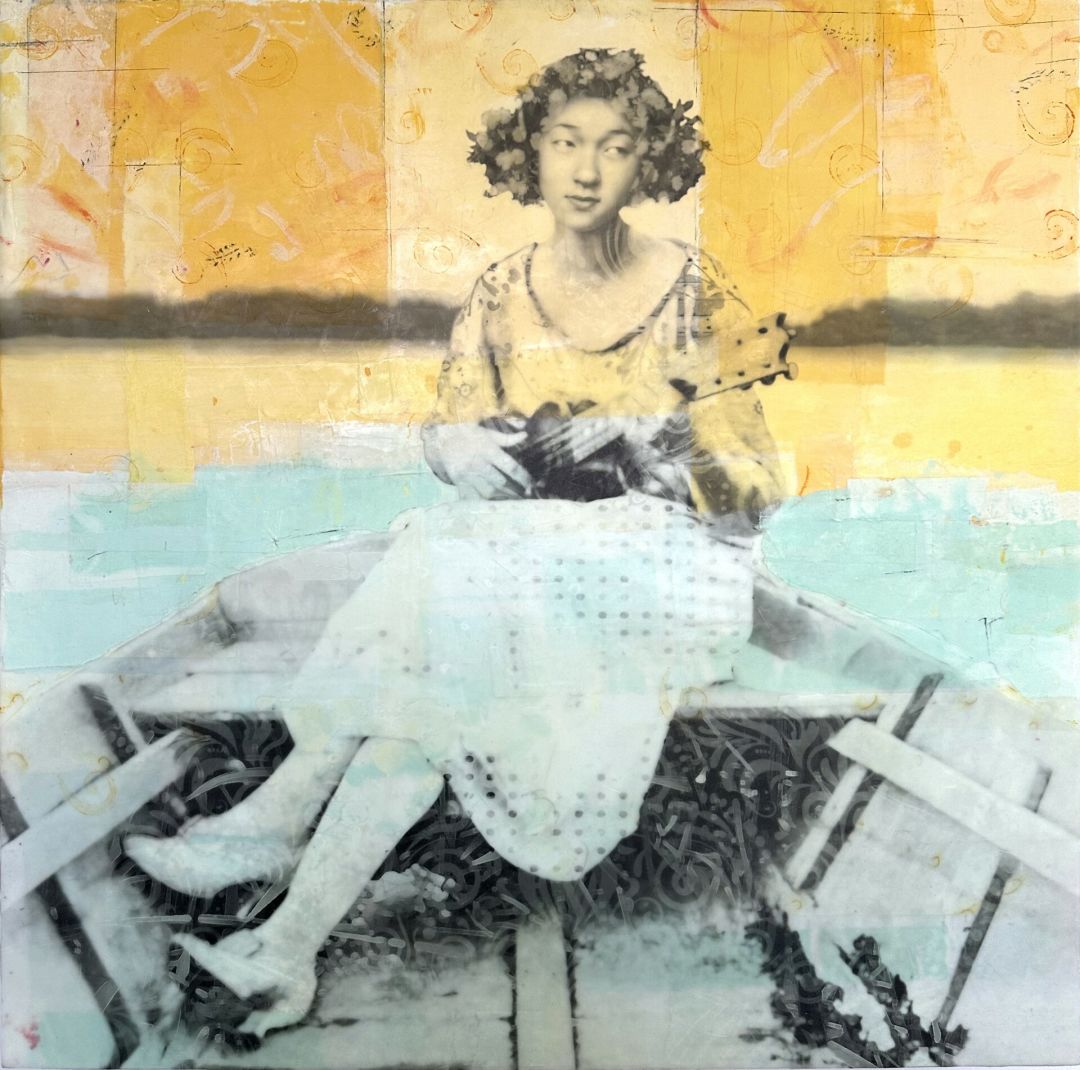
Akiko (Double Bass) by Marybeth Rothman.
His come-one-come-all stance belies his distinguished position in the fine art world. Frederick Holmes and Company is the only gallery in the region that regularly shows works by twentieth-century modern artists like Picasso and Salvador Dali; in a city where galleries often have a strong predisposition toward art by Pacific Northwesterners, that stands out.
It’s not just his personal interest in great international artists, or even his desire to expand Seattle’s horizons beyond the upper left corner of the country, that inspires Holmes to bring historically important works to his gallery. Selling a single Picasso helps Holmes bring exciting contemporary names like Marybeth Rothman, less established artists that Holmes believes in, and monthly jazz performances by renowned musicians to Pioneer Square, too.
Despite the "slew of people that have got nothing but crap to sling" at the oft-maligned historic neighborhood his gallery calls home, he sees Pioneer Square—much like Seattle's growing art community—as being amid a renaissance that he wants to play an active role in stoking. "We don't live in a manicured city. I don't want to," Holmes says. Instead, Holmes is helping make it a vibrant one.


