Baso Fibonacci Believes in Seattle Art

Image: Chona Kassinger
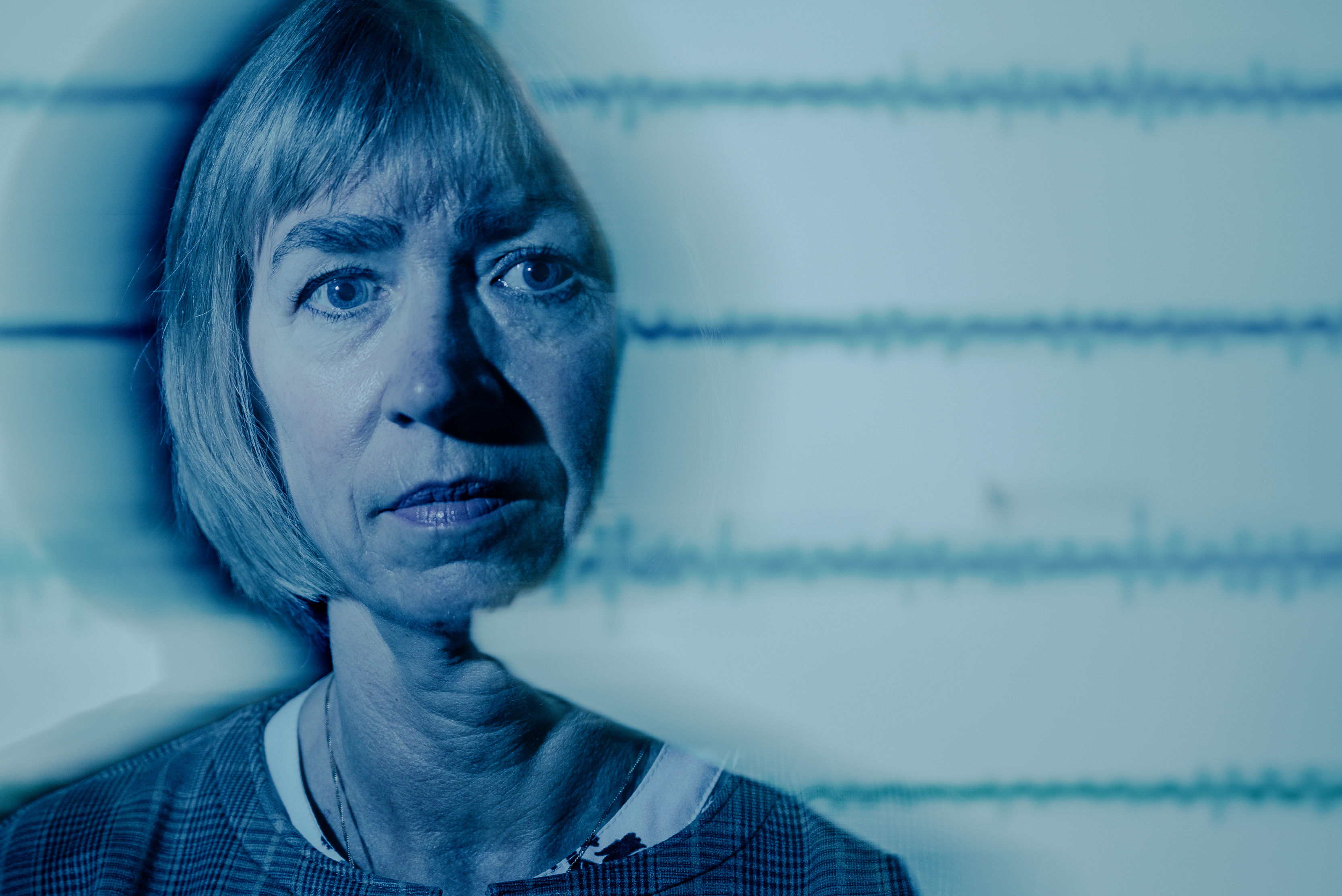
When Baso Fibonacci visited Barcelona more than 20 years ago, he marveled at how artists there didn’t sneak around when creating street art: “It opened my eyes to what could be done in the renegade art scene,” he remembers. In his home city of Seattle—he grew up on Issaquah’s Tiger Mountain—Fibonacci uses traditional oils along with photo transfers and house paint, even found materials. He directs his own renegade impulses into artworks depicting drug overdoses and life among the unhoused, along with still lifes and nature scenes. He now paints in a well-lit room in Actualize Air, an art collective that just moved into a 1909 Pioneer Square building. The collective opened a gallery space in January under its artist studios. But even as his work appears in private collections, public murals, hotels, and a sensory room at Seattle–Tacoma International Airport, Fibonacci still does the occasional street art and documents what’s done by others on Instagram. “I think graffiti is a sign of a vibrant city,” he says.
“Baso” is a pseudonym, but it’s also...as an artist, it is my identity.
It was soon after I had an accident that put me in the wheelchair. Baso was an old Zen Buddhist from, like, the early days of Zen Buddhism. Then Fibonacci was a mathematician.

Image: Chona Kasinger
The mathematics is kind of like the logical side of my brain...the Zen is more the other side. The two aspects of my personality, they kind of fit together.
I grew up in nature, in Northwest nature. That’s what calms me, going into nature.
I’m mostly a painter, a muralist, and the subject matter fluctuates between pure aesthetics and sociopolitical concepts. Between, like, decorative art and conceptual art.
I grew up doing graffiti. I still do stuff on the street sometimes. I draw like a flower here and there, you know?
There wasn’t much street art [in Seattle]. There’s still not a lot. But muralism has become, worldwide, more of a thing.
I painted on used fentanyl foils [for show Seattle’s Got the Blues]. People would smoke what’s called the blues, which leaves these little tracks. Then I painted a skull on each one. Each skull represents someone that died in the downtown area from a fentanyl overdose in 2023.
When I was painting on them, the ash of the smoke would, like, rub off and my hands would get dirty. It was pretty heavy.

Image: Chona Kasinger
My brother, when I was growing up, was a heroin user and lived on the streets of Seattle in the ’80s. He eventually died from the life of heroin use. I saw what opiates could do to someone.
After my accident, I was given morphine and oxycodone, and they gave me a lot.
I still have pain, and I still take opiates for pain, but I could have easily gone down that road.
I was worried about [the drug users] feeling like I was exploiting them. I really cared about what the community felt, and I got nothing but strong feedback from them [for the fentanyl series].
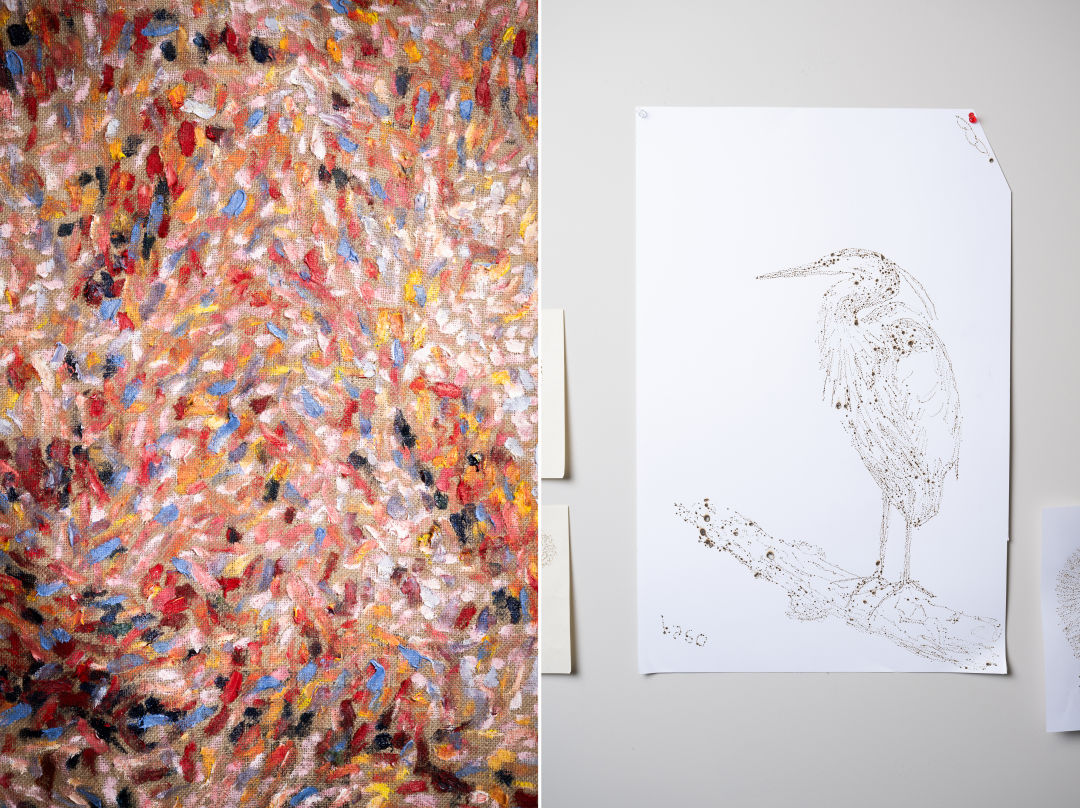
Image: Chona Kasinger
I have this Instagram called Seattle Art Rag. I go to a lot of art events and I take a lot of photos of art, because I have such a bad memory.… [I] document the art I see around the city. People have been calling me, like, a local Seattle historian.
In 2016 I made some shirts that said “RIP Seattle.” Because I was like, it’s burnt here. Amazon came in, it became so expensive, and artists were just leaving.
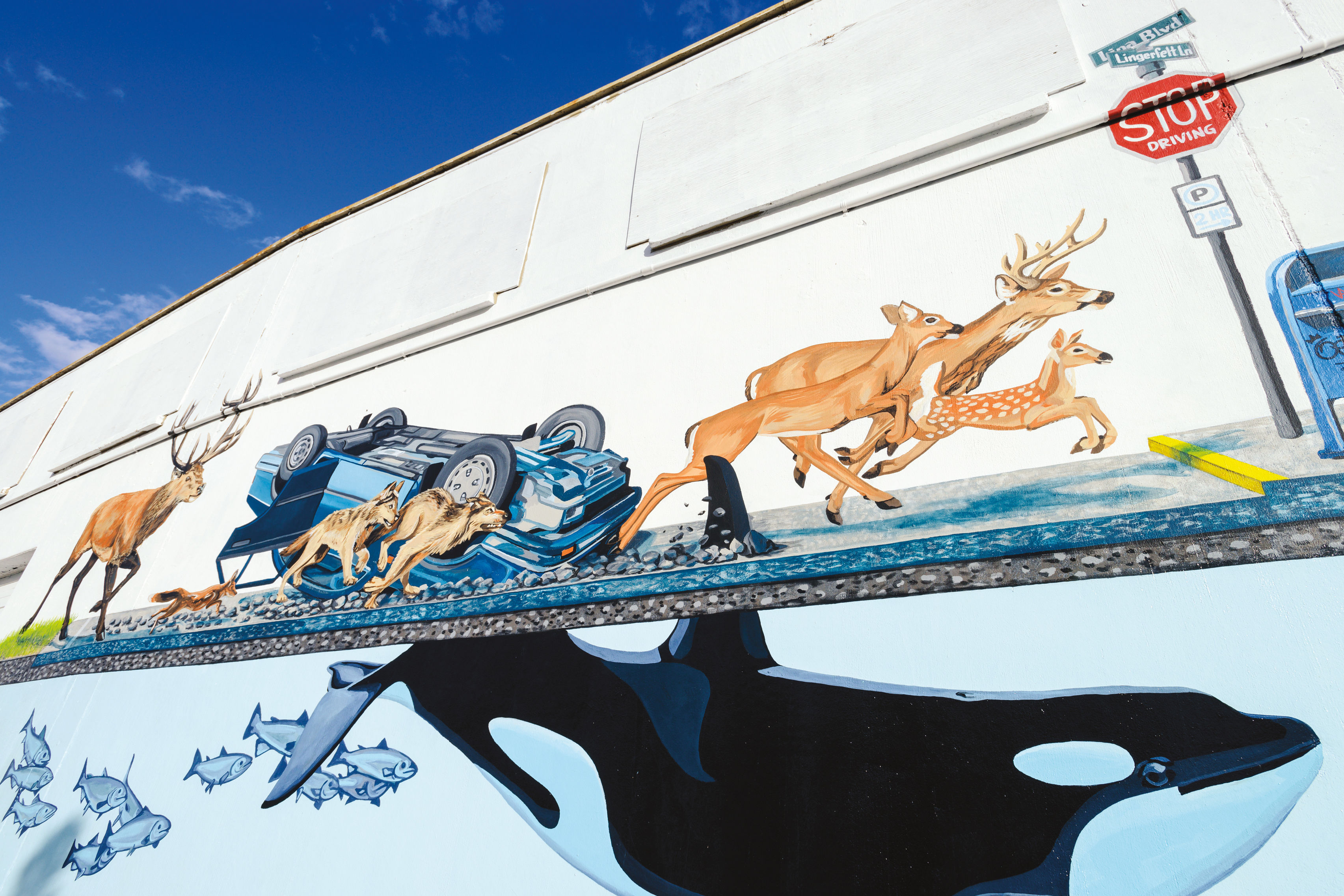
I did a mural [in SoDo]. It’s a wolf that’s running with fire behind it; the premise is the wolf is like an artist leaving Seattle, running south because it’s cheaper down there. And the fire behind it is kind of the culture burning.
But I feel like right now, Seattle’s having a mini renaissance.