The City Is a Canvas: Seattle's New Public Art Makeover
The upsetting truth is outdoor art is inherently impermanent. But that means there’s always a need for fresh ideas. Twenty-one years ago, community leaders gathered to breathe life into the SoDo railway tracks by empowering disadvantaged and homeless youth to paint murals along the line. Organizers soon determined that this shouldn’t be a one-off event and founded the nonprofit Urban ArtWorks.
The organization finds artists to design large murals for derelict locations and employs at-risk teenagers to help paint them, including adjudicated delinquents connected via King County Superior Court’s Education Employment Training Program. But painting isn’t a sentencing, it’s a job. Teens must apply and interview to enter the program, and they earn hourly wages for their work. They typically paint in teams of 12 for four to eight weeks to complete a project. In just over two decades, UA has worked with over 2,000 teens, providing a positive artistic outlet and creating more than 500 murals around town.
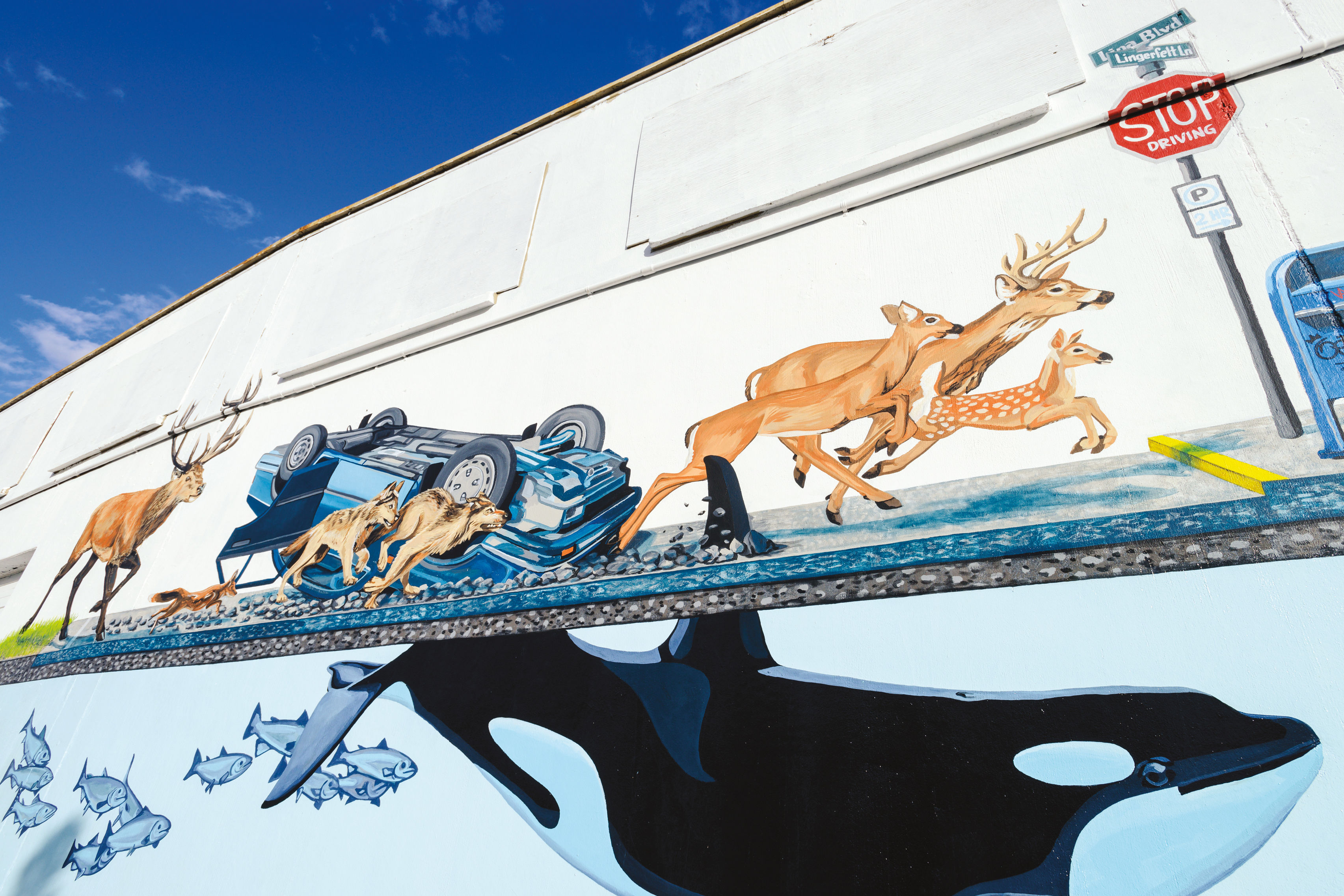
This past summer, as the 20th anniversary of the fading SoDo track murals approached, a new round of painting began with majestic murals like Josh Keyes’s concrete-smashing urban stampede (above). Over the next two years, UA will assist in painting the entire length of the rails from SoDo to Georgetown. As Urban ArtWorks director Kathleen Warren puts it, “Our legacy is on that track.”
All photos by Will Austin.
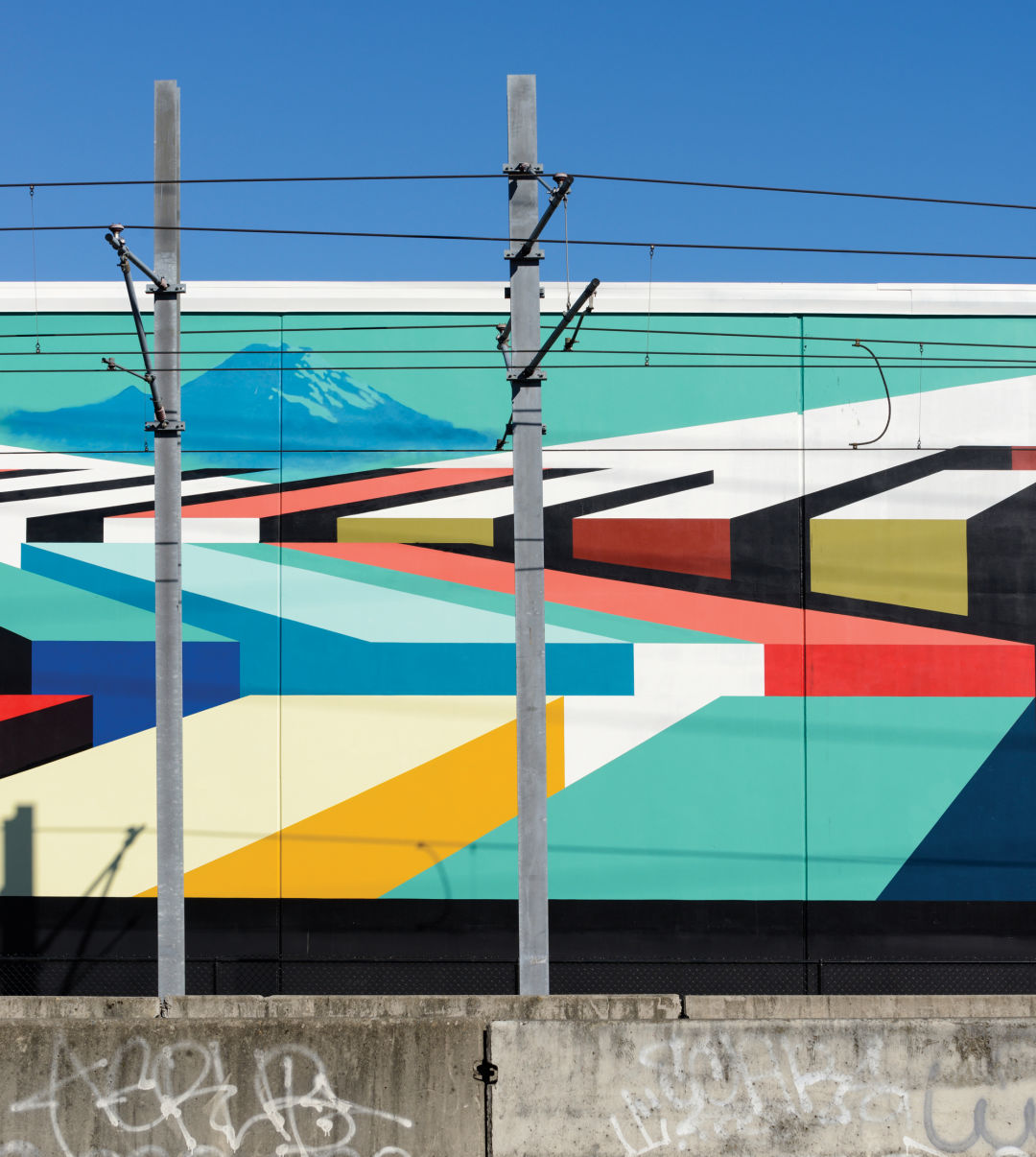
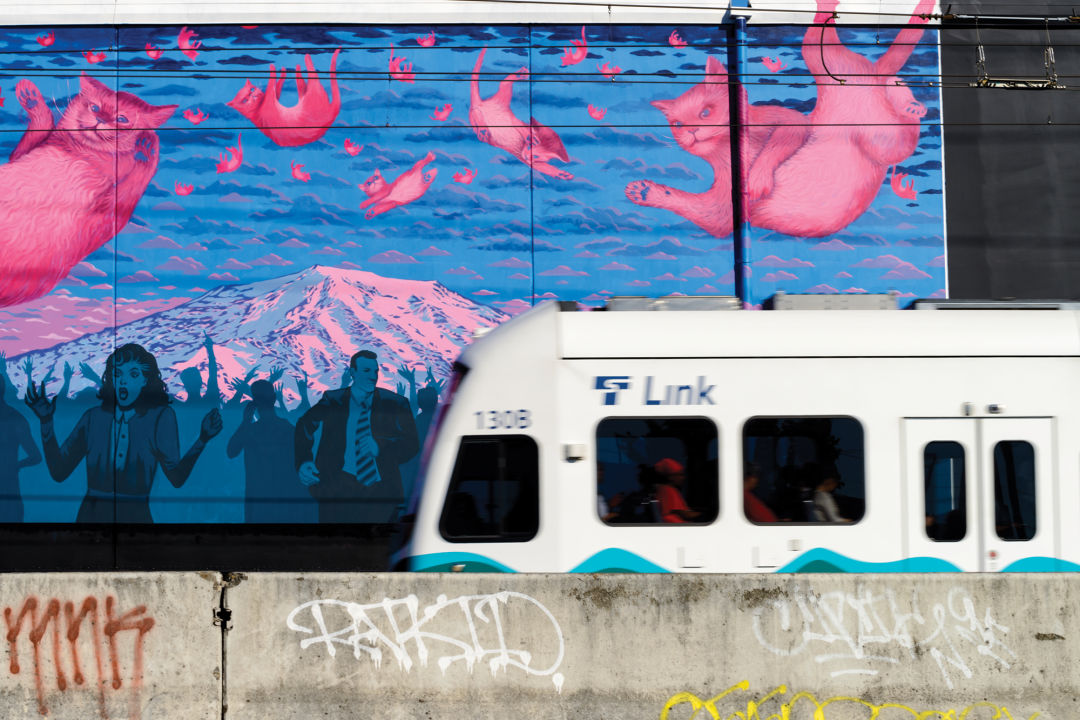
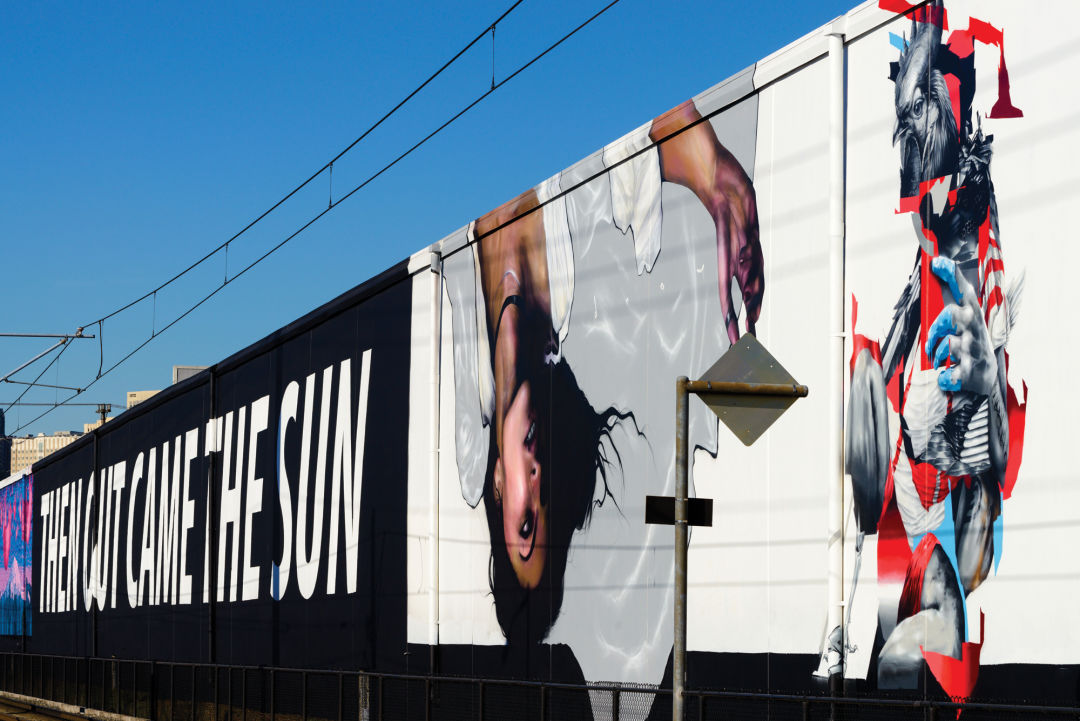
For safety reasons, not every UA project has youth involvement. Because an organization can’t put a teenager in a scissor lift or a dangerous construction site, Joram Roukes’s rooster on the SoDo track (above) was painted entirely by the artist himself.
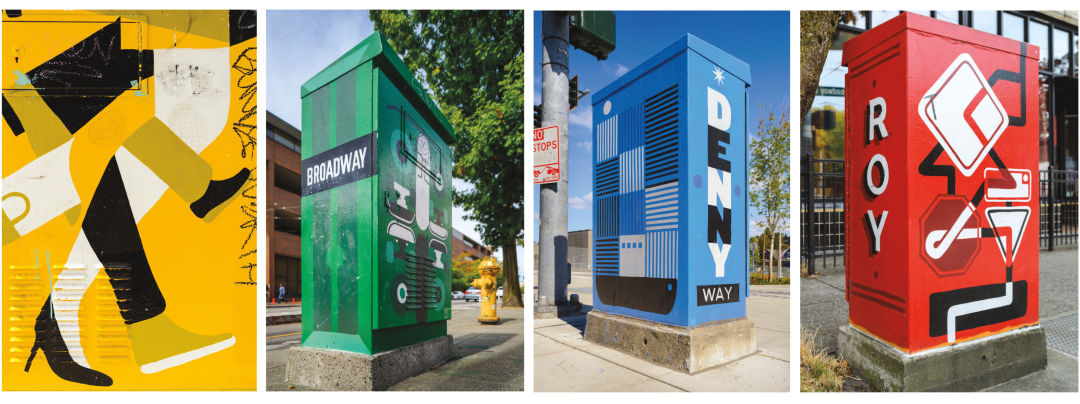
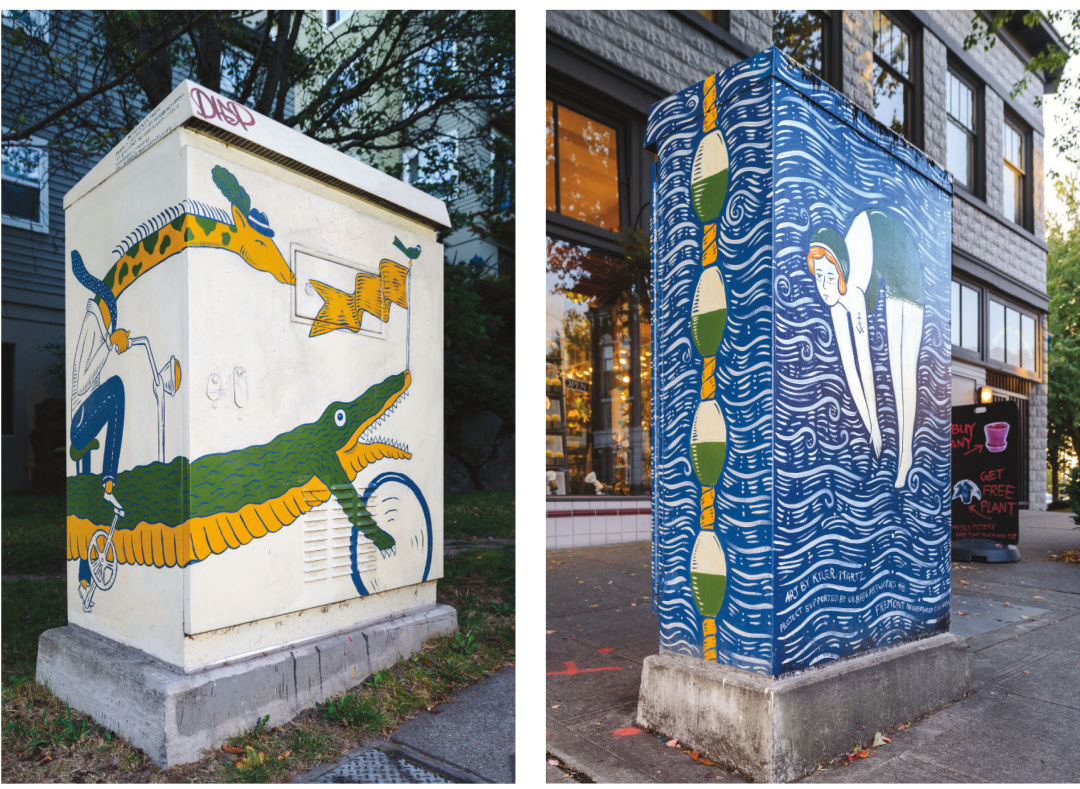
Every stoplight needs a signal box, providing small canvases that allow specifically tailored themes to stretch across entire neighborhoods. Jesse Brown and Matthew Hollister’s Sound Transit–commissioned designs (above) on Capitol Hill offer a sleek art deco vibe, while Kyler Martz, who worked for Urban ArtWorks as a teen, captures the bohemian Solstice Parade spirit (below) for the Fremont signal boxes.
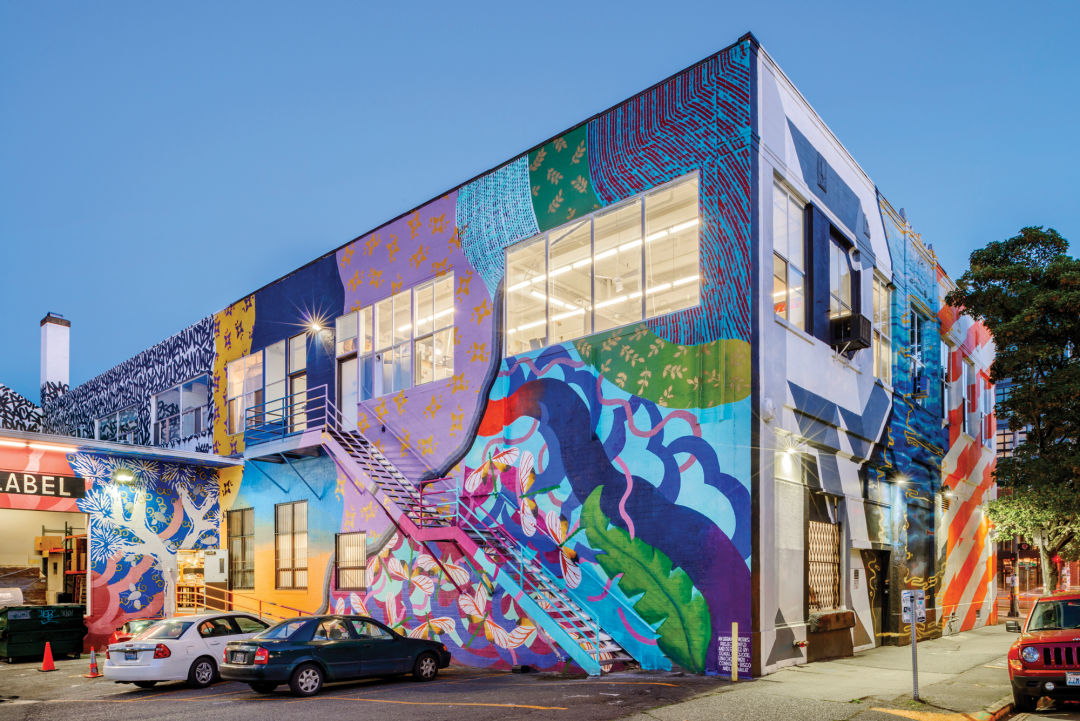
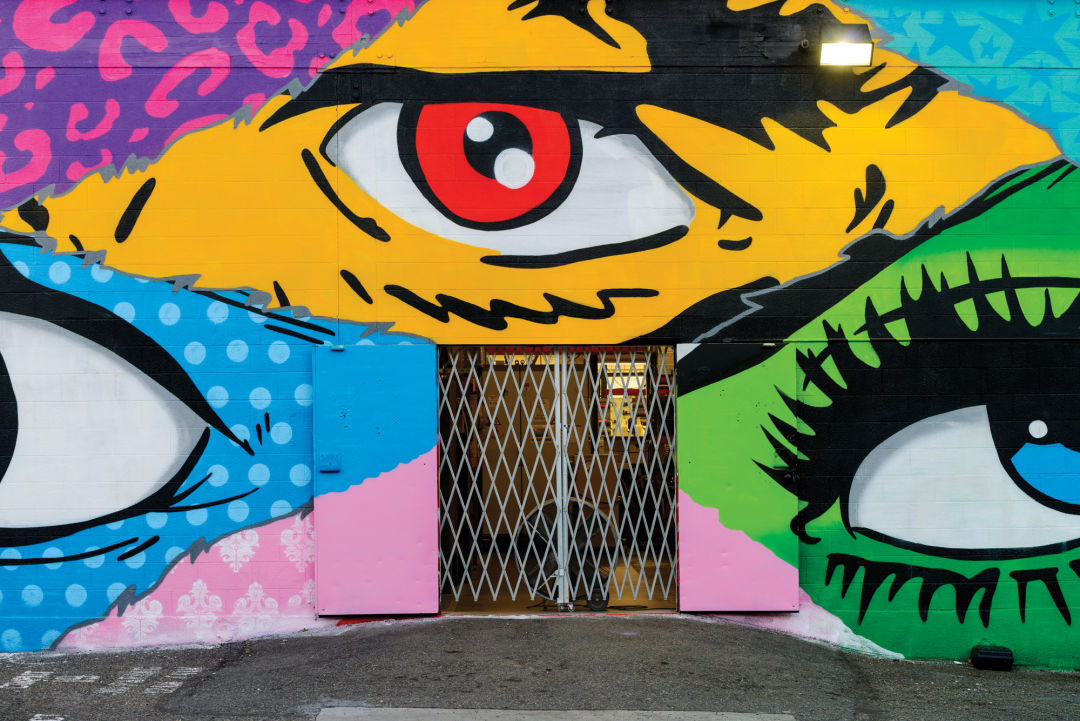
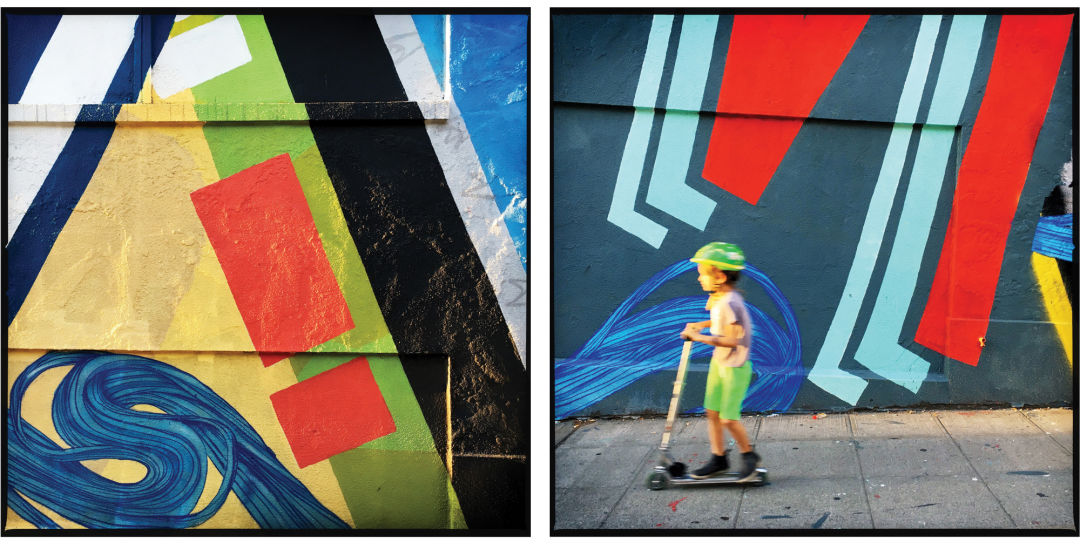
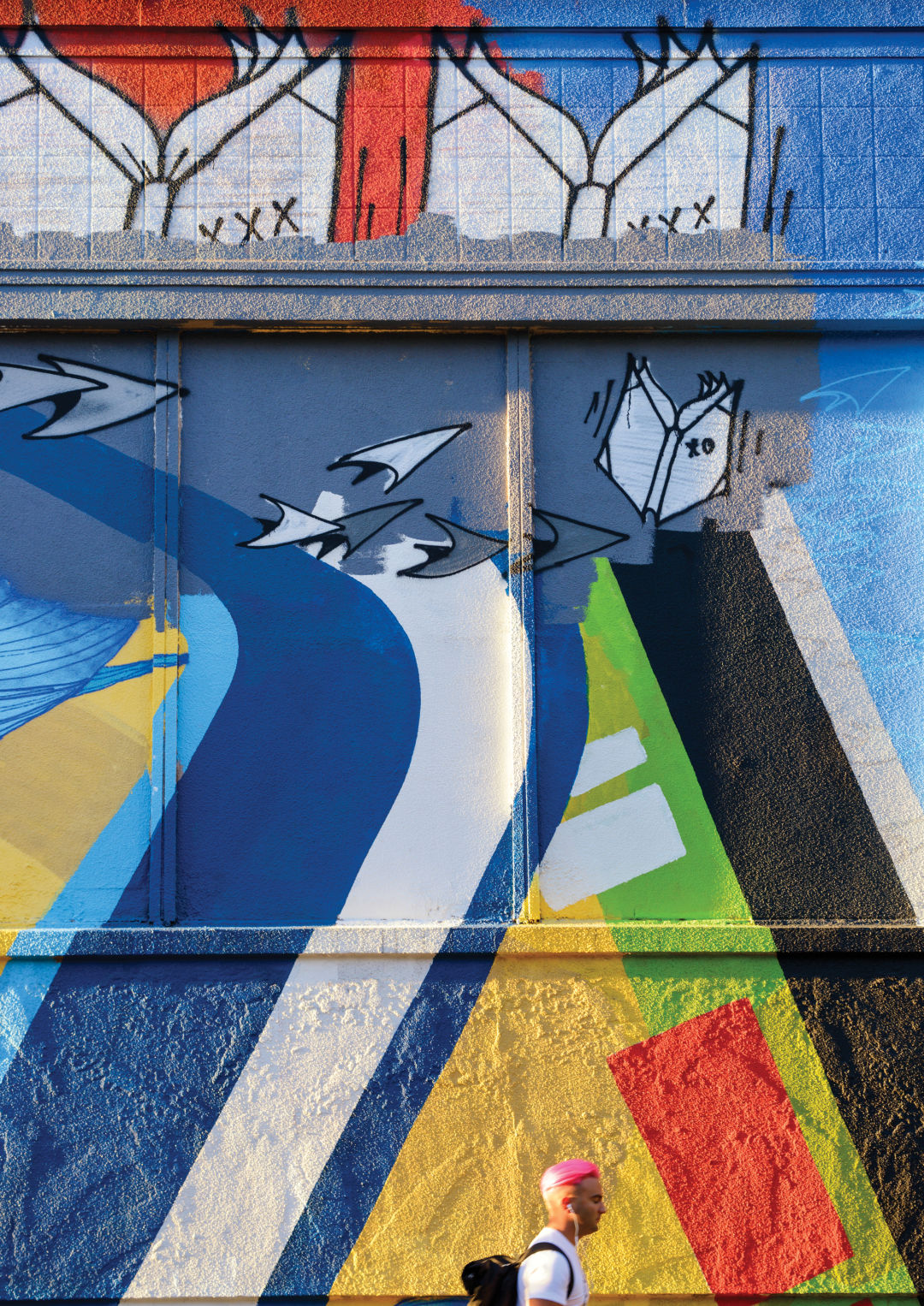
Richmark Label, Capitol Hill’s most muraled building, is the result of a rare combination: an eccentric local who owns both the building and the land (i.e., it’s not becoming new condos anytime soon). Seeking some abstract color, the owner turned to UA. While a variety of artists have been brought in over the years to spice up the facades, the newest addition is the staircase-side design by Lina Cholewinski and Connie Fu, a collage of elements pulled from their artist friends and old art deco books.
Richmark Label
Richmark Label
Richmark Label
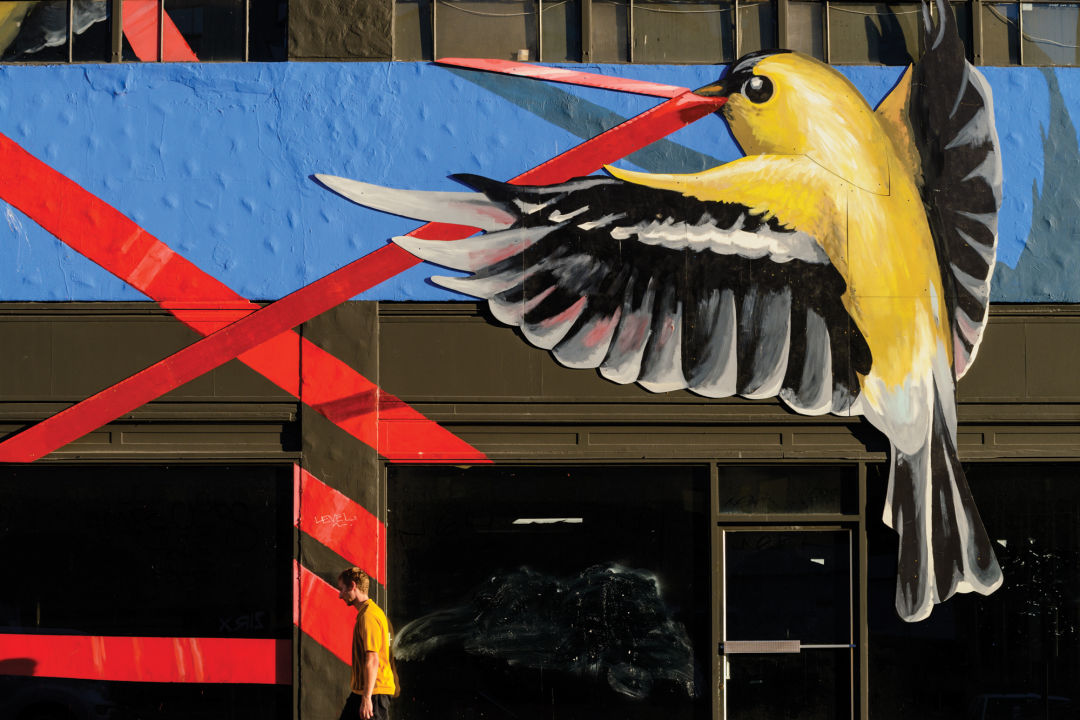
Sometimes Seattle’s booming growth moves faster than permit processing, leaving buildings—like this future Washington State Convention Center expansion site on Olive and Boren—empty for years. Rather than let these zombie structures suck the soul out of a neighborhood, UA steps in. Will Schlough’s Ribbon (below) plays with dimensional visual dynamics with willow goldfinches (Washington’s state bird) painted both on the exterior walls and inside the structure.
When the Sorrento Hotel underwent a redesign in 2015, Urban ArtWorks teamed up with Seattle Mural Project to manage this chic black-and-white linear design created and installed by Ellen Picken. While most of UA’s murals are meant to last a few years, the Sorrento sought a permanent concept that would endure. Picken’s comparatively subtle stripes help the pattern stand out from city’s flashier murals, effectively branding without grandiosity.
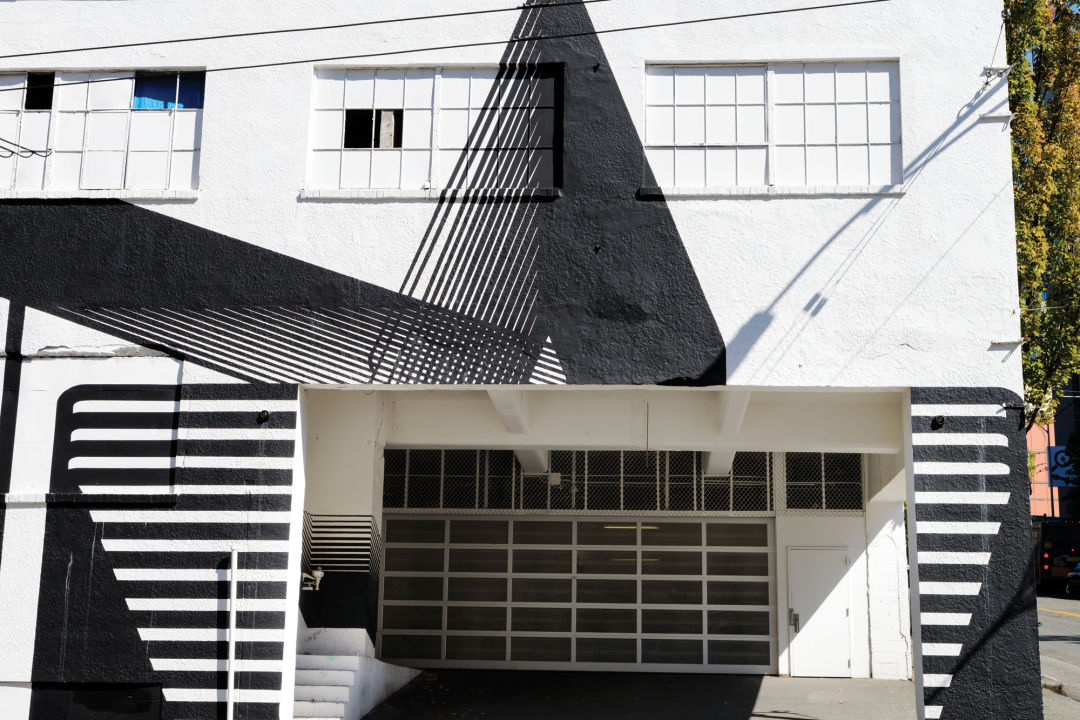
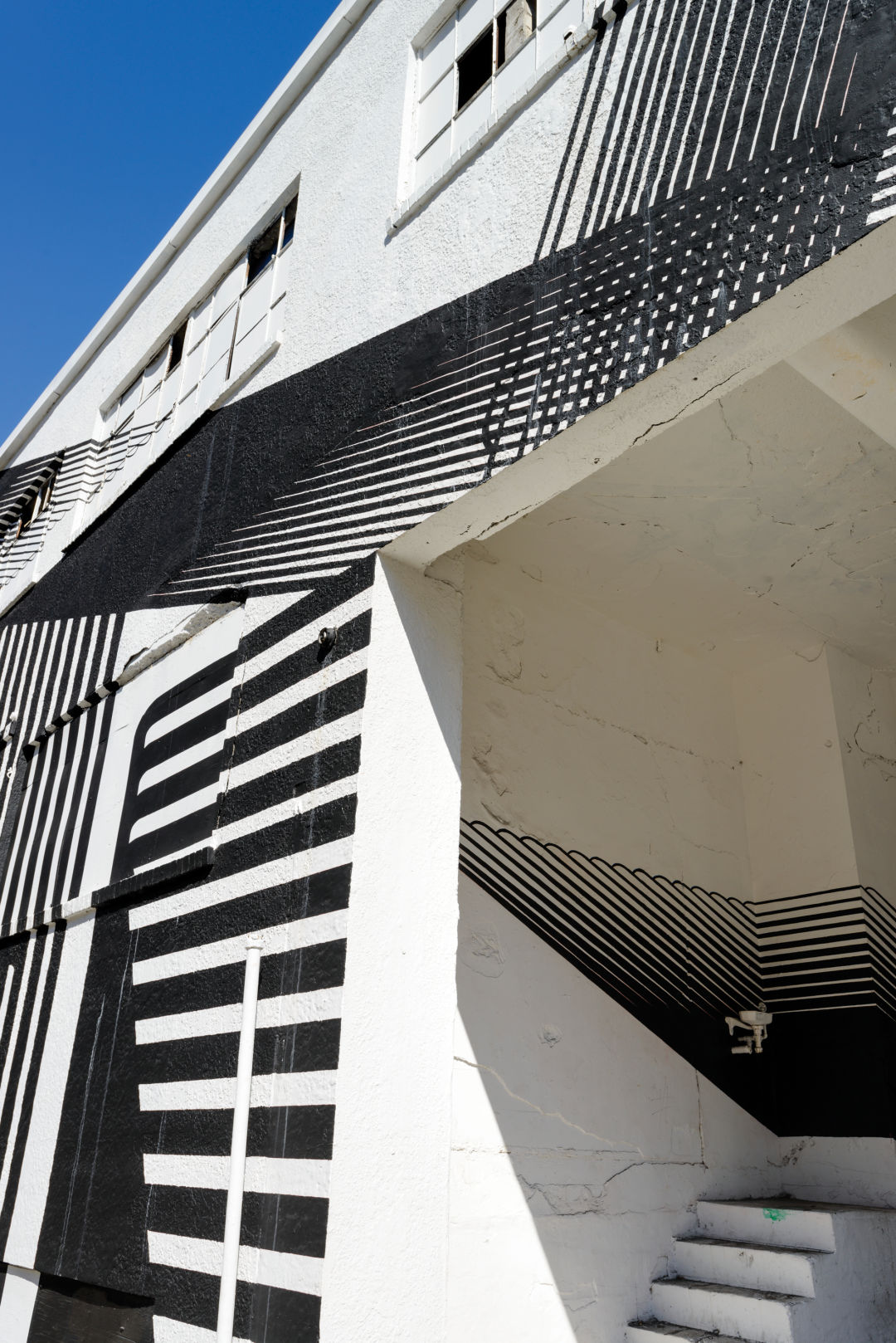
The Sorrento Hotel
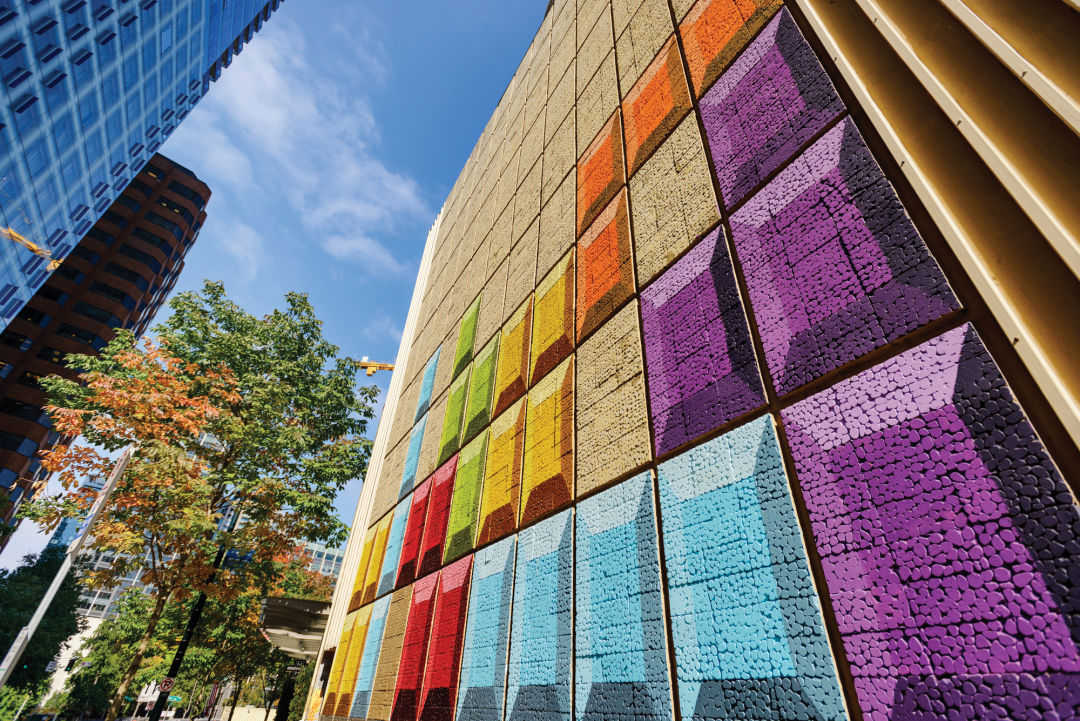
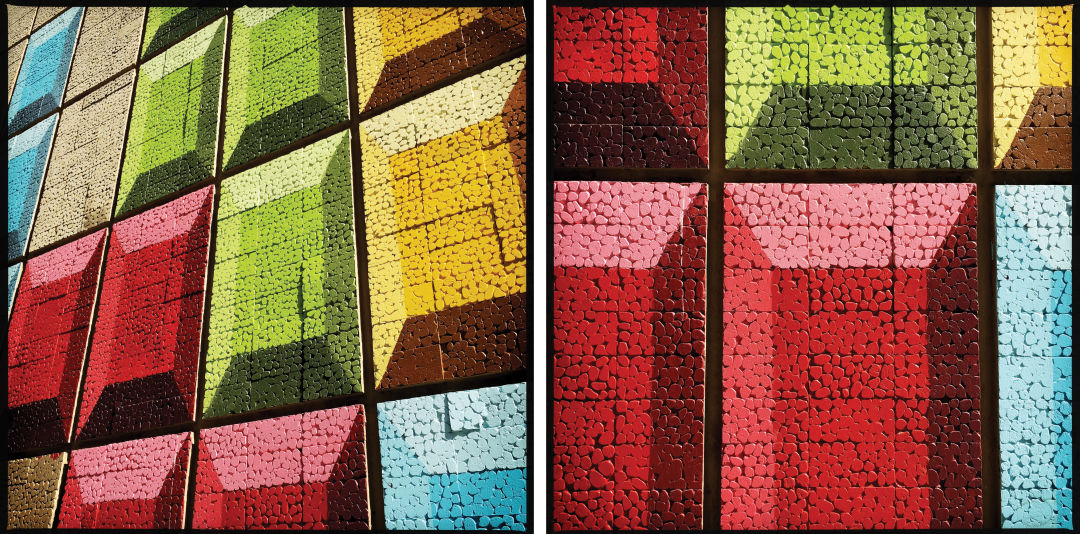
If you’re staring at your phone playing Candy Crush while walking past Eighth and Pine, you might miss the joyous playful color of Will Schlough’s Tetris-inspired mural. The building’s divided exterior panels naturally lent themselves to the classic blocky puzzle game’s pixelated look. It all made for one of Urban ArtWorks’ easiest projects, which the kids completed in just two days. (Though whoever’s playing this wall clearly isn’t very good at Tetris.)
Culture Fix
Things to Do in Seattle


Keeping Fremont Weird