Shane Chen's Forward Motion
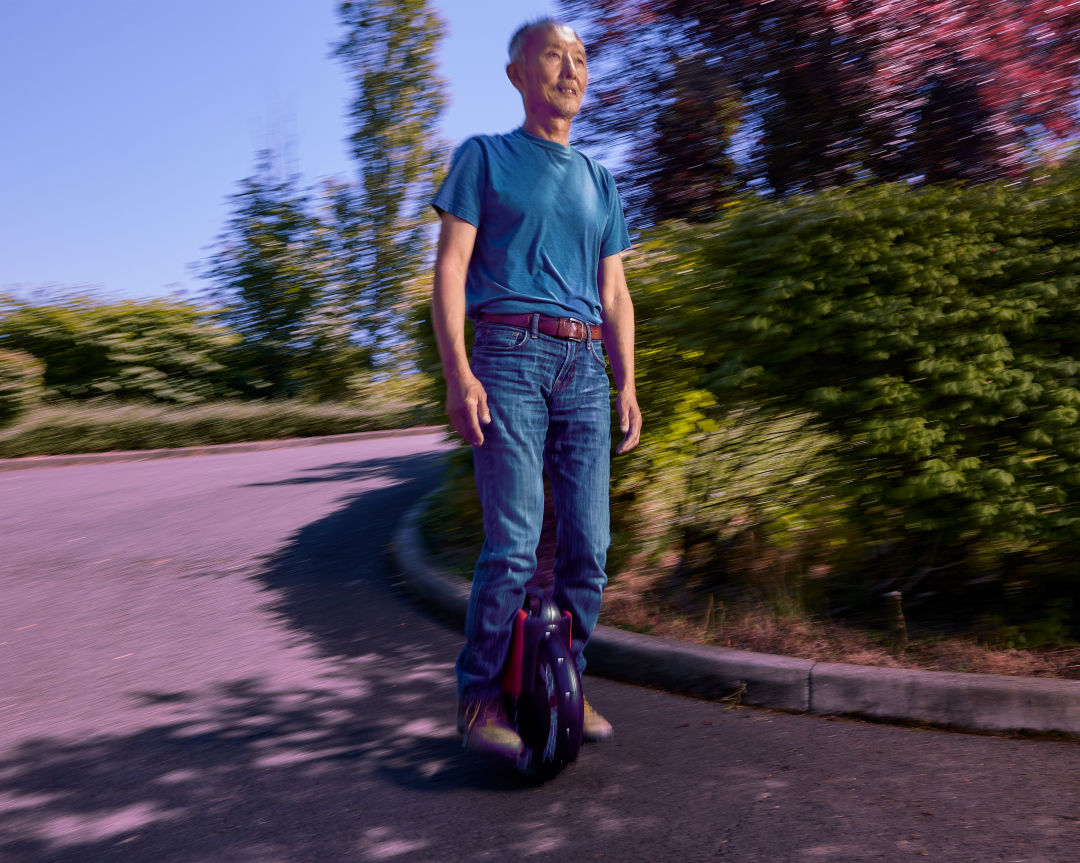
The inventor rides an original Solowheel, which are hard to find these days.
Image: Carlton Canary
Don’t blame Shane Chen if you get buzzed by a Solowheel the next time you’re walking down Pine. “They are not mine,” he says. “They’re all knockoffs.”
For the past decade, the man behind the electric-powered unicycle regularly seen shuttling Amazonians between HQ and Capitol Hill condos has tried to stop Chinese manufacturers from copying his inventions, plural. His hoverboard has inspired even more imitation abroad. But patent lawsuit after patent lawsuit has proven fruitless in a country where intellectual property is less protected.
Chen would know. He grew up in Beijing before moving to the U.S. in the mid-’80s, founding a company that developed scientific instruments for the agricultural industry. One device tracked photosynthesis. Others were similarly practical, but not exactly enthralling. “I was basically bored.”
Settling in the small Washington town of Camas along the Columbia River, Chen started a company, Inventist, that explored more electrifying ways to engage with the outdoors. Its AquaSkipper allowed people to hop across water. But nothing caught on quite like the Solowheel and Hovertrax, better known as the hoverboard.
Invented in 2010, the former functions more like an e-bike, Chen says. A 1,500-watt motor allows Solowheel pros to reach 10 miles per hour and finish the last leg of their commutes more sustainably. They lean forward to accelerate and backward to brake, with a circular stabilizer somewhat miraculously keeping them steady all the while.
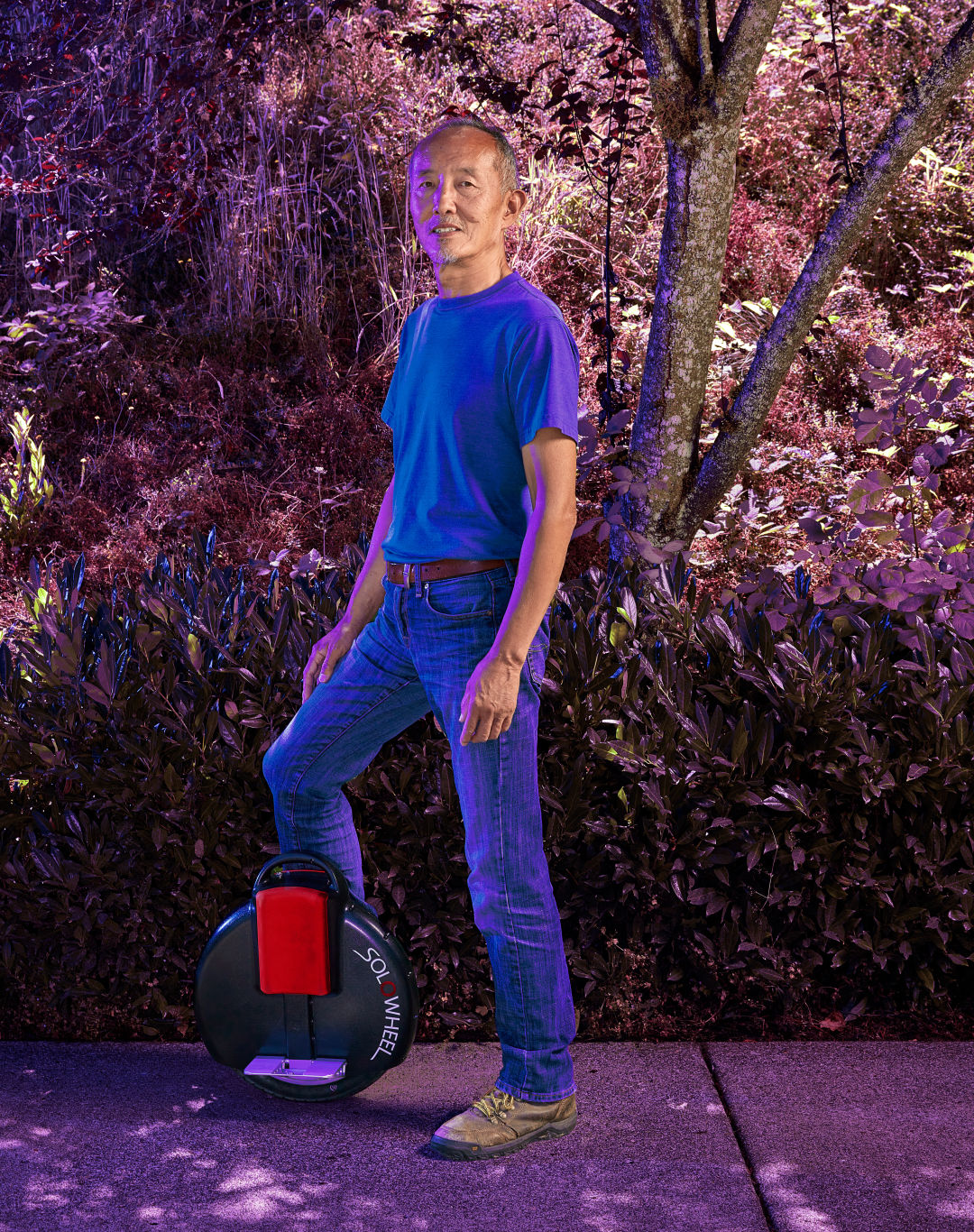
Image: Carlton Canary
The hoverboard, that ubiquitous platform with wheels, is more like a toy. A very popular toy. Chinese manufacturers have produced millions of them at prices so low that Chen ultimately decided he could not compete. He licensed the Hovertrax patent to Razor and essentially shut down Inventist operations.
But the company still exists, Chen will remind you, as long as his mind keeps racing for new ways to change the way we move. Lately he’s focused on standup paddleboarding. Keeping the vessel straight requires switching paddle hands every two strokes, he’s observed. What if it didn’t?
As he mulls that question, Chen’s also working on some tweaks to his original creations. Because for all their sales, copycats are still pretty unoriginal.