The Okanagan Valley Hides a Charming, Sun-Splashed Wine Region
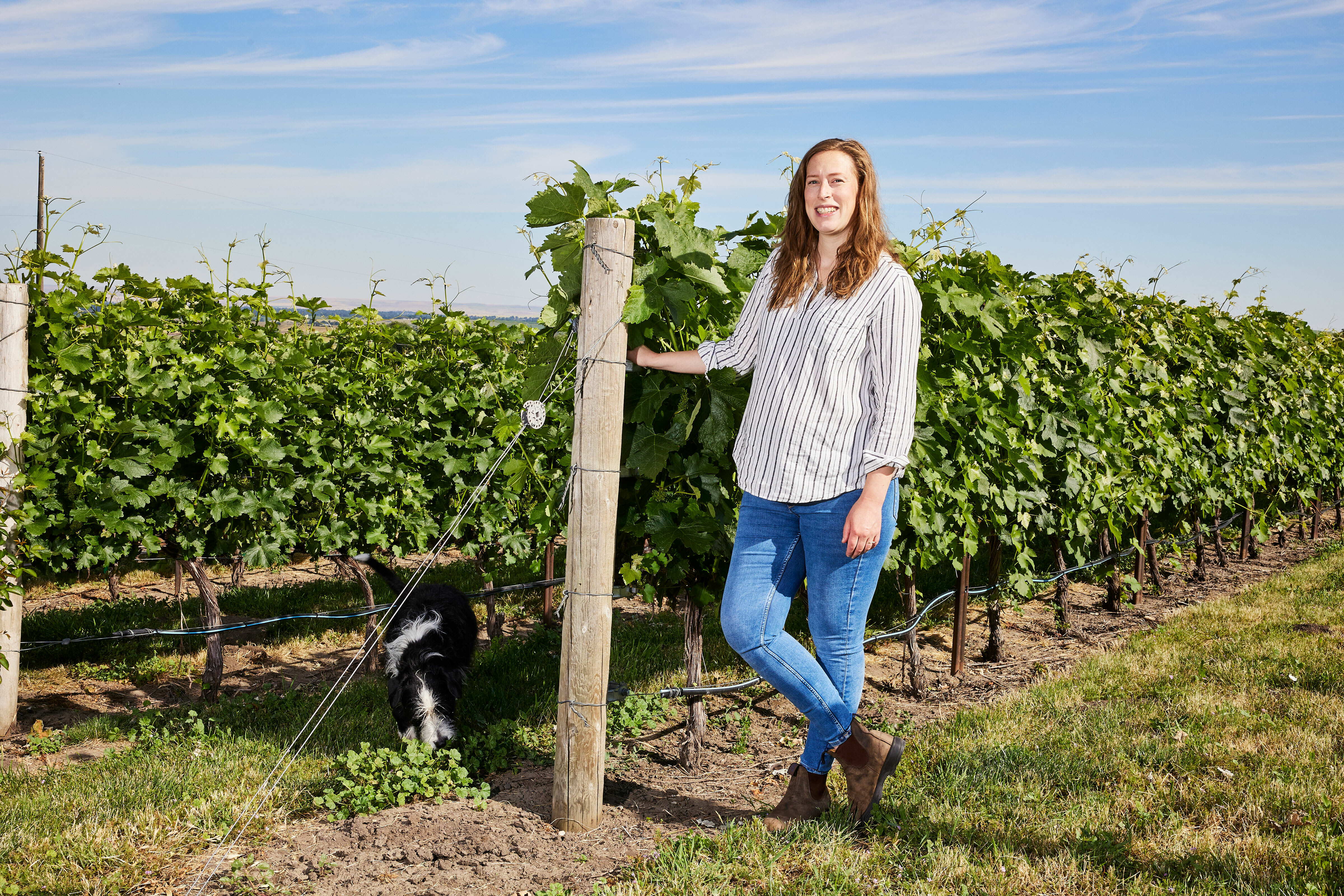
“Give her some of that liquid double gold,” Neelam Dhaliwal tells her younger sister. Manpreet Dhaliwal picks up a bottle of a Kismet Estate Winery 2023 vintage, whose nickname doesn’t come solely from the yellow label or the wine the color of dry hay. This bright, cheerful white won a double gold at the All Canadian Wine Awards. Impressive, considering that it was one of the first wines the then-26-year-old Manpreet crafted when she took over as winemaker of her family’s business.

But nothing in this wine region is exactly standard. For one, we’re in Canada—“Canada’s only desert,” I hear over and over again. Here in the Okanagan Valley, wineries cluster around the two small towns of Oliver and Osoyoos. We’re so close to the American border that Osoyoos Lake has shoreline in both countries.
Back inside Kismet’s tasting room, the scalloped, arched windows recall the famous palace architecture of Jaipur, India, and many of the bottles bear names drawn from Sanskrit: Safèd, Kamal, Karma. Manpreet and Neelam’s father, Sukwinder, immigrated from Punjab in the 1990s, working in the vineyards right when the Okanagan Valley was transitioning into a wine center; the British Columbia government encouraged this shift by paying farmers to try planting to high-quality European grapevines. Both sisters can remember childhood hours in the local vineyards while their parents worked, playing with farm dogs or helping prune. Today, Neelam runs winery operations while Manpreet makes wine.

Image: Courtesy Jon Adrian/Nk’Mip
Now that the Dhaliwal family has almost 650 acres of their own vineyards, they don’t feel the need to stay conventional. “We do a lot of blending just to create something unique and complex and something different,” says Manpreet. “Super bold, unique flavors.” What began as snack pairings at the tasting room—pakoras, chutneys—grew into an Indian restaurant, Manzil, next door. “We weren’t really thinking inside the box, trying to do what everybody was doing,” she says.

Image: Courtesy Manvil Restaurant
With a wine industry less than two generations old, the winemakers of the Okanagan are a diverse bunch. At Nostalgia Wines nearby, Gina Fernandes Harfman came to the craft after a career of pinstriping and airbrushing classic cars and motorcycles; her boutique winery hosts a car show every year, and some of her bottles are illustrated with pinup girls.
And her Nostalgia wines themselves can be curveballs. Take the best-selling kerner: The German varietal’s grape is a crossing of Riesling and trollinger, creating a fruit-forward wine with a bit more weight than most whites. Fernandes Harfman’s dry rosé is made with cabernet franc, malbec, merlot, and Syrah—like most things in the Okanagan, an unusual combination.
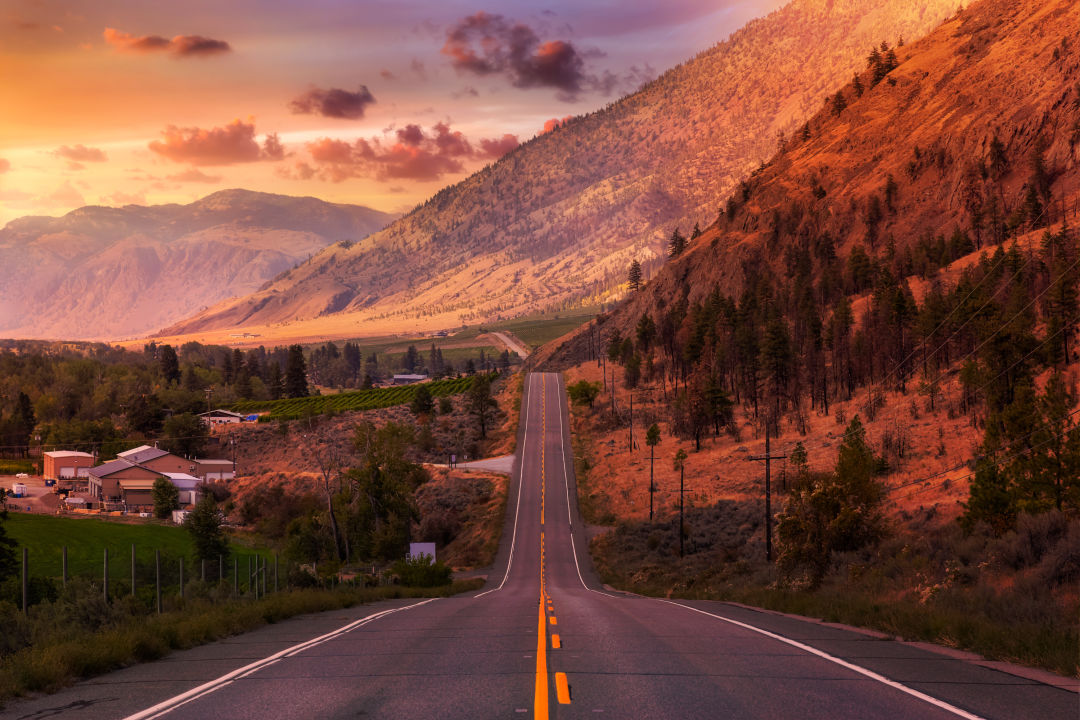
Though the town of Osoyoos sits about as far from Seattle as Walla Walla, at about five hours, it’s got a completely different vibe. Here mountains speckled with ponderosa pine make an abrupt ascent upward from the valley floor, forming a warm cradle about halfway between waterfront Vancouver and the towering Rocky Mountains. With about 50 wineries between Oliver and Osoyoos (and even more up north toward Kelowna), it’s the country’s second-biggest wine region, after Ontario.

The placid waters of Lake Osoyoos are akin to Lake Chelan—in summer the water is dotted with jet skis and pontoon boats, a reprieve from air temperatures that can climb past 100 degrees. But the surrounding hillsides are full of wineries of every stripe, from mom-and-pop operations in garages to Phantom Creek Estate’s 45,000-square-foot winery featuring modern art and a Chihuly chandelier. (It’s the one corner of the Okanagan that could pass for Napa.)
Farther south, Spirit Ridge looks more like New Mexico. The Spirit Ridge hotel property was crafted in American Southwest style, wood beams poking out of adobelike buildings. Rooms have stunning views of the valley and mountains, including the vineyards of Nk’Mip Cellars. All are owned by the Osoyoos Indian Band, whose story is told in a nearby cultural center with stunning outdoor exhibits that blend history and sculpture. The Bear, the Fish, the Root & the Berry—the hotel’s restaurant—splits its menu into Indigenous-inspired categories.
Nk’Mip, pronounced Inkameep, claims the title of the first Indigenous-owned winery in North America. For winemaker Justin Hall, running the vineyard is about taking the long view of a land that was once the winter hunting grounds for his people—maintaining the desert instead of turning it into, say, a casino and a mall.
“I want people to look back two, three hundred years from now and say, ‘My ancestors did something right. My land is still intact,’” he says. “It’s not like we just used it and plundered it.” The Native ethos of living in balance with nature means limited pesticides, sustainable practices, and relatively small batches of wine.

Image: Nalidsa/shutterstock.com
But for Hall, who took over the title of estate winemaker in 2021, wine can also be about living in the moment; though as a teen he expected to become a mechanic, he was drawn to the industry by its upbeat vibes. “The whole mentality around people when they’re in a winery, they’re having fun,” he says. He crafts his Dreamcatcher and Talon bottles to be drinkable weekday wines. For something more challenging, he cites Nk’Mip’s Mer’r’iym, or “marriage” wines—the red and white blends each expressing his palate as a winemaker.
Hall notes that when he grew up, the Osoyoos reserve—a Canadian version of a reservation—was fenced off, rather segregated. Today thousands of visitors come to eat, swim in the heated pools, and try his wines in a tasting room with soaring ceilings and windows that look out on the whole valley. “It’s a very magical place,” he says. “I want people to look back and go, they left us something pretty cool here.”