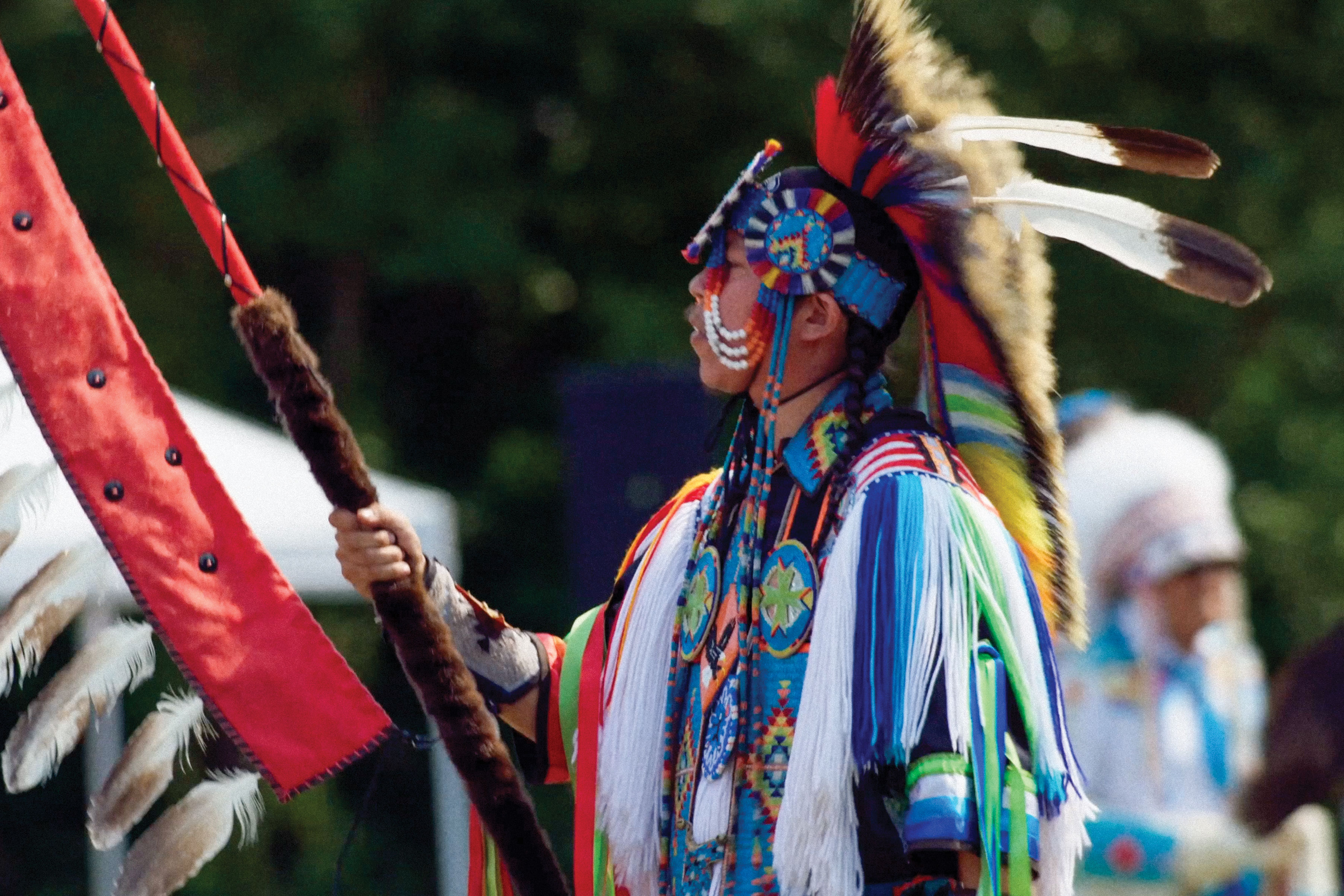
Plants Tell a Story of a Tribe on the Free Duwamish Eco-Tours
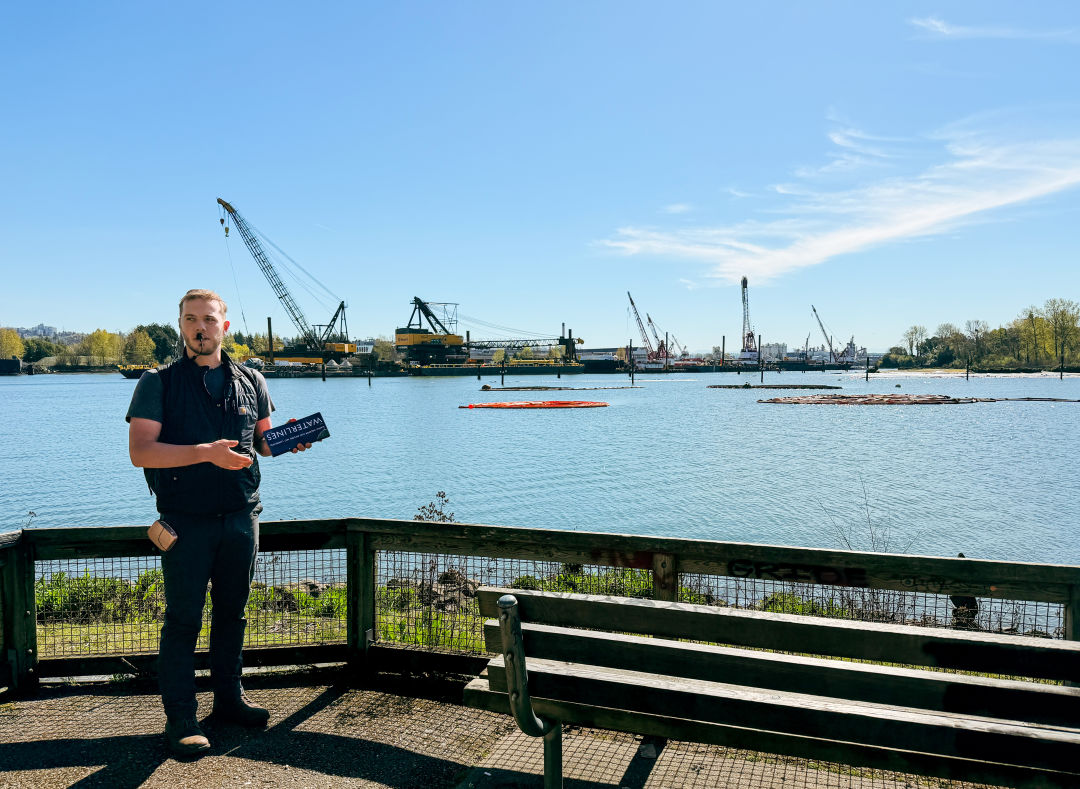
Image: Naomi Tomky
Thirty minutes into the 90-minute free eco-tour of the area given by the Duwamish Tribe, guide Andrew Grueter pauses to assure guests that there will be some positive things talked about today. He has just covered 65 years of history—from the first legal contact between Indigenous people and white settlers in the Seattle area to the destruction of the final Native settlements by the construction of the Ballard Locks around 1915—and it is bleak. As he talks about Boeing benefitting from the straightening of the Duwamish River to streamline industry, a plane taking off from Boeing Field punctuates the sky behind him.
This article, to borrow Grueter’s phrase, will also include some positive things—predominantly the tour itself, and its price ($0). Standing on the grassy ledge over the Duwamish River on a sunny spring morning, I watched seals and geese play on the water while I listened; eagles and kingfishers swooped above. Grueter points out where cormorants often land to dry off their wings, explains the healing uses of yarrow, and walks us through the history of xaʔəpus, the Duwamish village here, and of Youngstown, the neighborhood that followed, as illustrated by grasses, flowers, and trees.
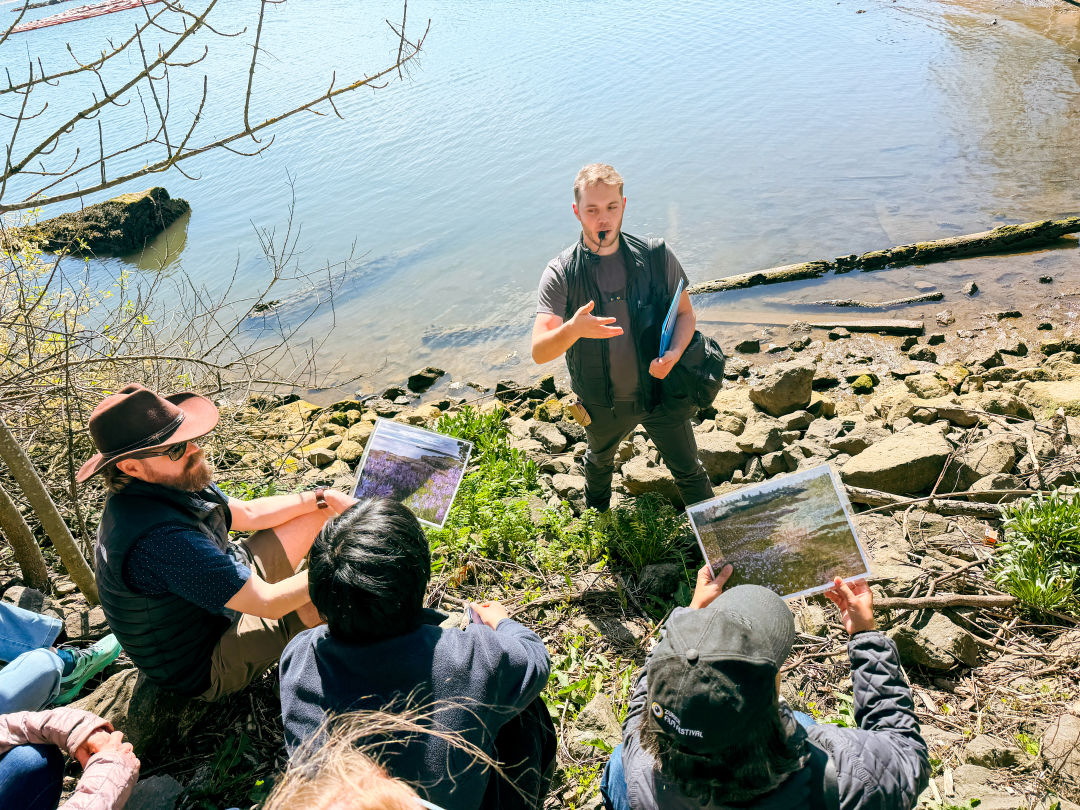
Image: Naomi Tomky
The tours are offered by the Duwamish Tribe, free to anyone who signs up online, and run sporadically throughout the year—the next one is May 30, then June 11. It begins and ends at Duwamish Longhouse, just south of the West Seattle Bridge, which serves the tribe as museum, gift shop, and gathering space.
Grueter developed the tours in 2020 while working for the tribe doing archiving and ecological restoration, with the aim of highlighting the more recent history of the tribe, including its legal battle for federal recognition. “It’s important that people understand how colonialism actually works,” he says. But the tour is only a bit “catalogue of horrors” and much more about pointing out clues and traces of communities who nurtured (or didn’t) this specific riverbank, in the form of camas lilies and cherry trees.
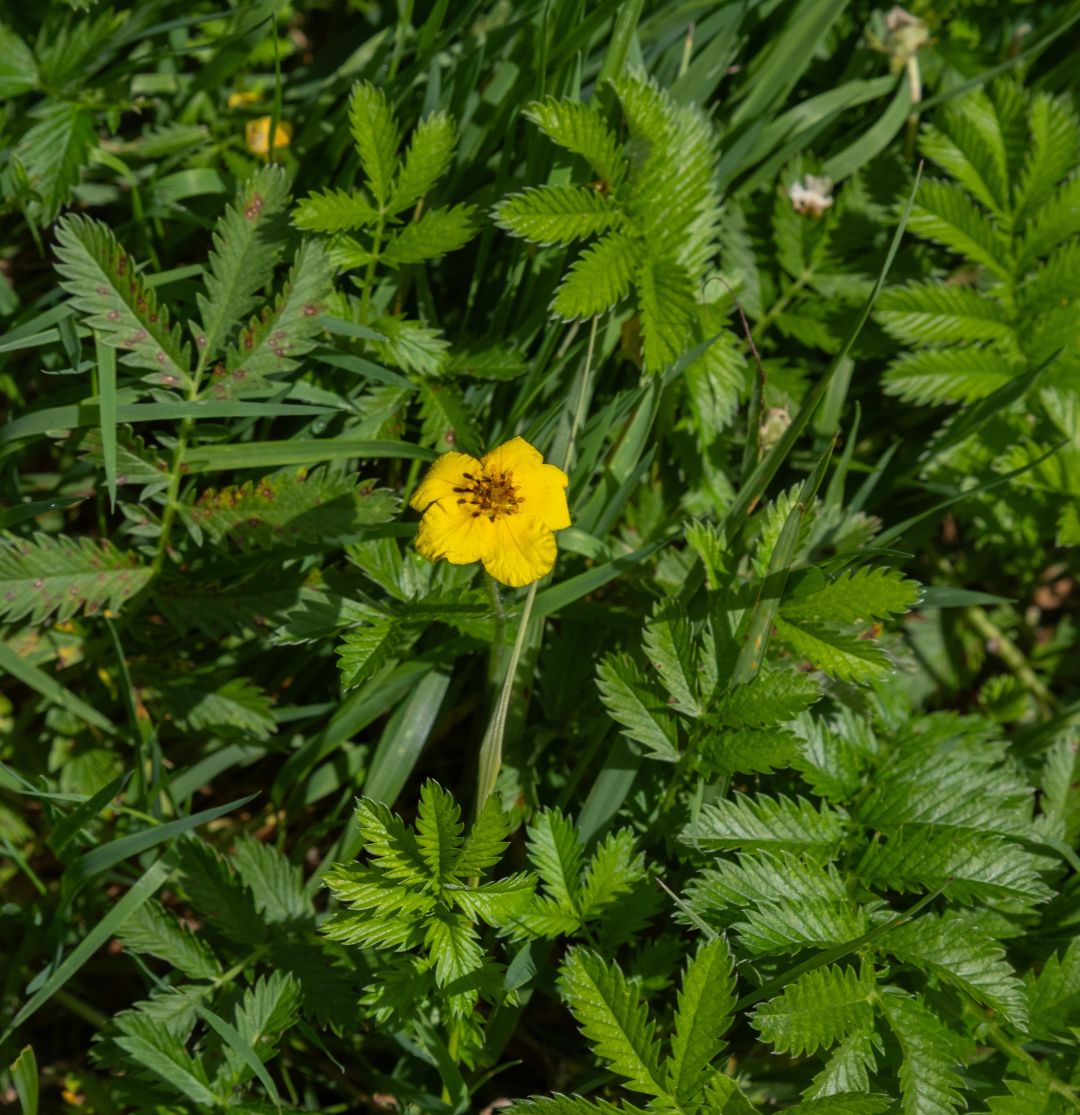
“Nobody put the silverweed down,” Grueter says, indicating that it came from the meadows that were part of Indigenous fire management—direct remnants of the Duwamish agricultural system. “It tells us so much, without talking.”
Even as a lifelong Seattleite with a vested interest in the history and ecology of our city, much of the information on the tour was new to me. It was also an exceedingly pleasant way to spend part of a day: admiring the wildlife that flock to the expansive waterway, getting to know a sliver of land wedged between the much-maligned river and the steep hill leading to West Seattle, and—most significant to Grueter—learning more about the Duwamish.

Image: Naomi Tomky
“The tour is first and foremost for the Duwamish Tribe,” he says. “Driving more eyeballs and people to the Longhouse to learn from the Duwamish, and also support them if they can, financially, just by stepping in the gift shop or paying Real Rent.” As for the people who come on the tour, he hopes they leave with a new filter as they walk around, whether here or elsewhere, looking for overlapping layers of history and at the quiet parts in the narratives. “That they can spot white-washing and notice what is glaringly missing more easily,” he says—even in something as seemingly trustworthy as an interpretive sign in a park.