Here Are Some of Microsoft’s Most Memorably Forgettable Products
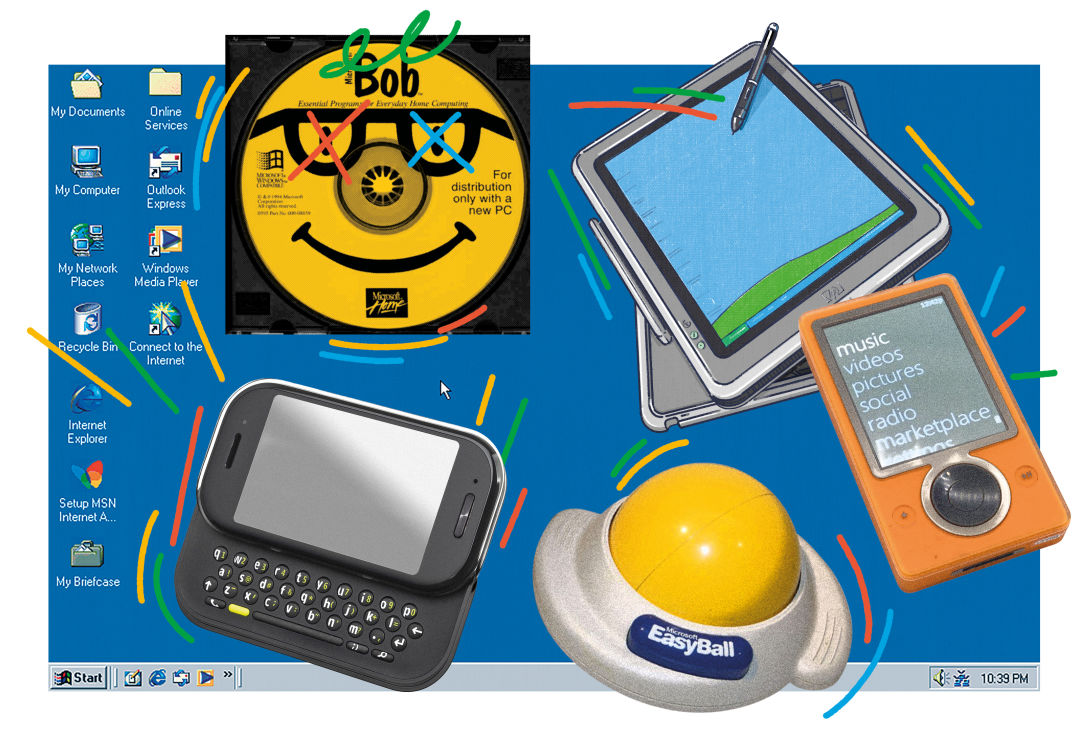
Image: Òscar Climent Ollet and Courtesy MOHAI
A half century of product releases and, well, there’s bound to be some half-baked gizmos and doodads. From a hygge-inspired mnemonic-forward computer portal to an MP3 player released five years too late, not every invention coming out of Redmond has offered a worthwhile return on investment.
Microsoft Bob
Bob had it all. With an interface resembling a cozy home interior, Bob was intended to provide a more accessible portal through which users could access a range of computer programs. Navigate to the office space in Bob, click on the pen and paper lying on a desk, and—Bob’s your uncle—you’ve just opened the word processor. Then click on the clock and you’ve opened the calendar. Sound intuitive? No? That’s because it wasn’t. Bob died a silent death less than a year after its 1995 launch. So long to the only Microsoft product whose logo was a cartoon smiley face wearing Bill Gates glasses.
Microsoft Kin
Kin kicked the bucket in similarly unceremonious fashion 15 years later. After poaching the hardware team behind the successful T-Mobile Sidekick flip phone, Microsoft hoped that the Kin line, billed as “social phones” centered around access to social media feeds, could usher in an era of smartphone dominance. Talk about original sin: The phone’s launch video bizarrely included a teenager sexting to the sounds of Edward Sharpe and the Magnetic Zeros. Kin was also bad at being a social media phone, refreshing users’ feeds only every 15 minutes. Verizon, Kin’s launch customer, pulled the phone after just 48 days.
Microsoft Tablet PC
Nearly a decade before Apple launched its iPad, Microsoft founder Bill Gates proudly released the Tablet PC. “The Tablet PC extends the power of personal computing into exciting new areas,” Gates said with his trademark verve and charisma in 2000. “Combining the simplicity of paper with the power of the PC will enable people to be far more productive.” Whether it was the uninspiring marketing emphasis on productivity gains, the clunky interface, or simply bad timing, the Tablet PC’s launch was met with muted enthusiasm.
Microsoft EasyBall
The EasyBall’s late-’90s launch was slightly more niche but arguably more successful than those for some other devices. Bundled as part of the Freddi Fish and the Case of the Missing Kelp Seeds CD-ROM game, the EasyBall was an oversize trackball designed to help kids use a computer. Parents could plug in a mouse in addition to the EasyBall so they could operate the computer together. This one’s been relegated to the annals of history because Microsoft stopped production a few years later, a milestone on the company’s long slide away from fun, quirky gadgets toward things like military AI systems and cloud computing infrastructure.
Windows Me
In classic middle-child fashion, Windows Me, the software system between Windows 98 and Windows XP, never recovered from severe neglect during its developmental stages. Released in 2000 (Me is short for “Millennium Edition”), the software was notorious for its reliability issues, earning it the unfortunate superlative of “The Worst Windows Ever.” The far more stable, and later beloved, Windows XP was released the next year.
The Zune
Last but not least: Microsoft’s yawn-inducing response to the iPod. Released in 2006 (five years after Apple’s media player), the Zune did include some features that Apple’s didn’t. Zune users could share music with one another, for example, and play those songs three times over the next three days before buying the song. But Zune could never beat the iPod’s firm market grasp and cool factor. It didn’t even beat budget MP3 players like the SanDisk Sansa. Microsoft killed Zune in 2011. Fare thee well, Zune, we hardly knew ye.
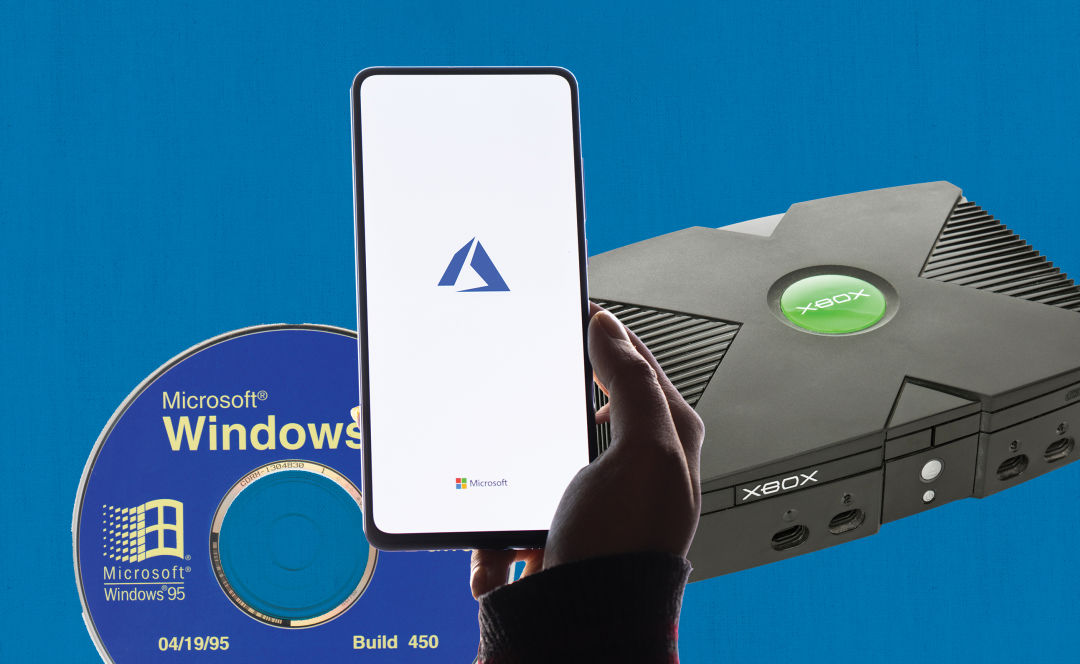
Image: shutterstock.com and Seattle Met Composite
Memorably Memorable Microsoft Products
Windows 95
If you start me up, I’ll never stop. It wasn’t just the incessant use of the Rolling Stones hit in commercials that made Windows 95 such a massive success. It was the fact that the operating system made, well, operating a computer so easy. You could argue that in its simplicity, accessibility, and clean aesthetics, Windows 95 is still the best thing Microsoft has ever made. Enough to make a grown man cry.
Xbox
In the annals of weird Microsoft cultural moments, it’s hard to top the Xbox console unveiling ceremony featuring Bill Gates and professional wrestler Dwayne “The Rock” Johnson, who had recently finished a run leading a villainous stable within WWE called —no joke—“The Corporation.” The product, however, has aged better than the skit. “The Xbox is everything the Rock is, cutting-edge, electrifying, exhilarating,” said Johnson at the time. And over multiple iterations since, he’s proven to be correct.
Azure
It turns out the wallpaper that came standard with Windows 95 was kind of portentous. The launch of Azure, Microsoft’s cloud operating system, cemented its future as an enterprise giant and provided the platform for the company’s growth in the coming decades. It doesn’t matter how hard it is to search for an email in Outlook. Microsoft’s present and future is in the cloud. And, hey, so is that email, somewhere.