De La Soil Grows a New Kind of Restaurant in Kenmore

Image: Amber Fouts
As I romped and chomped excitedly through De La Soil’s summer menu and specials, dragging charred Jimmy Nardello peppers through whipped feta with miso-lime vinaigrette, I worried about the impending fall, when tomatoes stop blushing and the watermelons—like those served as a granita with Tajín ice cream—wither on the vine.
The heirloom tomato tartine tasted of pure joy and sunshine, lathered in roasted garlic mayo and sprinkled with a purple confetti of chive blossoms; I struggled to conceive of its gloomy season sibling. What could possibly live up to this? Upon returning for the autumn menu, the wild onion doughnuts issued a robust rebuttal to my lack of imagination. They were light and chewy and festooned with a kaleidoscopic dusting of leek ash and dried summer onion powder. Caramelized onions swam in the ramekin of Gruyère fondue for dipping. Had I not ordered the french fries, I would simply have spooned the remainder of the sauce into my mouth.

Image: Amber Fouts
Somewhere around the charred cabbage, its flames tampered by a lake of buttermilk on which danced skipjack bonito, I grasped the hardiness of De La Soil. It far more resembles the scraggly rooted onion in its logo than the thin-skinned late-July peaches that came charred on a salted pretzel crust with crème fraîche. As Seattle continues to sink into its restaurant apocalypse era—with rising rents, rising labor costs, rising food costs, and shrinking dining budgets—chefs Andrea and Cody Westerfield are quietly demonstrating how to build a resilient business, and, quite possibly, the restaurant of the future.
De La Soil forgoes some features of the traditional concept of a great restaurant—an urban location, full table service, and its own space—but it makes no compromises on the quality or creativity of the food.
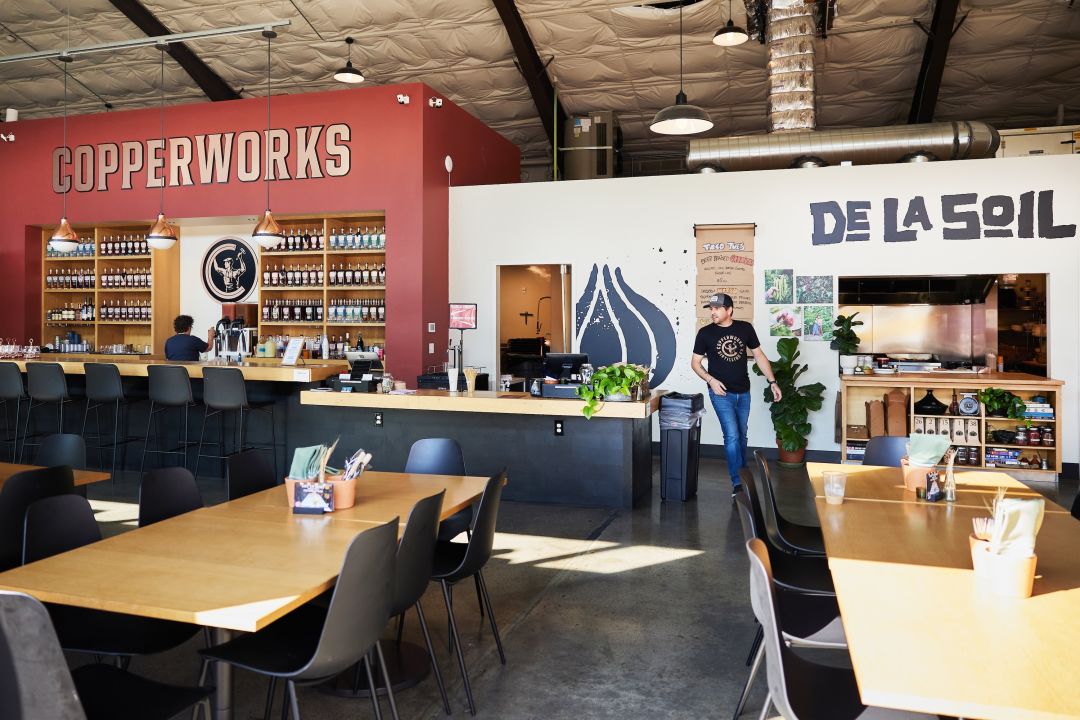
Image: Amber Fouts
Kenmore’s Copperworks Distilling is more like the typical PNW brewery taproom than a distillery; a sprawling building and casual outdoor space with games, it’s welcoming to children of both the human and canine variety. But instead of food trucks or paltry bowls of pretzels, families playing bar trivia or couples seated with a view into the kitchen dig into blooming Walla Walla onions and lemon ricotta pasta with chicken-skin breadcrumbs.
Veterans of the Seattle food scene who cooked at Lecosho, Serafina, and Baker’s, the Westerfields had all but given up on the typical chef dream of owning their own restaurant. Andrea left the industry in search of the kind of stability it failed to provide. Cody took on consulting gigs, including a fortuitous one with an old friend and former regular, Jason Parker of Copperworks.

Image: Amber Fouts
Tasked with recruiting a restaurant to open a second location for the Kenmore tasting room, Cody walked in and had a new idea. “I saw the barrel-lined walls and the giant windows and the big patio on the Burke-Gilman trail,” he says. “There’s trees everywhere; it just felt like a real fun space to inhabit.” Adding to the appeal, it sits just 10 minutes from Tuk Muk Farm, with whom the Westerfields partnered with for much of the produce they used in earlier pop-ups, and now at the restaurant.
Though eye-roll-inducingly overused at this point, De La Soil demonstrates ‘farm-to-table’ as the phrase deserves to be wielded—about half the produce comes from local farms or the garden on the outdoor patio near the yard games—and lives up to its name, which aside from the punny ode to the hip-hop greats De La Soul, means “from the soil.”

Image: Amber Fouts
The commitment means alliums abound at De La Soil, on the logo, in yogurt and mayonnaise, in the form of flowers, roots, and ranch dressing. Where the small menu and seasonal bent could be seen as limitations, the Westerfields seem to thrive on the challenge. Each dish takes the familiar and intensifies its best attributes with a playful twist. For example, the sockeye salmon with fingerling potatoes comes on top of seaweed tartar, with crunch and classic fish-and-chips flavor from a crumble of salt n’ vinegar potato chips (Tim’s Cascade, naturally).

Image: Amber Fouts
The kitchen made only one real misstep in my meals: the dry Parker House rolls that showed no sign or scent of the lobster fat they were supposedly made with. I made one, too, by ordering dessert at the same time I ordered dinner. Food comes out as it’s ready, so my warm apple pie came out with the buffalo deviled eggs, well before my shrimp taco with bacon fat refried beans.

Image: Amber Fouts
Hybrid counter service and bussing your own table after a $25 entrée is, I’m afraid, something we will likely have to get more accustomed to. As might be driving out to places like Kenmore for great meals. It’s not so bad when the food rivals that of the top spots in the city. Washing it down with a plum gin slushie from Copperworks at a patio table next to the chef’s herb garden as my child begins her 17th attempt to roll a golf ball up a snake on the custom yard game helps, too.
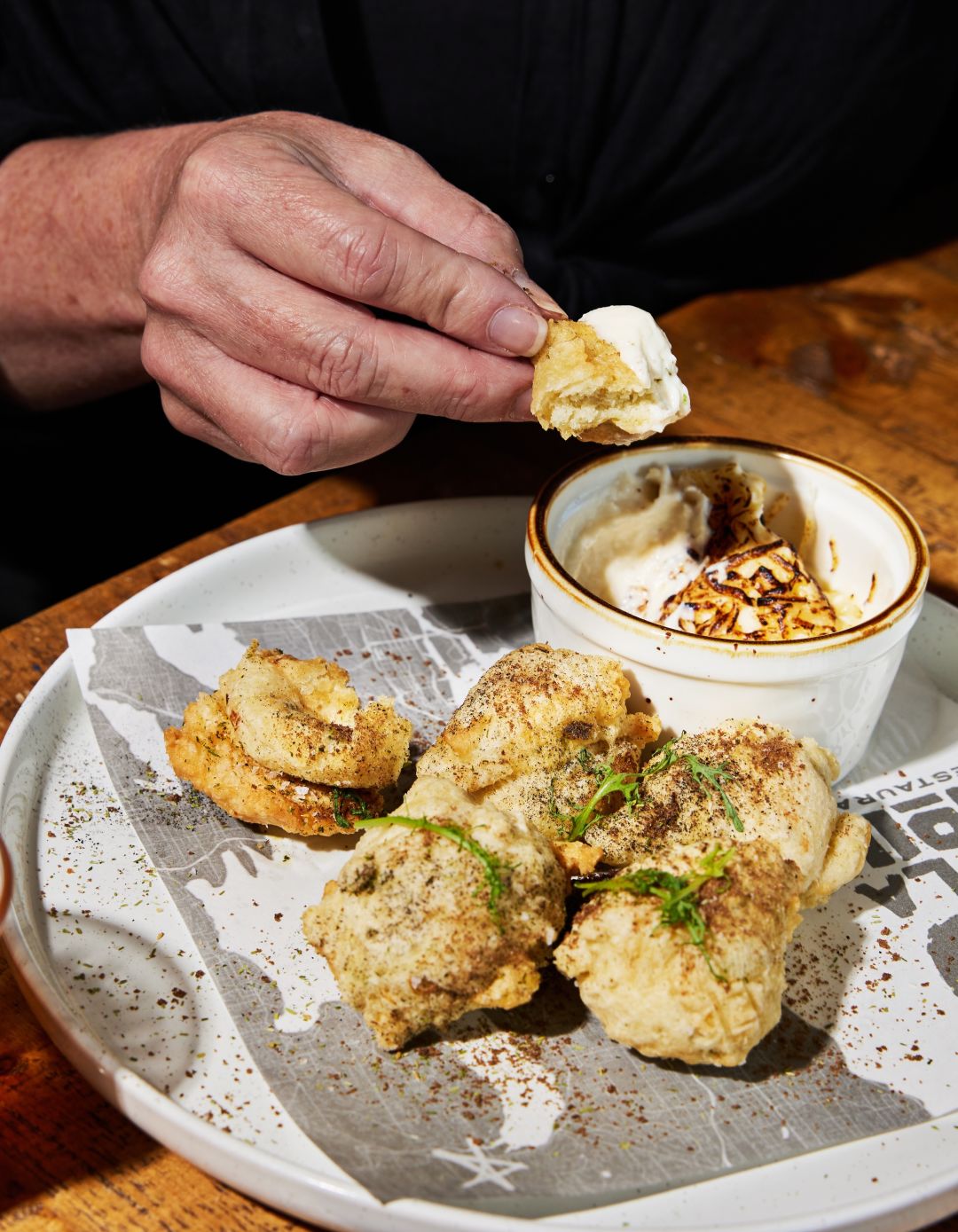
Image: Amber Fouts
Given the choice, I’d prefer table service. But, given the choice, I’d opt for the wild onion doughnuts over almost anything. I would choose heaping plates of creativity and resourcefulness with a sidecar of understanding over a sea of sameness. I would choose a space shared with a distillery over a dystopia of bland chain restaurants. For restaurants to survive, something has to give, and De La Soil shows one way forward, with nods to tradition and an absolute refusal to sacrifice flavor.