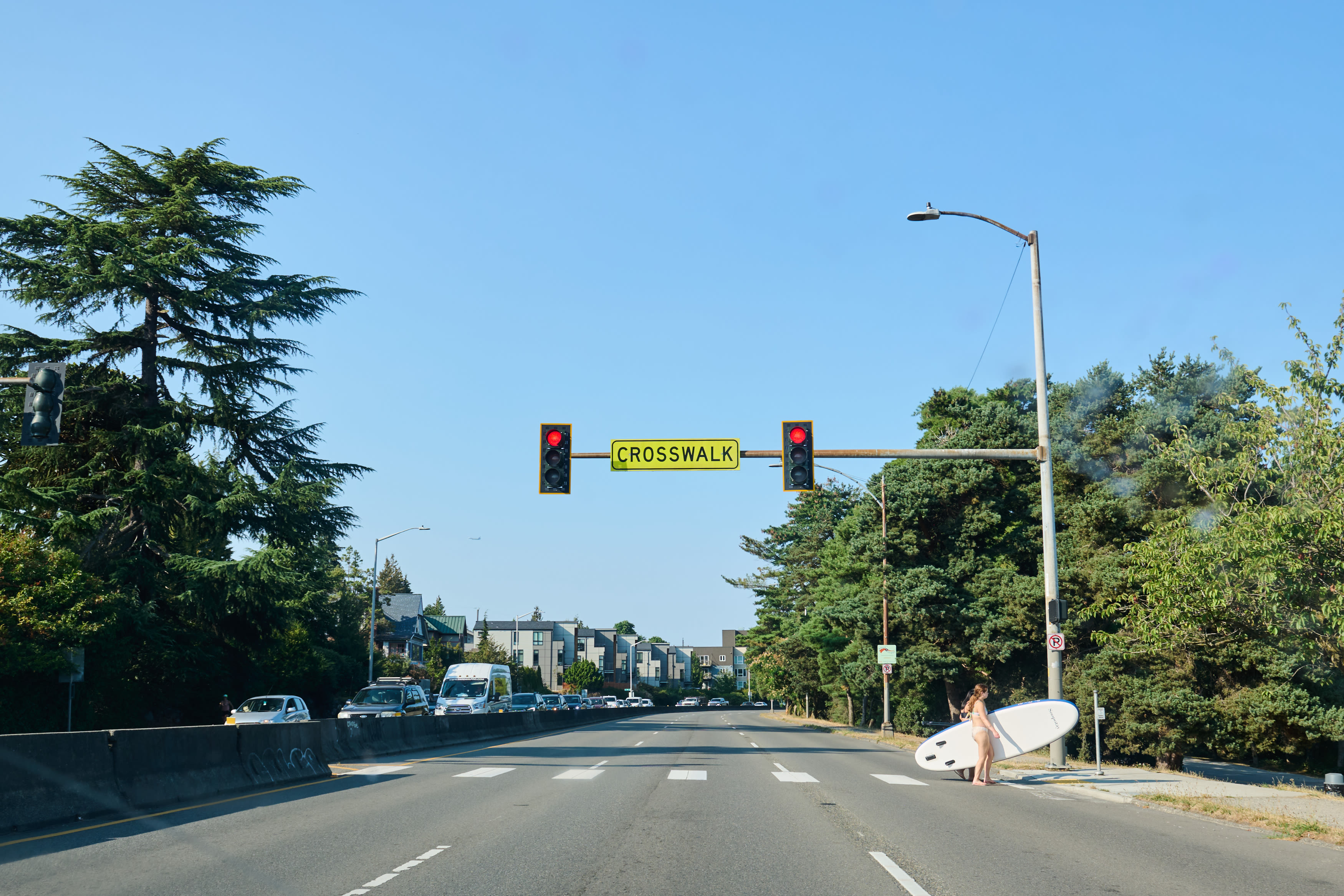
Photo Essay: Aurora Across the Decades
The Aurora we know was finalized with a high-flying bridge modern enough to merit the attention of President Herbert Hoover. Over the years it’s been home to an amusement park, a race track, all manner of roadside attractions—even some recipe testing by none other than Colonel Sanders, who flipped burgers at Clark’s Twin T-Ps while perfecting his own Kentucky-style fried chicken.
Some souvenirs from its heyday remain, like the landmark Aurora elephant or the mural that celebrates its Highway 99 heritage. Others are lost to time. From engineering marvels to the highs and lows of midcentury dining, here’s a pictorial record of Aurora as it was, and is today.

The George Washington Memorial Bridge (known to most as the Aurora Bridge) rises in 1931. Its completion the following year marked Seattle's first highway bridge—and the final link of a route that stretched from Mexico to Canada.

One of the arches that supports the George Washington Memorial Bridge, which carries Aurora across the Lake Washington Ship Canal. This was Seattle's first high-level bridge, designed to let ship traffic move beneath the roadway.
Image: Courtesy MOHAI

The space beneath the Aurora Bridge gives this corner of Fremont a sort of cathedral air.
Image: Chona Kasinger
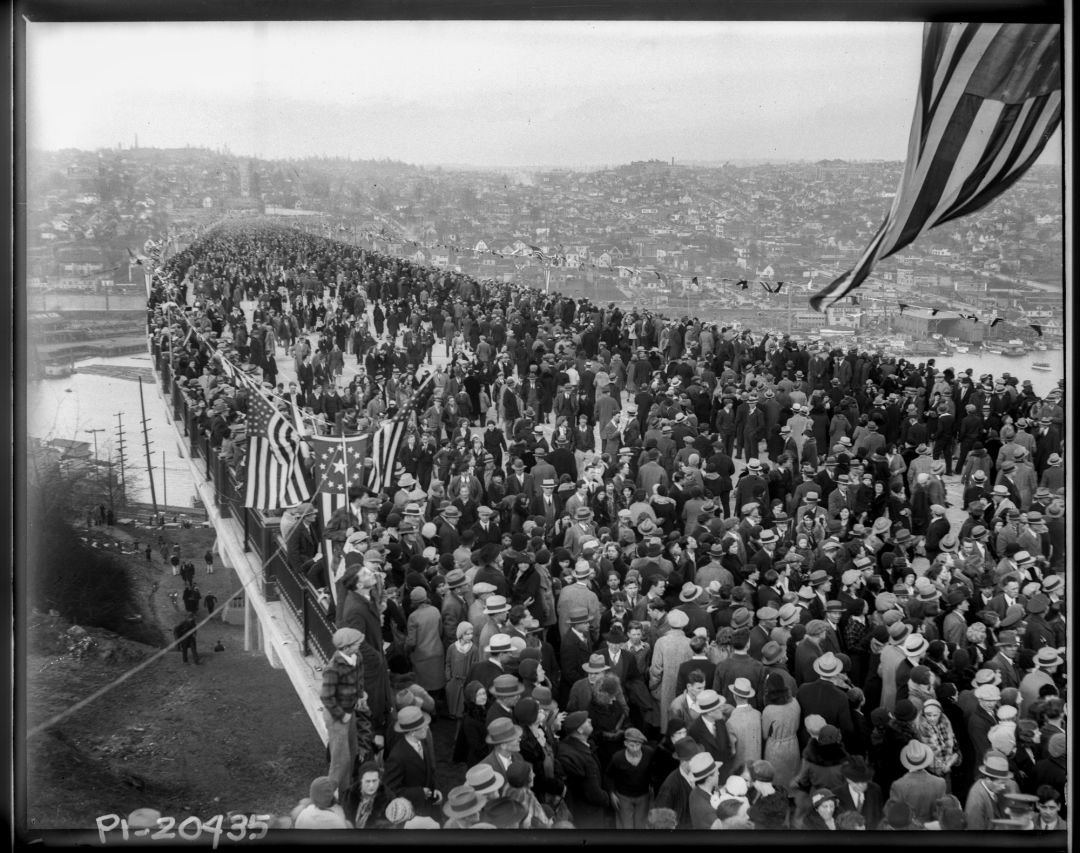
Thousands of spectators—not to mention dignitaries—walk onto the span during the opening day of the George Washington Memorial Bridge. Seattle chose George Washington’s 200th birthday, February 22, 1932, to dedicate the new bridge. Back in Washington, DC, President Herbert Hoover pressed a golden telegraph key that prompted a siren on the bridge, a 21-gun salute in the water below, and a cutting of a special ribbon made of Douglas fir.
Image: Courtesy MOHAI
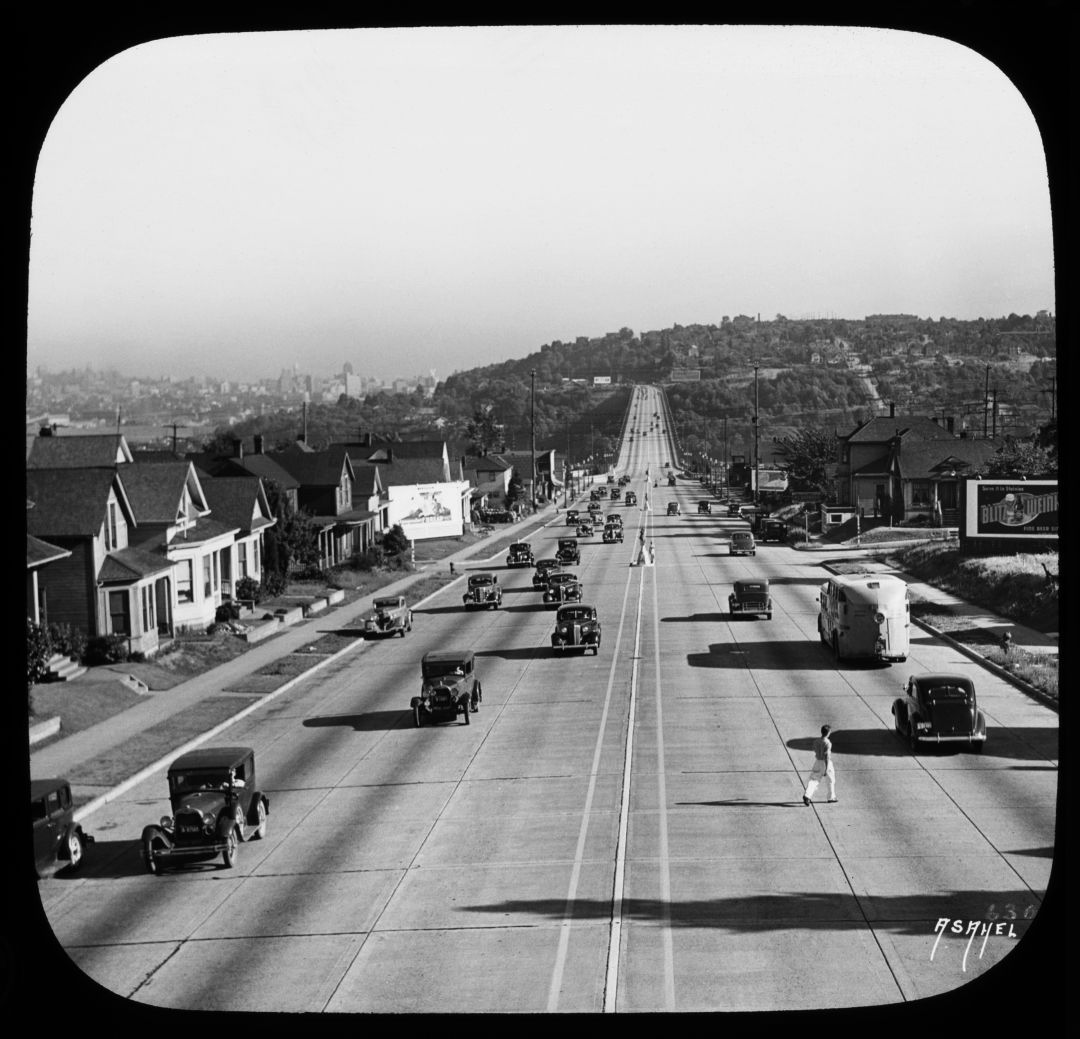
A far more residential Aurora Avenue, circa 1937. This photo was taken from about North 40th Street looking south across the bridge. Downtown Seattle is in the distance to the left.
Image: Coutesy MOHAI

Traffic safety concerns plagued the highway even in its earlier days. Here, members of the Seattle Junior Chamber of Commerce (today known as the Jaycees) install a safety reminder sign.
Image: Courtesy MOHAI

Throwback oddities along the Aurora Avenue corridor become roadside landmarks for daily commuters. Among them: the Puetz Golf Superstore (and driving range) at 11762 Aurora Avenue North. Brothers Peter and Alvin Puetz opened the driving range in 1947, adding a discount golf store in 1958. In 2008, the city studied this land as a potential site for a new jail. In 2021, the Puget Sound Business Journal reported that the family sold the property to a home builder and it will be redeveloped into townhomes and condos.
Image: Chona Kasinger
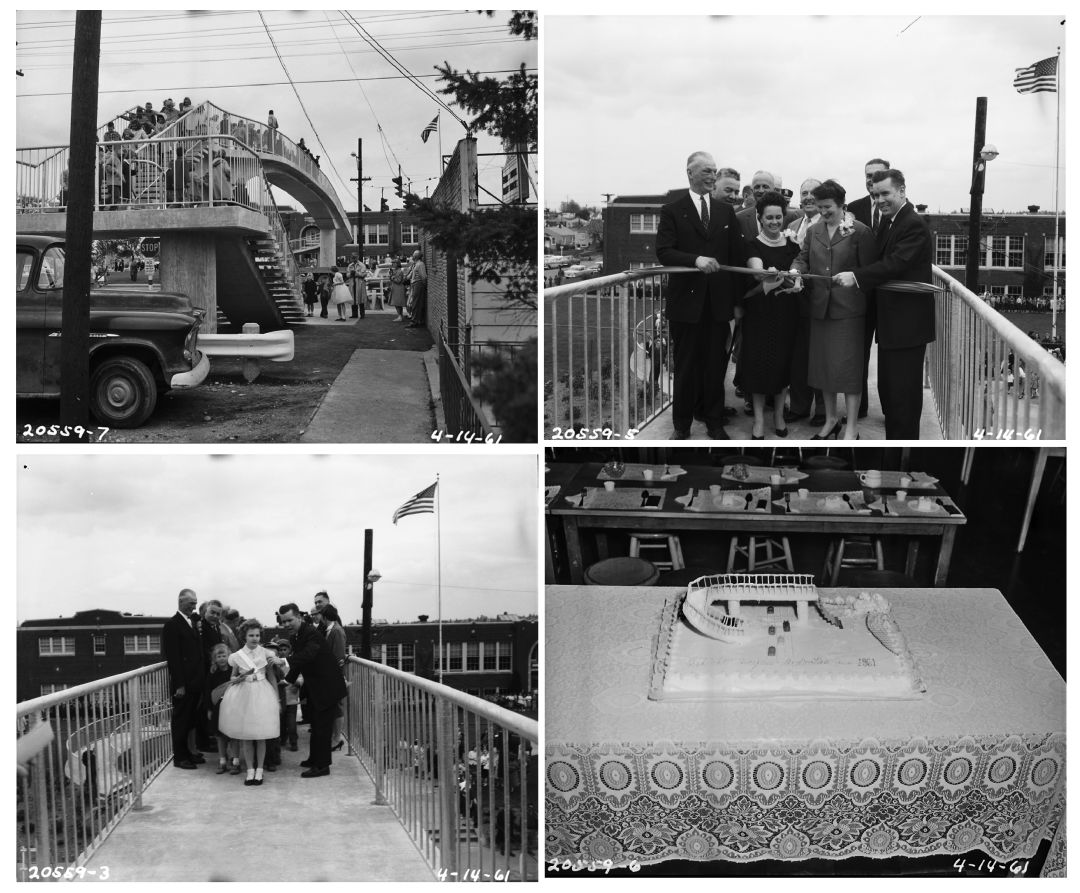
Residents dedicate the pedestrian overpass at North 102nd Street on April 14, 1961.

Today the pedestrian overpass at 102nd and Aurora has colorful public art to soften the 1960s-era concrete design.
Image: Chona Kasinger

The pedestrian bridge at 102nd arrived in the 1960s to help students cross Aurora Avenue safely on their way to Oak Lake Elementary School, which closed in 1982. Today it's a colorful pathway to the Oak Tree Village shopping center, built on the site of the old school.
Image: Chona Kasinger
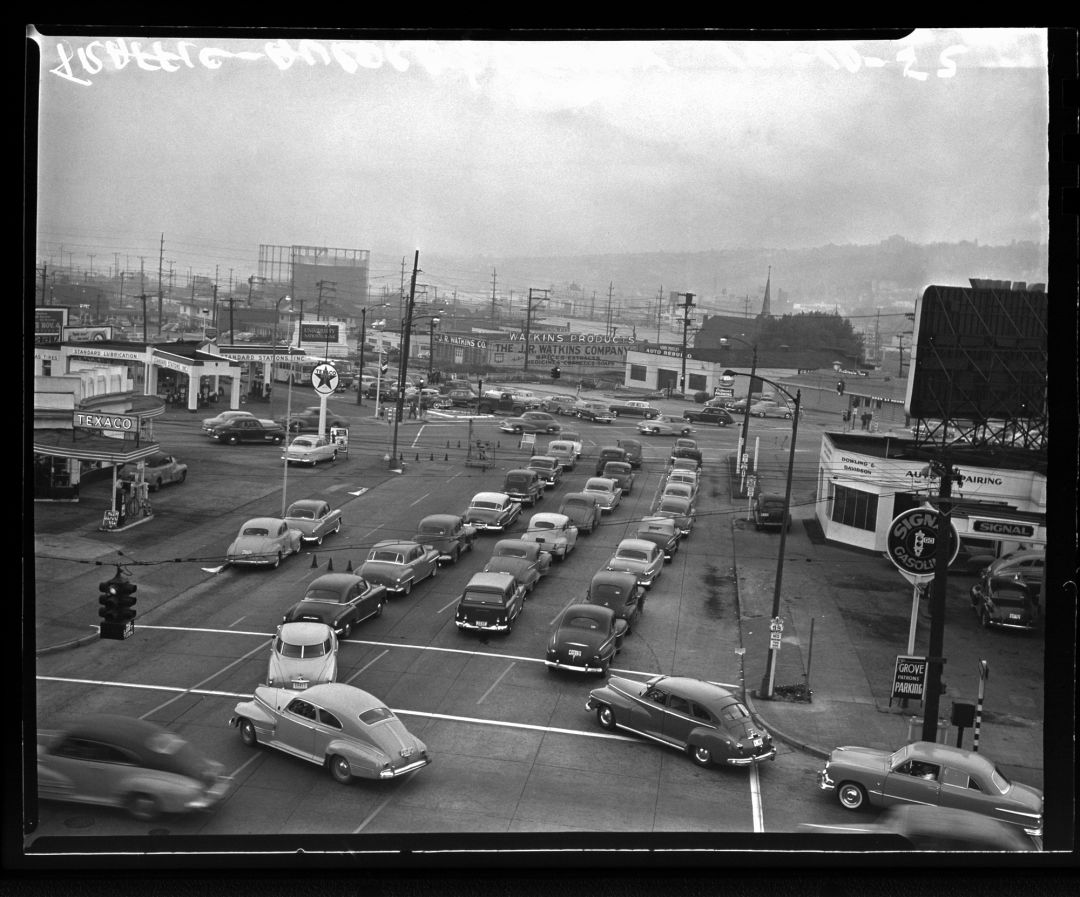
The busy intersection of Aurora Avenue and Denny Way in 1952. The three lanes of traffic are headed east on Denny.
Image: Courtesy MOHAI
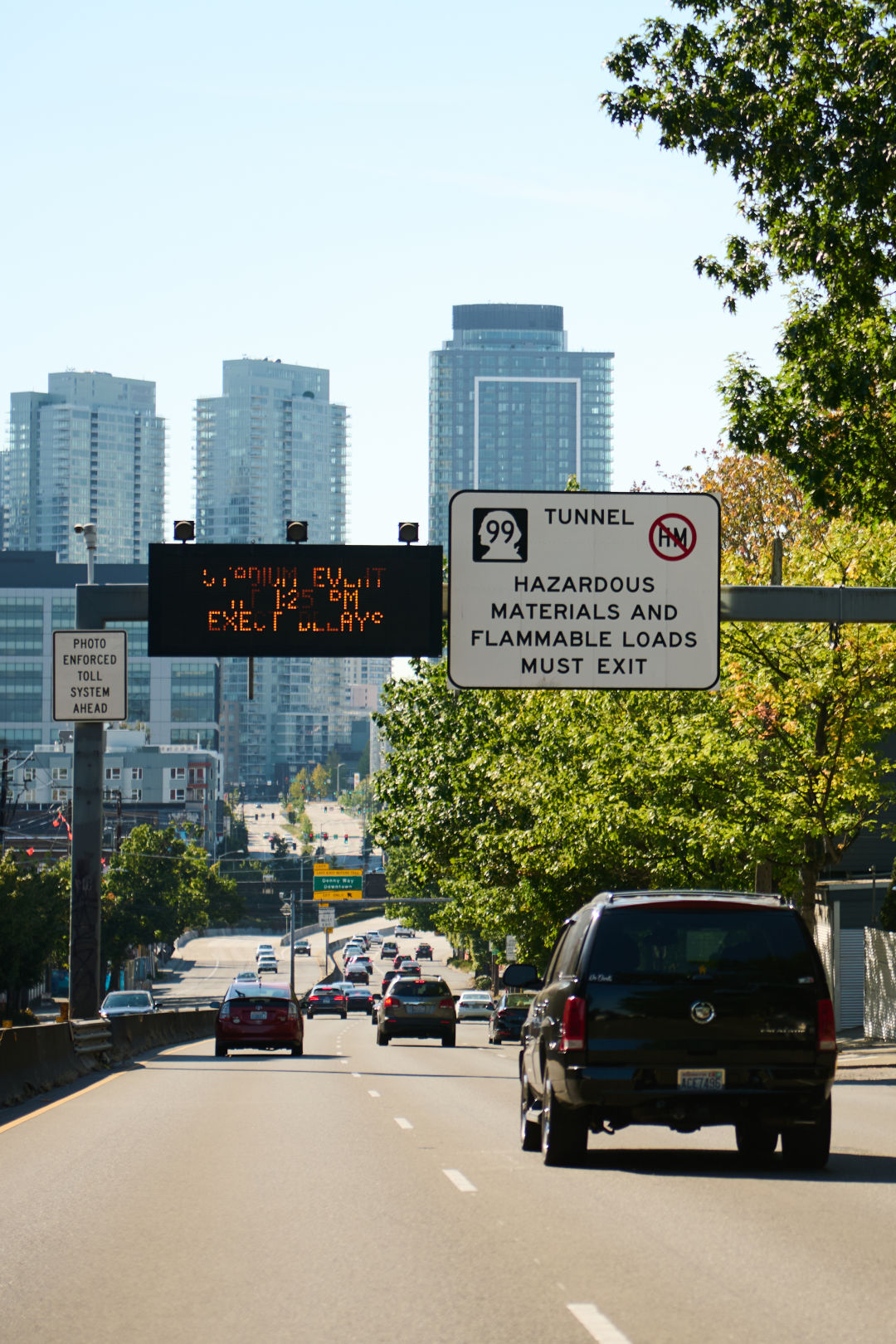
Today, of course, Aurora Avenue leads into the State Route 99 tunnel, which opened in 2019.
Image: Chona Kasinger
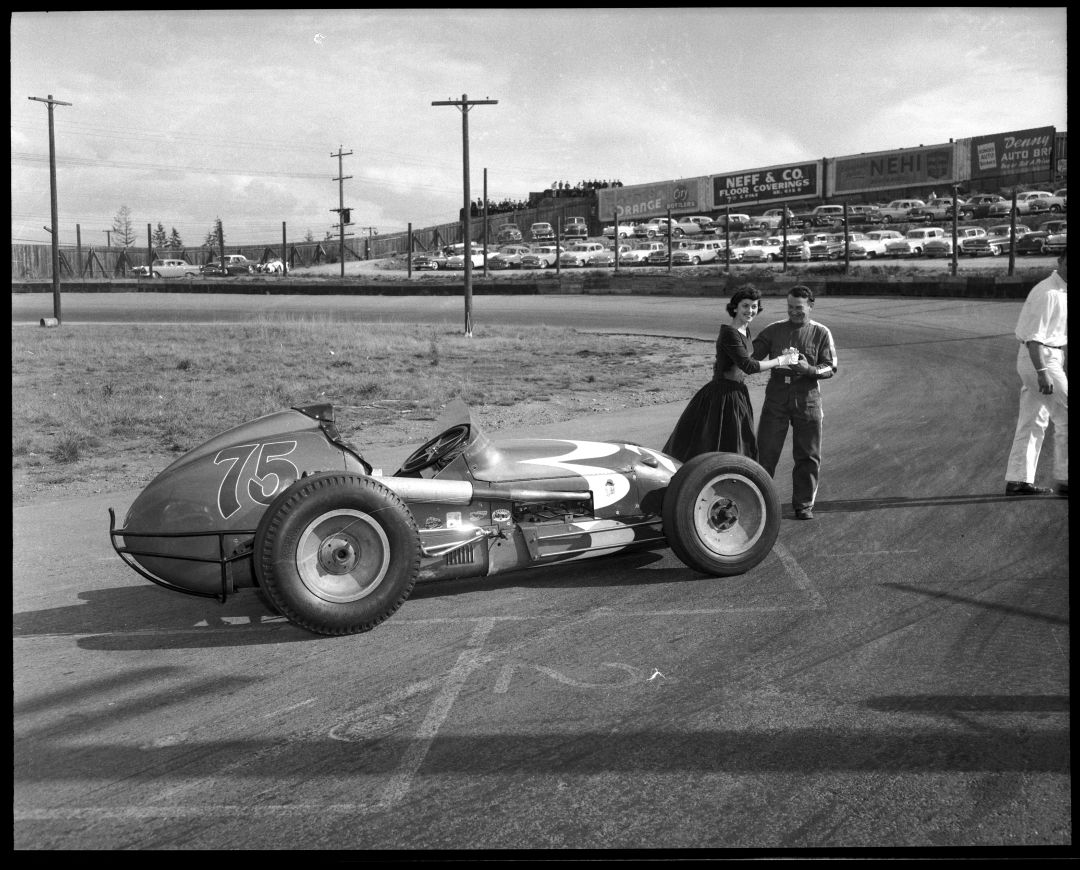
Once upon a time, Aurora Avenue was home to a racetrack and a beloved Seattle amusement park. Playland Amusement Park opened in 1930 and soon added the Aurora Speedway to its portfolio of attractions. In 1932, park owners debuted the oval track and large grandstand, which ran along Aurora between North 130th and 135th Streets. They had to rebuild the grandstand after a fire in 1950. Here, an unidentified woman hands over a trophy in 1958. Playland ultimately closed in 1960, after the city annexed the land.
Image: Courtesy MOHAI

The Aurora Merchants Association commissioned a mural in 2011. Artist David Heck painted a celebration of the highway’s history. You can still see it today on the road’s east side, at North 105th Street.
Image: Chona Kasinger

Car lots and auto dealerships (not to mention repair shops) proliferated on Aurora in the days when many of its blocks were outside city limits. This is the L. Hoyt Motors car lot in August 1983. The sign advertises the week’s special: a Volkswagen “Thing” for $2,850.
Image: Courtesy MOHAI
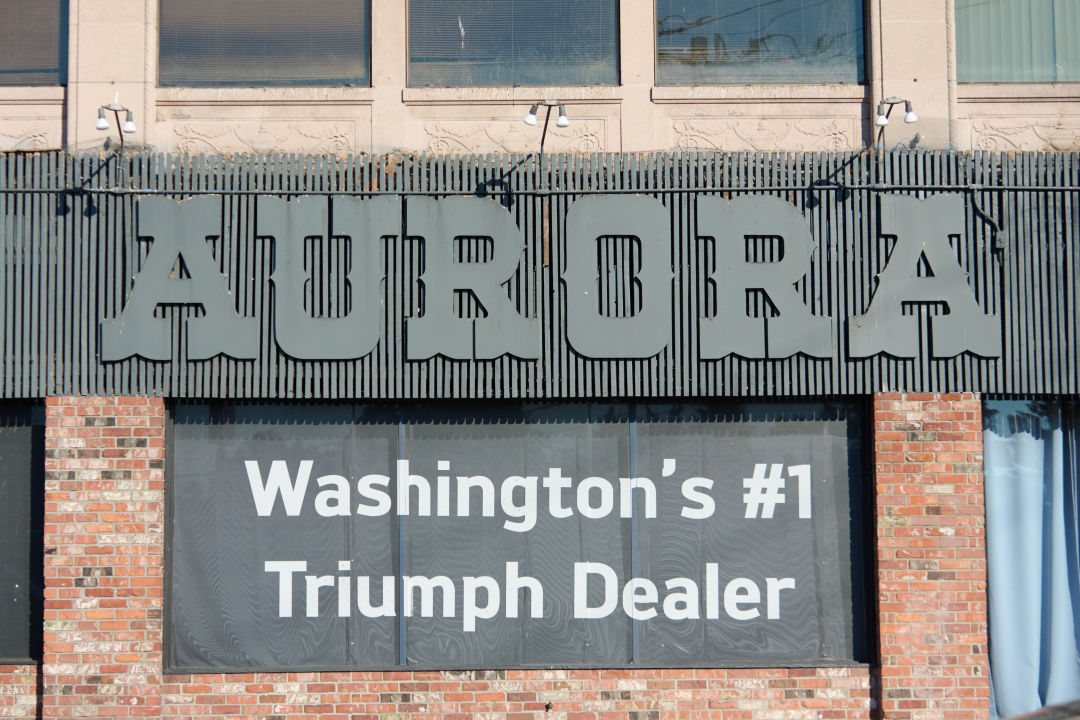
Motorcycle dealer Triumph of Seattle is another visible landmark for Aurora commuters.
Image: Chona Kasinger

Evergreen Auto Court arrived on Aurora in the 1930s, as Americans started embracing long-distance drives on the nation’s new highway system. It sat at 9109 Aurora Avenue, then part of the Pacific Highway, which ran from Canada to Mexico. Guests could stay in individual cabins with kitchenettes and private bathrooms. Amenities included a notary public and wedding chapel. This photo was taken in 1935, when these roadside motels were still novel. And then…
Image: Courtesy MOHAI

By 1976, motels cluttered Aurora Avenue, many a souvenir from the 1962 World’s Fair. On this stretch of the highway, facing north near North 88th Street, you can also see the Aurora elephant, which then stood over the Aurora Flower Shop, and a sign for Sambo’s Restaurant. Back then, the chain restaurant with the racist name and logo had 1,117 locations in 47 states, according to MOHAI. The final location in California did not change its name until 2020.
Image: Courtesy MOHAI
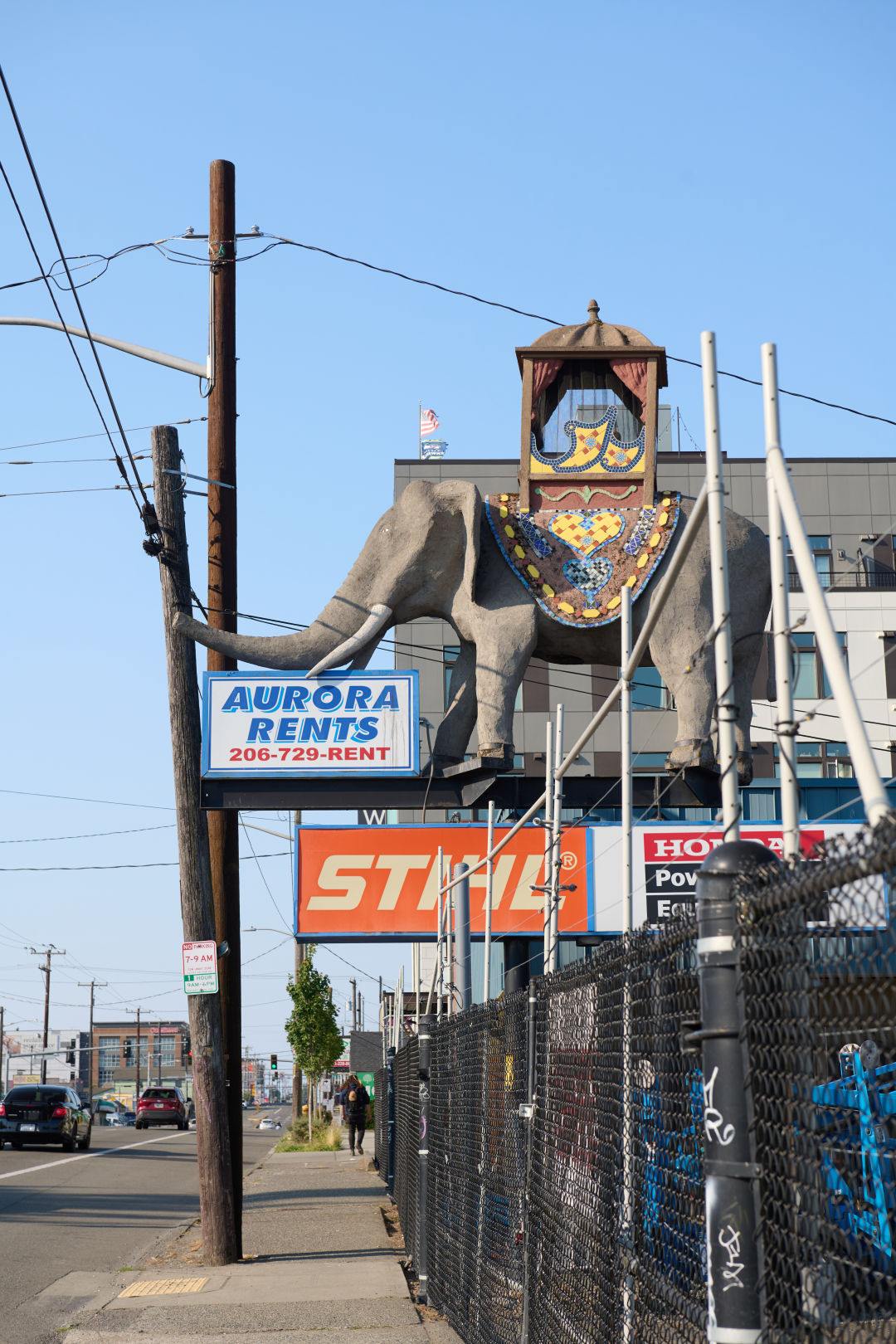
The Aurora elephant today, recently rehabbed and watching over a party equipment and tool rental business.
Image: Chona Kasinger

The original Dag’s Drive-In stand near the intersection of Aurora and Aloha Street served up fries, shakes, and 19-cent “beefy boy” burgers in 1962. According to Vanishing Seattle, local PR guy Bob Ward helped write punny messages for the restaurant’s reader board. One example: “This is Dag’s, Canlis is Ten Bucks North.”
Image: Courtesy MOHAI
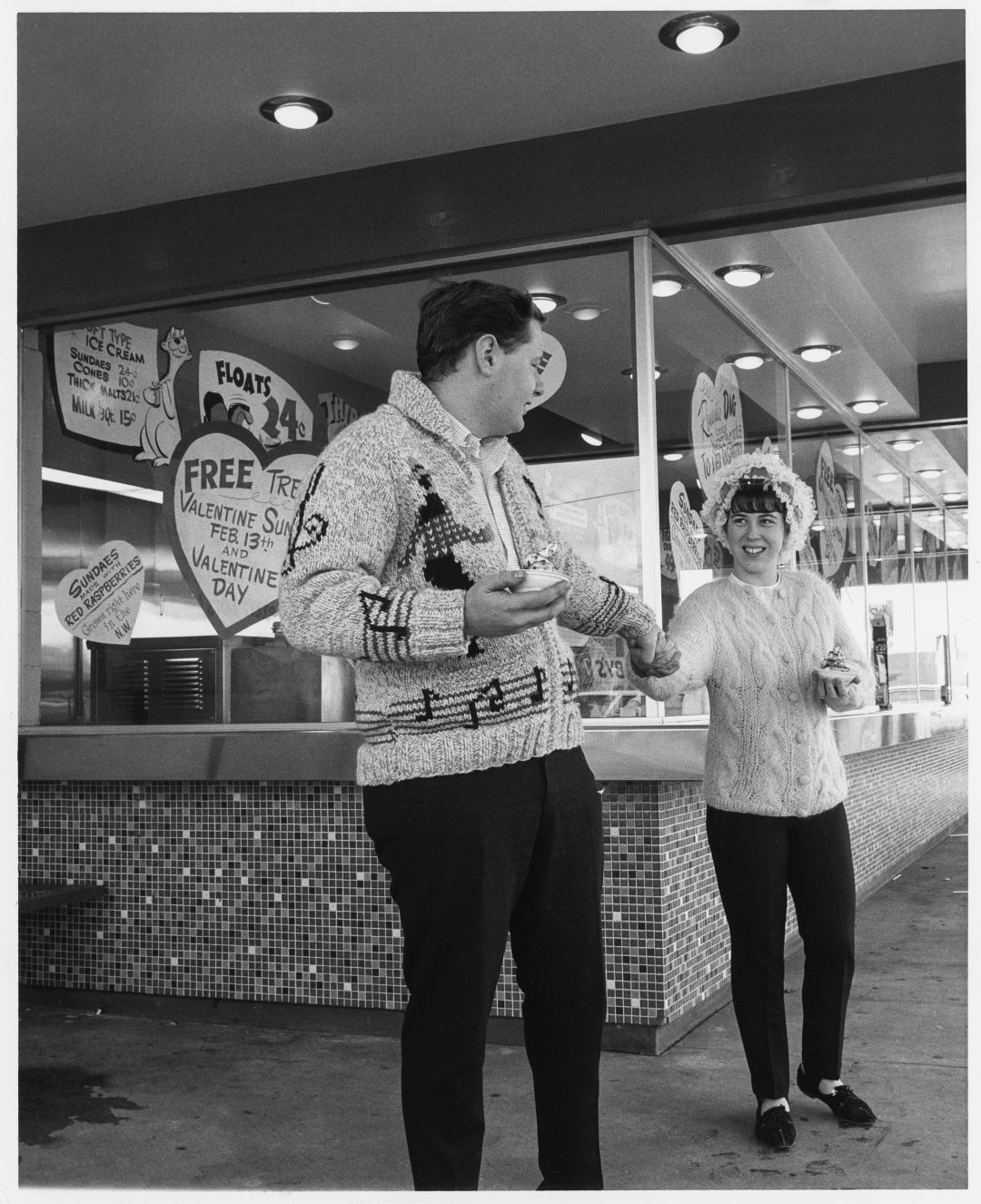
A couple orders ice cream sundaes at Dag’s Drive-In on the 800 block of Aurora in 1962. His sweater game (and her curler game) are strong. Paul Dorpat’s 2011 piece for the Seattle Times has more details about this chain of burger stands, which sounds like Dick’s crossed with Ivar’s, and survived until 1993.
Image: Courtesy MOHAI

As Americans embraced long-distance car trips, places like the Twin T-Ps restaurant opened to feed travelers along the highway, near Green Lake. The exterior, a pair of 25-foot crimped-metal tepees, was designed to catch the attention of automobile occupants. This photo was taken in 1937, the year this location opened. In 1942, a man named Walter Clark bought the place, added his last name, and hired his old army buddy, Col. Harland Sanders, to cook here. According to HistoryLink, he worked on his “Kentucky-fried” chicken recipe in the restaurant’s kitchen before becoming a fast-food legend.
Image: Courtesy MOHAI

The Burgermaster location at 9820 Aurora Avenue continues the tradition of drive-in (rather than drive-through) restaurants popular in midcentury American life.
Image: Chona Kasinger

At the Chuck Wagon Bar-B-Q, carhops wore belts adorned with silver dollars and brought spareribs, ham, beef, and burgers out to customers’ cars. The restaurant at 4902 Aurora Avenue North survived into the 1990s.
Image: Courtesy MOHAI
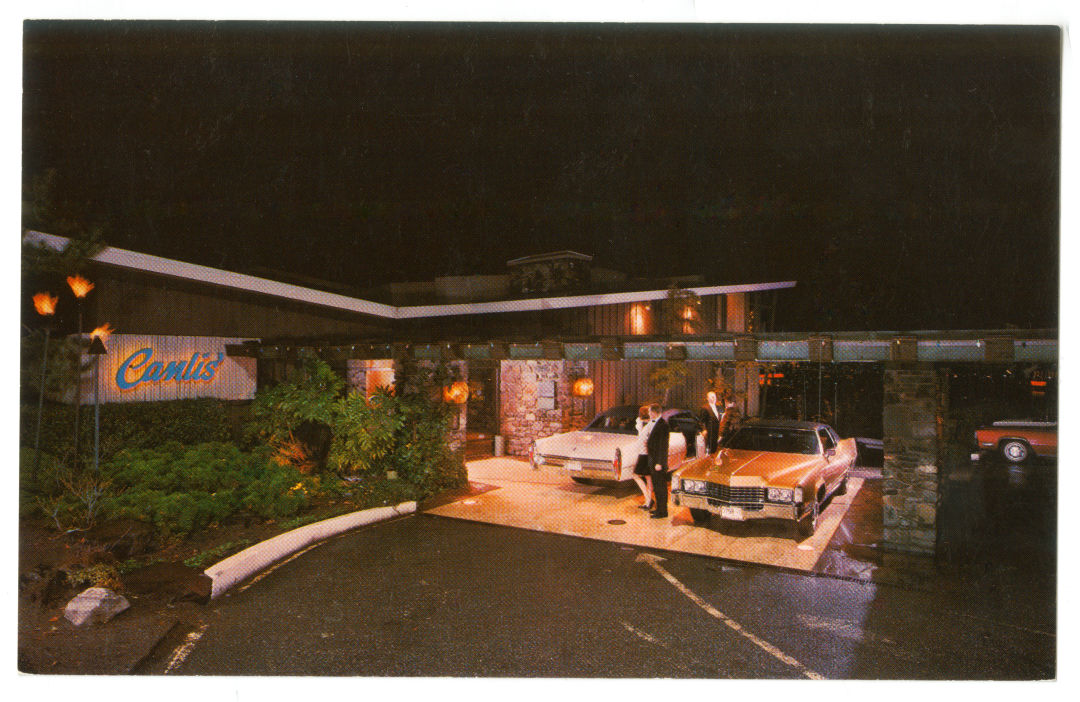
Architect Roland Terry designed the landmark restaurant Canlis, which opened at the foot of the Aurora Bridge in 1950. While the restaurant built its reputation on its food, its service, and its views of Lake Union and Gas Works Park, diners enter the restaurant’s valet from Aurora Avenue. Canlis takes pride in remembering every guest’s car without a tag.
Image: Courtesy MOHAI

Feature
Up and Down Aurora Avenue
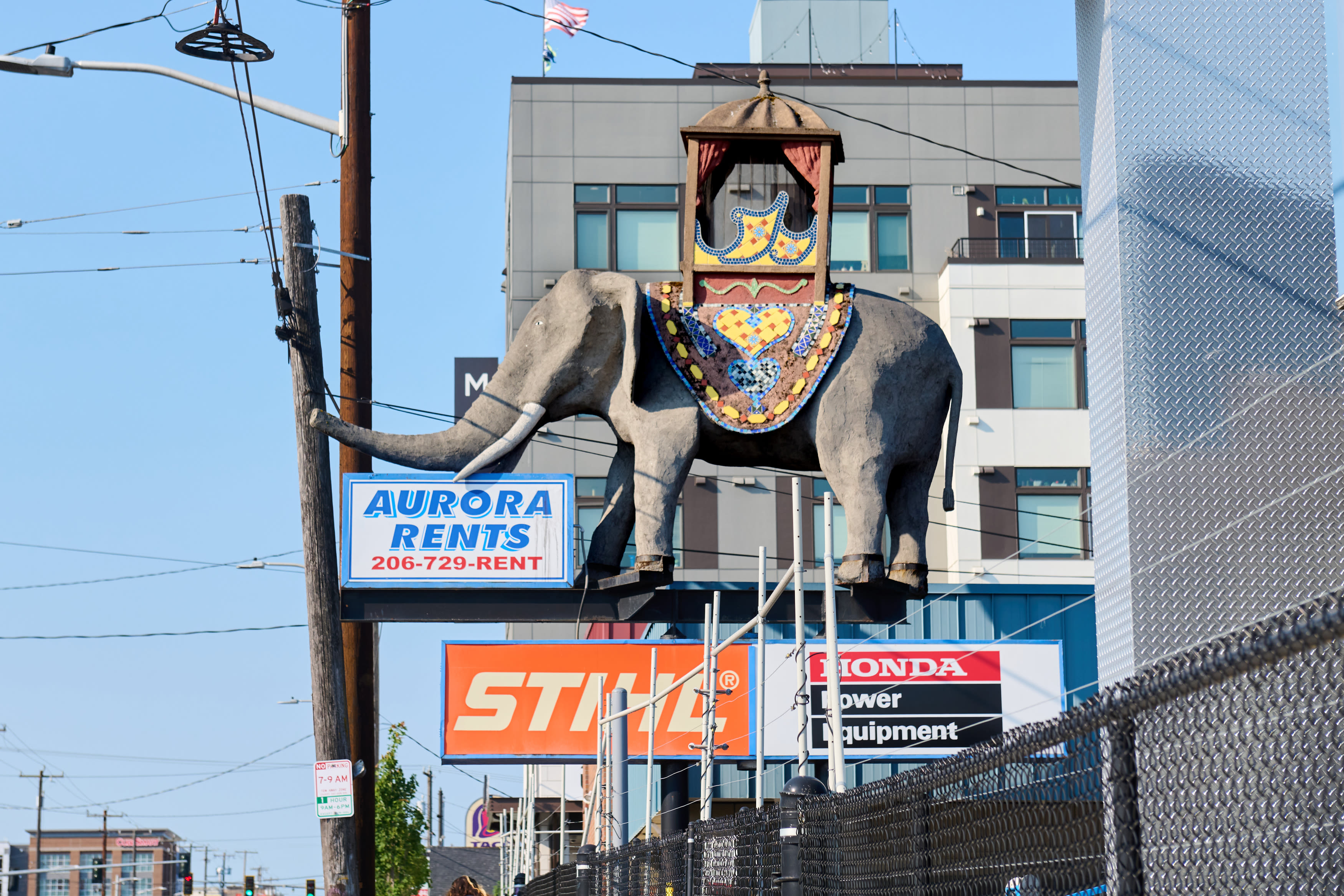
Up and Down Aurora
How an Immigrant Craftsman Gave Us the Aurora Elephant

Love and Football
