Everything You Need to Know About Marmots
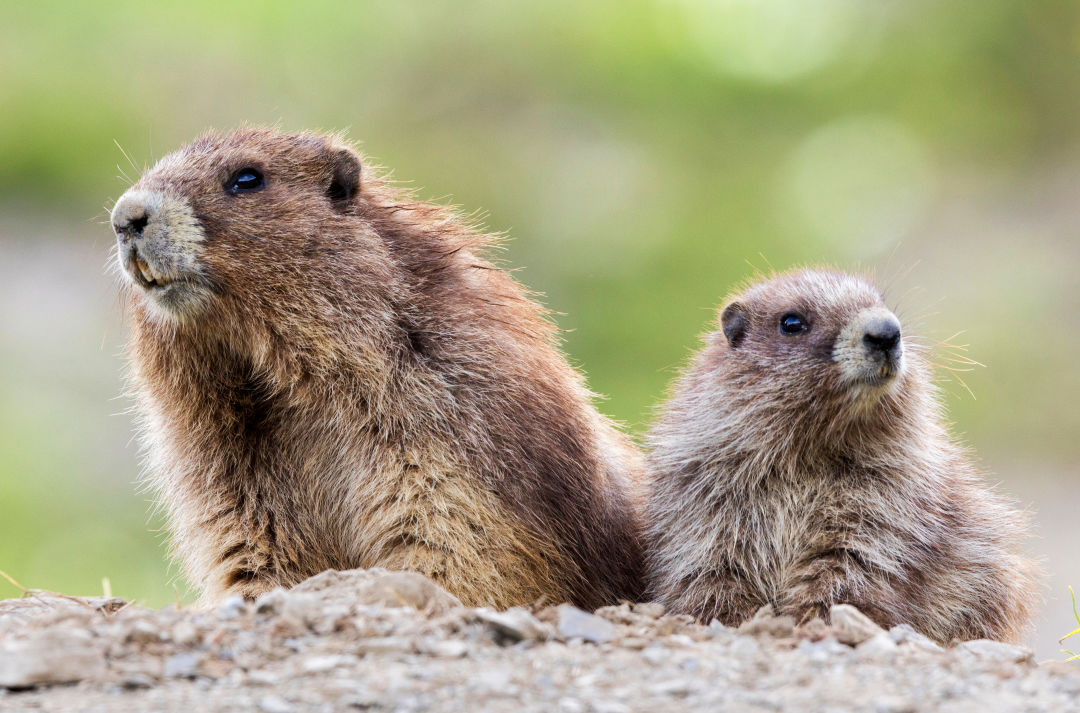
Go ahead and envy the Washington marmot. The tubby, housecat-size rodents live in some of the prettiest parts of the state—alpine meadows, waterfall overlooks, urban parks—and they sleep for half the year. While on the East Coast the groundhog (the marmot’s close cousin) is burdened with the responsibility of playing meteorologist every February, Washington’s marmots are fuzzy, whistling free spirits.
Looking for hikes where the marmots hang out? Check out our list of the best marmot trails and parks in Washington.
Olympic-Size Problem
In 2008, scientists noted the decline of Olympic marmots, hypothesizing that increased predation from coyotes was shrinking their numbers. In 2024 the nonprofit Center for Biological Diversity petitioned to protect them under the Endangered Species Act; in 2025, the center sued the Trump administration for failing to act on that request. The CBD estimates fewer than 4,000 Olympic marmots remain.

Olympic
|
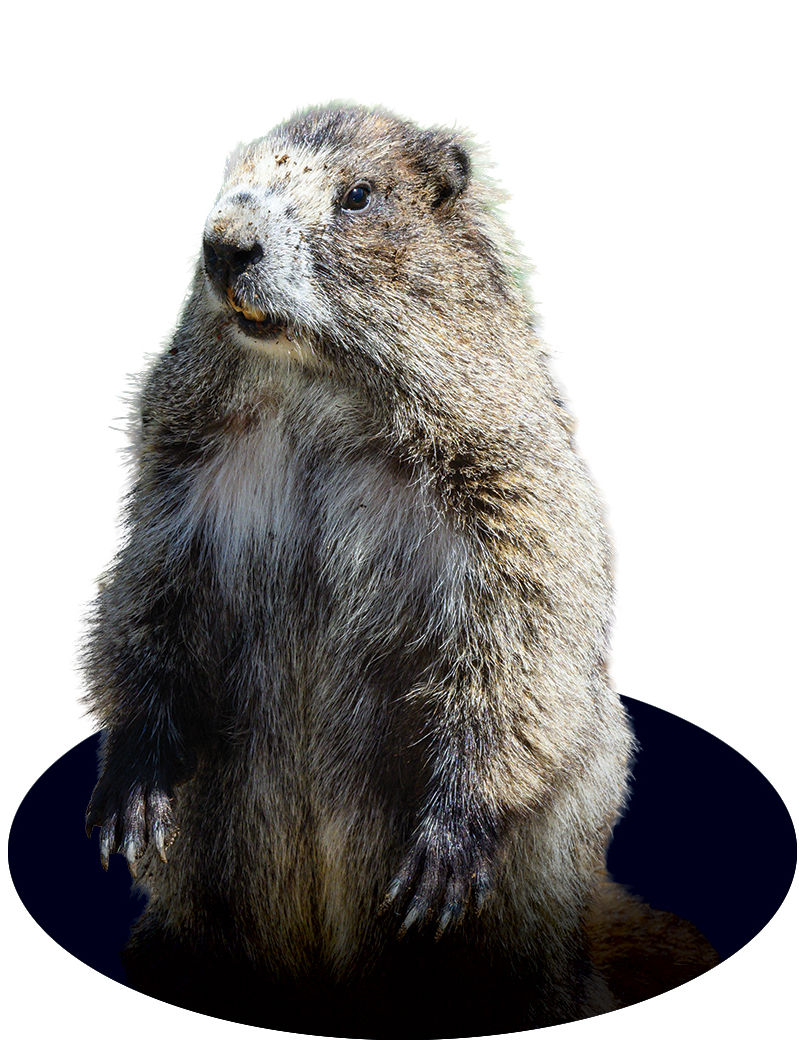
Hoary
|

Yellow-Bellied Marmot |
|
Marmota olympus |
Marmota caligata |
Marmota flaviventris |
|
These brown rodents are endemic to Washington, meaning they’re naturally found only here—in the Olympic Mountain meadows and talus slopes, specifically. They reproduce less often than most other marmots. |
Named for the white frosted effect on their coats and living in the high reaches of the Cascade alpine. Chunky and up to 20 pounds each, they’re also found in Alaska and the Yukon. |
Slightly shorter than their hoary relatives. The name comes from an actual yellowish belly (not a propensity for cowardice). They live at lower elevations and on the plains. |
Glossary
- Burrow: The hole dug by marmots to live in, which can be as much as deep as seven meters in the Himalayas.
- Hibernation: The period of up to eight months from fall to early spring in which the animals go without eating or drinking, living off accumulated body fat. The room in the burrow where the whole family gathers for the big sleep is called the hibernaculum.
- Whistle Pig: A nickname for marmots thanks to their signature shriek used to warn each other about predators; it’s what gave Whistler, BC, its name.
- Groundhog or Woodchuck: The animal known in scientific circles as Marmota monax, making it a cousin to our mountain furballs. Some are found in Northern Washington.
- Bubonic Plague: Disease (also known in the Middle Ages as the Black Death) spread by marmots as recently as 2020 in Mongolia.
< 30
The remaining population of Vancouver Island marmots in 2003. To ensure the unique species Marmota vancouverensis didn’t die out, the Marmot Recovery Foundation captured and bred them before releasing them back into the wild. The successful program has boosted their numbers to 427 individuals last winter.

Image: Annisa Yuna/shutterstock.com
Predators
Though adults are bigger than a house cat, marmots can be eaten by golden eagles and other raptors. Other dangers include wolves, coyotes, cougars, and foxes, plus bears and, in Eurasia, snow leopards.
74 percent
The amount by which hoary marmot populations in the North Cascades dropped from 2007 to 2016, according to a recent study. Researchers suspect the declining snowpack has disturbed the balance of predators and prey.

Attractive Nuisance
In 2009, an Associated Press article noted that a marmot had wandered into a Prosser restaurant and made itself at home, evidence of a larger marmot problem in the Yakima Valley. The local government had paid thousands to thin the local population in the 2000s.
In Olympic National Park, marmots have been known to crawl into the undercarriage of cars and hide, so park staff recommend popping the hood while parked to make it less appealing as a hiding space. In 2025, the park’s wildlife biologist had to travel to Port Angeles to retrieve a marmot that had ridden the Hurricane Ridge Shuttle bus from the alpine visitor area down into town.

Image: Abeille12/shutterstock.com
Like early humans, marmots crossed the Bering Land Bridge between Alaska and Russia when it existed tens of thousands of years ago. But unlike humans, marmots migrated the opposite direction—from the New World to the Old.
Let’s Hear It for the Marmoteers
Since 2010, volunteers have staffed a citizen science program to count populations in Olympic National Park. Marmoteers head into remote areas for up to eight days in summer, looking for the remaining Olympic marmots or signs of their habitation, like scat or freshly dug burrows. The Marmot Monitoring program is so popular that in 2026 it received almost 200 applications for 100 positions. Next year’s applications are planned to open on, naturally, Groundhog Day.
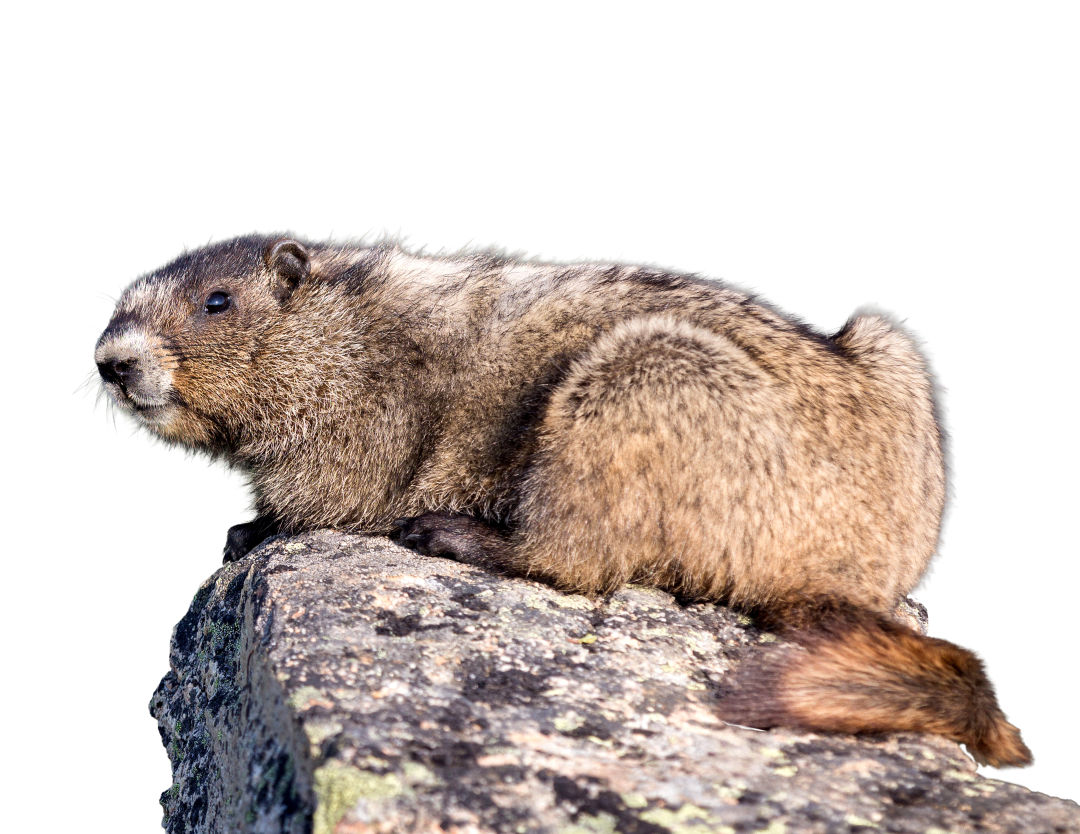
Are they really sunbathing?
Though it’s common to see the animals sprawled on boulders in alpine environments, they are not catching rays; they’re actually cooling their bellies on the rocks. “They’re like these little fat balls that can’t sweat,” says Patti Happe, who helps run the Olympic National Park Marmot Monitoring project. “So they don’t like to get hot.”