Washington’s Wine Tasting Rooms Have a New Flavor
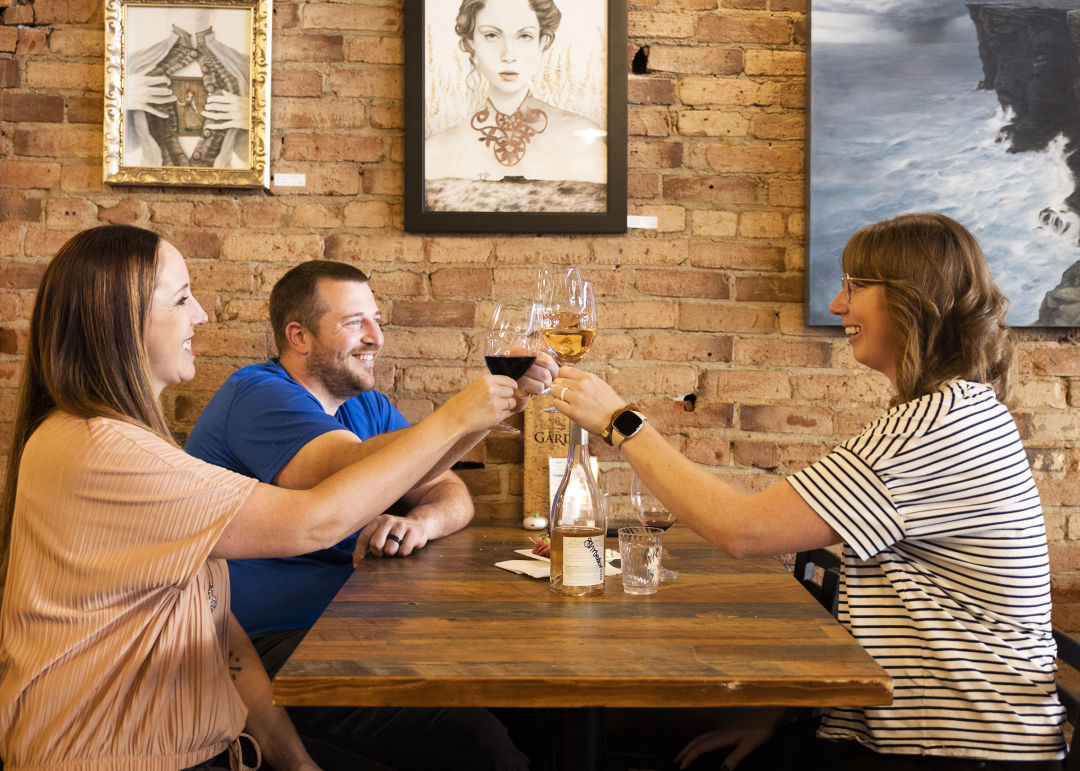
The art is striking. The wall is exposed brick. The pours are top-notch. But this Gård Vintners tasting room isn’t in wine country. It sits in downtown Ellensburg on the same block as a tavern, a barber, and a tuxedo shop—and it’s an important part of the new model for wine success in Washington.
At one time, drinkers found the best bottles at a high-end wine store or their local fine-dining restaurant. More rarely, at a winery itself. But how and where local wineries sell their products has fundamentally changed in recent years. Today, selling wine direct to consumer—DTC in industry parlance—is king, and not just at singular tasting rooms either. “If the pandemic showed us anything, it’s that DTC is extremely important,” says Matías Kúsulas, head winemaker at Gård Vintners.
Indeed, wine club and tasting room sales were a lifeline to local wineries during the pandemic, partly because so many local restaurants temporarily or permanently closed. But selling wine at retail and at restaurants, which was never easy, had already become significantly harder.
By law, wineries must sell to distributors, which then sell to retailers and restaurateurs. However, a wave of consolidation in the retail and distributor industries left mom-and-pop producers with far fewer places to peddle their wine. Washington’s 2011 liquor privatization initiative also gave big-box wineries and retailers an upper hand on the retail shelf over smaller businesses.
Enter DTC sales, where wineries don’t need to deal with distributors or retailers unless they want to. A 2017 Washington state law turbocharged the change, increasing the permitted number of off-site tasting rooms from two additional locations for each business to four. Winery satellites started springing up all over, including along the Interstate 5 corridor near Seattle. In other words, not just primarily in Walla Walla and Woodinville.
“We wanted to go into a market that is super, super dry with wine,” says Structure Cellars co-owner and winemaker Brian Grasso, who opened a tasting room in Tacoma in 2023. Edmonds has seen some tasting room love: Shoreline’s Virtue Cellars was one of the wineries to open in the town, pouring glasses and flights along with Rainier beer and San Pellegrino.
“We do the quintessential tasting room thing, but we have a wine bar component, too,” says Virtue co-owner Jake Edens.
The latter is critical at most satellite tasting rooms. Instead of just tastings, they serve wine by the glass and bottle, looking for repeat business and wine club signups. The experience is now as important as the wine, with food pairings, music, game nights, and more.
The I-90 corridor is the latest frontier. The Tri-Cities’ Upsidedown, which has a tasting room in Oregon’s Hood River, opened a satellite in a tiny town just east of the Cascades that’s light on wineries. “We wanted to do something closer to the west side of the state, and I think there’s an opportunity in Cle Elum,” says owner and winemaker Seth Kitzke. The tasting room features a leather couch, a long bar with stools, and, again, some exposed brick. It’s a space that invites drinkers to stay awhile, not stand through a speedy tasting.
Gård, which has satellites in Woodinville, Walla Walla, and Royal City, also has an outpost on the I-90 corridor, in Ellensburg. “It’s the highest-revenue tasting room that Gård has,” says Kúsulas. He also has a tasting room for his own brands, Valo and Massalto, in the town.
In what is typically a slow-moving industry, these changes have been swift and impactful; wine lovers have quickly found themselves with a lot more options. What it means long-term for Washington wineries and wine is more murky.
As labor-intensive as the tasting room model is, the three-legged stool of direct, retail, and restaurant sales has given wineries a diversity of outlets and a greater market presence. Selling exclusively via DTC makes wineries more independent but more vulnerable to small shifts in the economy. Thus far, Washington’s smaller wineries have reaped the benefits of the new model, but coming years could reveal new challenges. In the meantime, the state’s wine tasting deserts have become a little less dry.