Adult Summer Camps Let Grown-Ups Have Fun, Too

Image: Courtesy Fela Raymond/TONL
Jodi-Ann Burey never went to summer camp as a kid. In fact, she describes herself as so indoor-oriented that “I was the kid who’d be in the house, yelling outside, ‘Can you pass me a burger?’” when her family held a barbecue. But last summer Burey, a Seattle author and speaker, found herself at the one-day AfroCamp in Arlington, surrounded by dozens other adults dressed in colored T-shirts, riding a big swing together and then doing outdoor yoga while deer wandered across the meadow.
The world of fire circles and silly songs, canoe races and craft projects no longer belongs solely to the grade school set. Adult summer camps have proliferated in recent decades, delivering the kind of scheduled fun someone with a 401(k) and credit score can’t usually access. “I wanted to spend a day not on my phone,” says Burey of her stint at the camp for the Black community. “I wanted to have literally a whole day planned for me.” At AfroCamp, that meant dodgeball and a camp Olympics.

Image: Courtesy Fela Raymond/TONL
Tech product marketing manager Rachelle Olden launched AfroCamp in 2021, inspired by an article she read about adult Jewish day camps. Besides looking for ways grown-ups could capture the playfulness of youth, Olden craved a place to build Black community outdoors, “a space that wasn’t under scrutiny.” This summer she’ll expand into an overnight experience.
A few years before that, video producer Brian Oh found himself yearning for “a sense of community that didn’t revolve around drinking and partying and going out.” He launched Camp Rahh, which he held at various retreat facilities before settling on Skagit County’s Samish Island. Now almost a decade in, he still sees demand for social connection IRL; he invites campers to lock their phones up in little hazmat bags to avoid temptation.
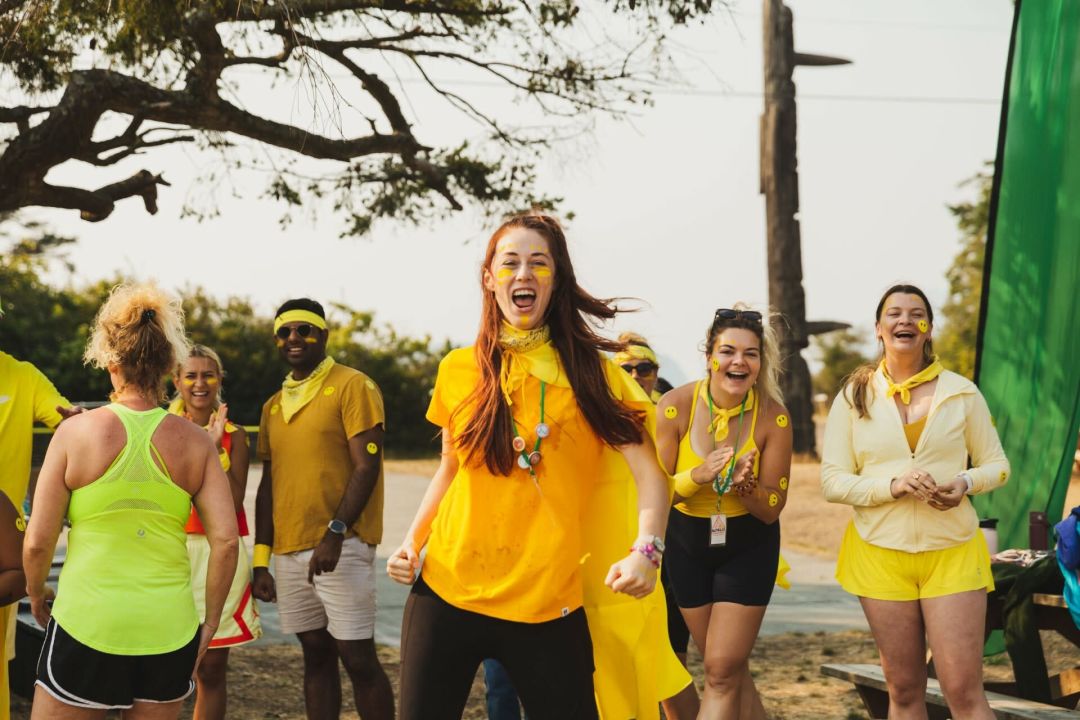
Both camps are single annual events for busy adults at existing camp facilities. In some ways they echo the usual kid version, with campfires and songs and arts and crafts. But then Rahh might also have a Lululemon-sponsored yoga instructor, and AfroCamp boasts a tea-blending session. Adults come for catered meals, not bug juice.
One common component of adult summer camp? No networking. Both Camp Rahh and AfroCamp discourage talking about one’s profession. Olson asks her campers to share “not where you work, but what makes you glow” to spur meaningful conversation. At Rahh, it’s one of the three big rules—no drugs, no alcohol, and try to talk about something other than your job. “A lot of people come for just that alone,” says Oh.
Though most grown-ups don’t need to fill a summer vacation–size gap in their schedule, camp opportunities are only growing. Camp Fire Central Puget Sound, a 112-year-old local organization, added spring and fall adult weekends at its Camp Sealth campus on Vashon Island, a favorite with alumni who went as kids. “We pull on the nostalgia factor,” says director Carrie Lawson. The spring programming is heavy on crafting but this year included a Dungeons and Dragons workshop.
Burey expected a little bit of awkwardness when she showed up at AfroCamp; she didn’t know any other campers well and has a physical disability due to an incomplete spinal cord injury. But she saw how staff intentionally grouped strangers together and encouraged new connection; Burey was so busy with a dance competition and step routine that she barely noticed the rain coming down. She plans to come back to AfroCamp this year and introduce friends to an experience she calls her reentry into outdoor spaces. “I was just like, oh my god, this is the best.”


