
The 25 Greatest Seattle Athletes
No disrespect to the mid-’90s (seriously, just read on), but we’re in the middle of the greatest sports era Seattle has ever seen. The city is loaded with superb women’s and men’s pro teams. The Seahawks just won the Super Bowl. The World Cup is coming. But any Seattle sports fan can also tell you that the experience of loving the game here has always come with a lot of heartbreak. The good news? It’s also always come with a lovable cast of characters.
To celebrate those characters and this great sports year, the Seattle Met editorial staff came together with a couple of sports writers who know ball and know Seattle: Christian Caple and Brittney Bush Bollay. Then we spent hours hashing out our list of the 25 greatest Seattle athletes.
A note about methodology: This list is about more than just naming the players who accumulated the best stats. You get bonus points for vibes. You get bonus points for appearing in memorable local commercials. You get bonus points for sticking around after your playing days are over. There’s a difference between greatest athletes and greatest Seattle athletes. But if you’re a Seattle fan, you already understand that.

Image: Tathoms/shutterstock.com
25. Fred Couples
With an impossibly smooth swing, Couples, a popular O’Dea graduate who grew up playing at Jefferson Park, was the world no. 1–ranked golfer when he won the Masters in 1992. He won 14 other PGA Tour events, has won another 14 since joining the Champions Tour in 2010, and was inducted into the World Golf Hall of Fame in 2013.—CC

Image: PA Images/Alamy Stock
24. Debbie Armstrong
The namesake of Alpental’s Armstrong Express and Debbie’s Gold, the Seattle-raised ski racer won Olympic gold in 1984 in the giant slalom. After 18 top-10 finishes in five years on the World Cup circuit, she retired and has taught skiing since, remaining, as the cover of Sports Illustrated called her, “Queen of the Mountain.”—NT

Image: Ringo Chiu/shutterstock.com
23. Jordan Morris
It took vigorous debate to narrow our Sounders field down to one, but in the end the honor fell to Morris, the soccer team’s all-time leading goal scorer and a hometown kid. Unpretentious, slightly awkward, loyal, and reliable, it’s hard to deny that Morris is Seattle to a T.—BBB

22. Félix Hernández
A charismatic prodigy who tore through opposing lineups with gleeful efficiency, King Félix was the greatest Mariners pitcher of all time. His starts gave us a reason to tune in during the club’s long playoff drought. He threw a perfect game in 2012 and was nearly perfect most of the time through 15 seasons. Too bad the rest of his team wasn’t.—EN
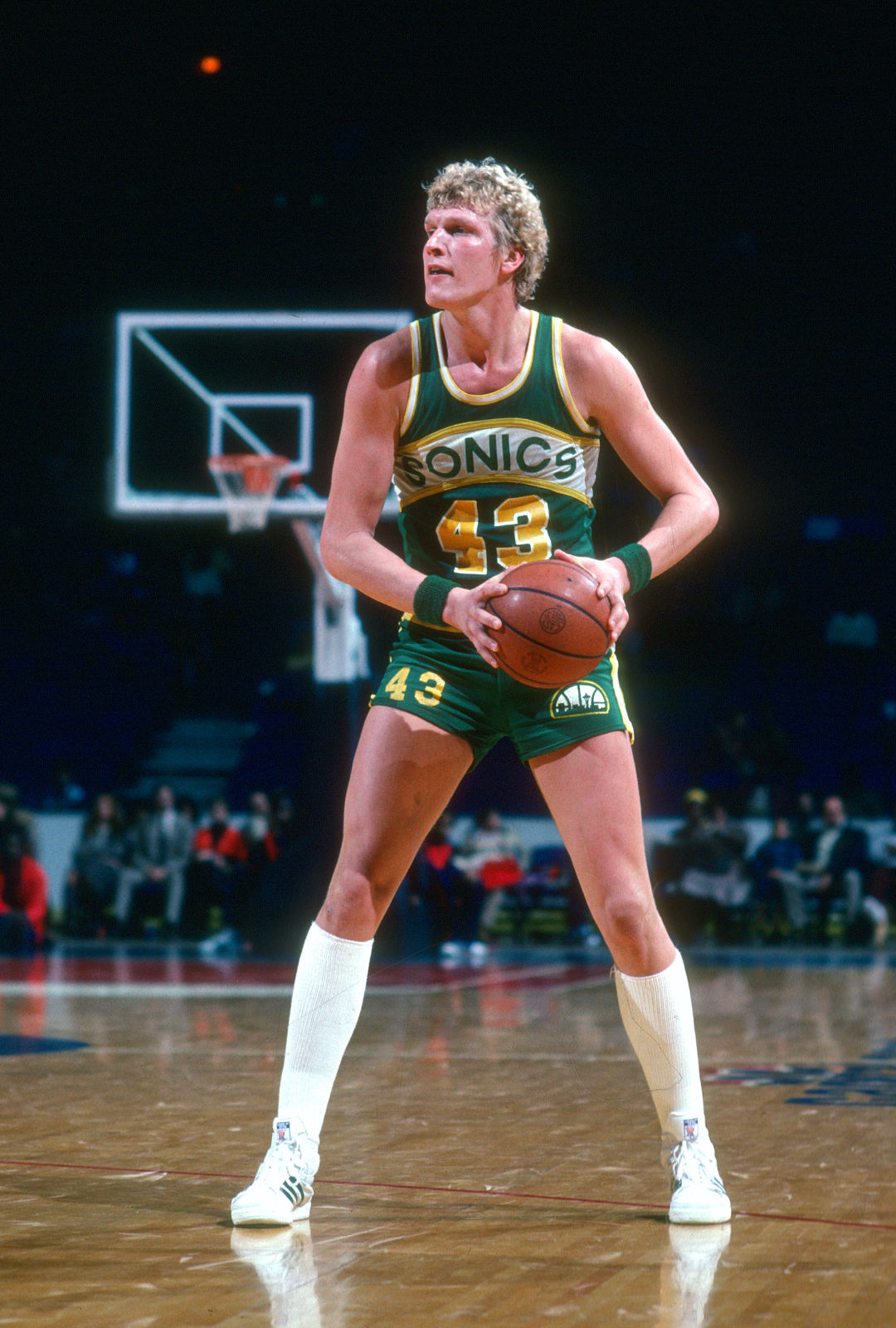
Image: Focus on Sport/Getty Images
21. Jack Sikma
The first of his seven NBA All-Star seasons came in 1978–79, when the 6-foot-11 center averaged 15.6 points and 12.4 rebounds per game to help the Sonics to their only championship. His no. 43 jersey was one of six the Sonics retired before they relocated.—CC

Image: AP Photo
20. Danielle Lawrie
No athlete in University of Washington history boasts a résumé quite like Lawrie, a two-time softball national player of the year and the star of the Huskies’ 2009 national championship team. At age 34, she was the winning pitcher for Team Canada in the bronze-medal game at the 2020 Summer Olympics in Tokyo.—CC

19. Joyce Walker
Walker’s full circle basketball career took her from a state title at Garfield High School to Louisiana State University, where she was a two-time All-American, to pro ball in Europe (this was before the WNBA) to a pioneering stint as the third woman to play with the Harlem Globetrotters.
That’s a lot. And it would have been even more if she’d been born in an era when there were more opportunities for women’s players of her caliber. Walker was a natural scorer, with an effortless ability to run the court and get to the hoop. She once held the NCAA record for most field goals.
In the 1990s and 2000s, between stints coaching high school basketball in Seattle—she led Garfield to a state title as a coach in 2005—Walker overcame addictions to drugs and alcohol. These days she’s running ReJoyce Academy, a nonprofit dedicated to helping youth in Seattle on and off the basketball court.—EN

Image: Jamie Squire/Getty Images
18. Marshawn Lynch
On defense, Pete Carroll’s Seahawks had the Legion of Boom. On offense, they had Beast Mode, a fitting nickname for Lynch’s take-no-prisoners running style. The football player topped the 1,200-yard rushing mark in each season from 2011–14, and gave Seahawks fans a forever memory with his “Beast Quake” run in the 2011 playoffs. And though Lynch often dodged reporters, his Skittles-loving, “just ’bout that action, boss” personality spoke plenty loud.—CC

Image: Otto Greule/Getty Images
17. Nate Robinson
Before he became a first-round NBA Draft pick and a three-time slam-dunk champion—standing no taller than 5-foot-9, by the way—Robinson was a local legend for his exploits in three different sports. You might not even know that he set the state record in the 110-meter hurdles as a senior at Rainier Beach High, because he attended UW on a football scholarship and, of course, helped lead its men’s basketball team to the Sweet 16. Teaming with other local stars like Brandon Roy, Will Conroy, and Tre Simmons, Robinson helped usher in a new era of UW hoops success under coach Lorenzo Romar. That he did it as a little guy who rose above the rim, with a playful spirit to match, only endeared him to Seattle fans more.—CC
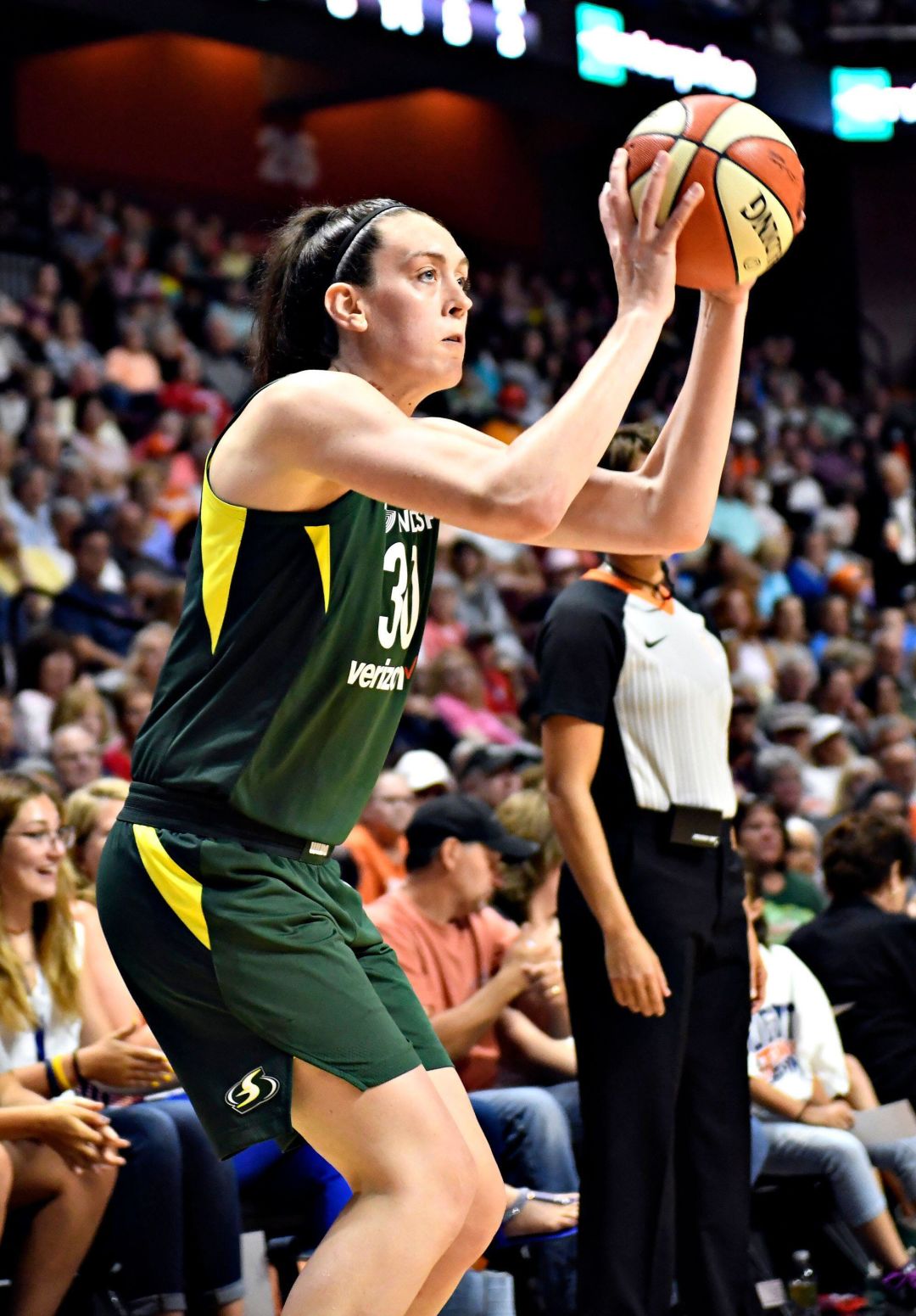
16. Breanna Stewart
All professional women’s athletes are perennial overachievers, but Stewart stands out even in this elite group. Barely 30, the four-time NCAA champ already has three Olympic golds, three WNBA championships, and multiple MVP trophies. Somewhere in there the longtime Storm power forward (now with the New York Liberty) also had time to found her own damn basketball league, Unrivaled.—BBB

Image: Courtesy MOHAI
15. Helene Madison
Would you believe that one of the greatest Olympic swimmers the United States ever produced got her start in the murky waters of…Green Lake? Madison was 2 when her family moved to Seattle, and 6 when they settled into a home a block from the lake. By the time she was a teenager, Madison was casually setting state and then national records, and training at the brand-new Washington Athletic Club.

Image: Sergey Kohl/shutterstock.com
Madison was only 19 when she won three gold medals at the 1932 Olympics in Los Angeles. After the games, she and several other athletes, including future Tarzan Johnny Weissmuller, stayed on in Hollywood to try to make it as actors. She starred in a short film called The Human Fish. The fish flopped, and, unlike for Weissmuller, the movie biz was a bust for her.
Still, Madison returned to Seattle a conquering hero, greeted by what was reportedly the grandest ticker tape parade in the city’s history. They called her the Queen of the Waves. She was hired to give swimming exhibitions and was reportedly even gifted a car by the Washington Athletic Club. But the payments and gifts meant she lost her amateur status and future Olympic eligibility.
After the initial glow of her gold medals faded, Seattle didn’t exactly treat Madison like the queen folks proclaimed her to be. The Seattle Parks Department wouldn’t hire a woman as a swim instructor. Instead, Madison worked the concession stand at Green Lake and eventually managed to open her own school at the Moore Hotel pool, where she would train swimmers, including future silver medalist Nancy Ramey. Madison died of throat cancer in 1970, still living just a short walk from Green Lake. The public pool at Haller Lake is named in her honor.—EN

Image: Nick Ut/AP Images
14. Warren Moon
The first Black quarterback elected into the Pro Football Hall of Fame, Moon was a University of Washington pioneer, too, leading the Huskies to their first Rose Bowl win of the Don James era in the 1977 season—after the home fans had booed the quarterback earlier on. Moon’s 23-season pro career in the NFL and CFL brought him back to Seattle for the 1997 and 1998 seasons; he passed for 3,678 yards for the Seahawks in 1997 and made the Pro Bowl for the ninth and final time. Between the NFL and CFL, Moon passed for more than 70,000 yards and 435 touchdowns, and was elected into the Hall of Fame in 2006. He won the CFL’s Grey Cup five times, and was the NFL’s Offensive Player of the Year in 1990.—CC

13. Steve Largent
A superstar during the Seahawks’ fledgling years, Largent twice led the NFL in receiving and had eight 1,000-yard seasons in a 14-year career spent entirely in Seattle. His production and longevity put him atop the Seahawks’ career receiving list by 4,495 yards and 39 touchdowns over second place (Tyler Lockett).—CC

12. Lauren Jackson
Jackson played 12 years for the Seattle Storm, and that wasn’t even half of her professional basketball career. She has nine national basketball championships and five Olympic medals, and was the first Storm player to have a number retired. The Australian is in at least three basketball halls of fame. That’s three more than you.—BBB

Image: Jim Bryant/Alamy Images
11. Edgar Martínez
The only Baseball Hall of Famer to play his entire career in Seattle (at least until Félix gets inducted), E-e-e-e-e-d-d-d-d-d-g-g-g-a-a-a-r-r is indeed among the city’s first-name-only legends. As a seven-time All-Star and two-time American League batting champion, he still owns one of the most iconic moments in franchise history: “The Double” in Game 5 the 1995 ALDS. Plus, there’s a street named after him.—CC
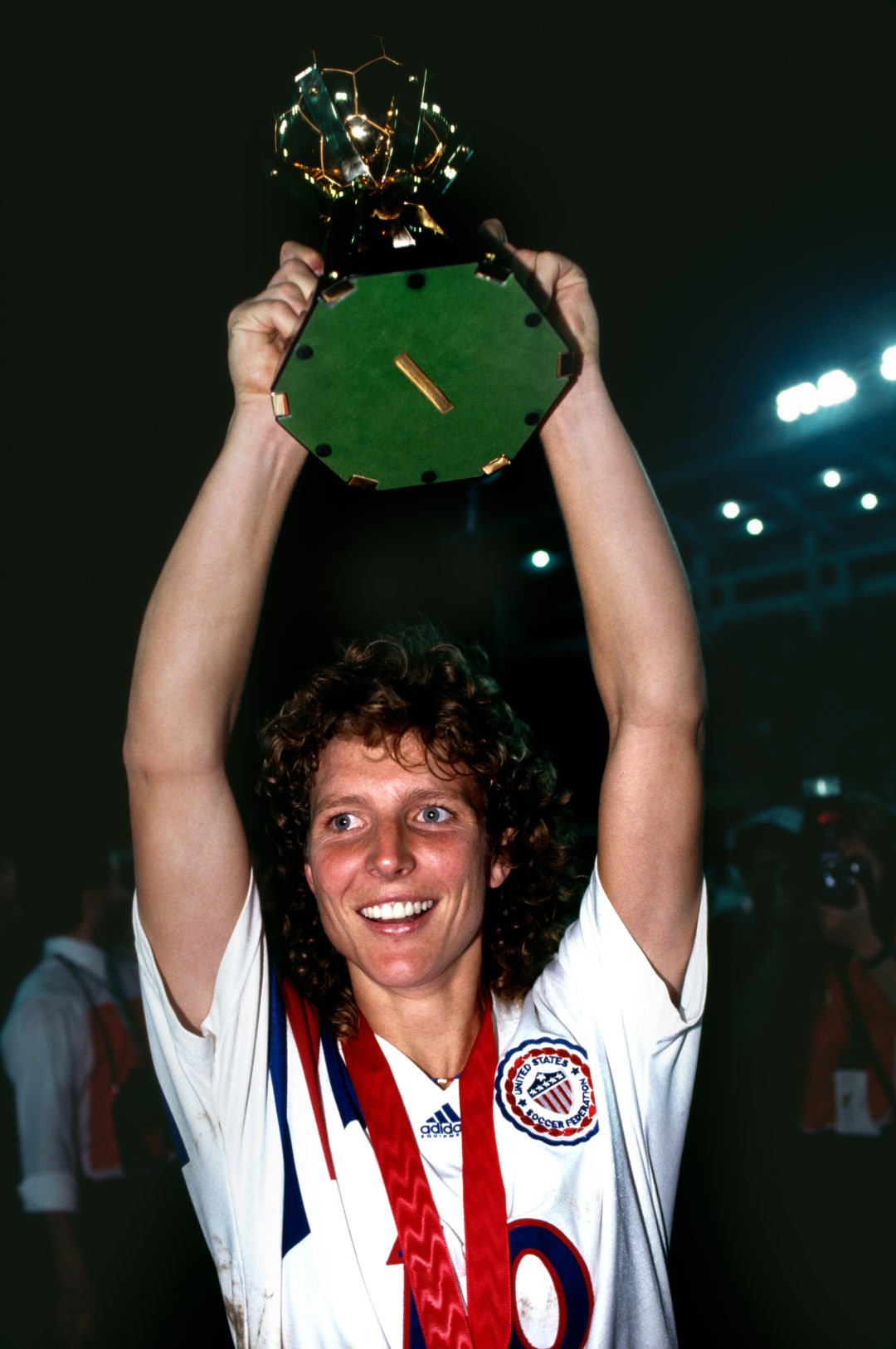
Image: Bob Thomas/Getty Images
10. Michelle Akers
Long before the girls of Seattle could dream playing for the Reign, Shorecrest High School soccer star Akers played for the US Women’s National Team from its debut in 1985, as it won the first-ever women’s World Cup championship (1991) and Olympic gold medal (1996). Despite a career plagued with injuries and suffering from chronic fatigue syndrome, she retired in 2000 with more than 100 goals in international play and, in 2002, was named the FIFA Female Player of the Century.—NT

Image: Keith Homan/shutterstock.com
9. Walter Jones
We put Big Walt here as much for his steady vibes and offseason workouts pushing trucks around a parking lot as we did for the Hall of Fame abilities he built over 12 seasons with the Seahawks, stating in 1997. His interviews suggest a philosophical perspective: “When you’re in a game and your legs feel strong and you’re dominating guys in the fourth quarter, you know it’s because of pushing the truck.” John Madden himself once called Jones the best player in the NFL—unheard-of praise for an offensive lineman. —BBB

Image: Eric Gay/AP Images
8. Apolo Anton Ohno
He is the most decorated US Winter Olympian of all time, and probably the reason you know what short-track speed skating is. Ohno burst into the collective consciousness during the 2002 Winter Olympics in Salt Lake, a reformed troublemaker with a superhero name, raised in Seattle by a Japanese immigrant father who put in long hours at his hair salon to support his family. Ohno’s story captured almost as many people as his signature soul patch and and bandanna-framed mane.
While his face was giving Tiger Beat, the sports beat was excited by Ohno’s athleticism and the drama and novelty of short-track speed skating. In the 2002 games, Ohno was involved in as many controversies as medal ceremonies, including a disqualification scandal so heated he withdrew from a 2003 World Cup event due to fears for his own safety.
Ohno, already the biggest star the sport had ever seen, raised his profile further by taking home two bronze and a gold from Turin in 2006. He made his final Olympic appearance in 2010, winning a sixth and then a record-setting seventh and eighth medals in Vancouver, just a few hours from home. Ohno retired from competition soon afterward.
Since stepping down, the energetic Ohno has tried his hand at seemingly everything, from motivational speaking to health tech to reality television. The spotlight still loves him. But his greatest legacy will certainly be the entire generation of speed skating superstars who first gave the sport a shot after seeing Ohno on TV.
Who could have guessed that a kid from Federal Way would legitimize the wild-west sport of short-track speed skating? And he might’ve been the only one who could. Someone less charismatic, less conventionally handsome, or even less controversial wouldn’t have captured the nation’s imagination quite the same way. —BBB

7. Russell Wilson
When the Seahawks finally traded Wilson, the best quarterback in franchise history and at the time the only one who had led Seattle to a Super Bowl win, the overwhelming feeling among Seattle sports fans was relief. It takes a special kind of person to endear yourself to a fanbase the way Wilson did—generating ridiculous sports radio calls and somehow getting 12s to say things like “I’d rather have him than Tom Brady”—and also unendear yourself the way he did.
Wilson was corny as hell, perpetually smiling, main character. Depending on whom or when you asked, he was either too sincere by half or not sincere at all. But there’s no arguing with what Wilson did on the field, where he was exactly the main character Seattle needed. Was the defense great? Yes. But Wilson was great too. There’s a reason Bob Condotta of The Seattle Times recently named Wilson the no. 1 player in franchise history. Because he was.—EN
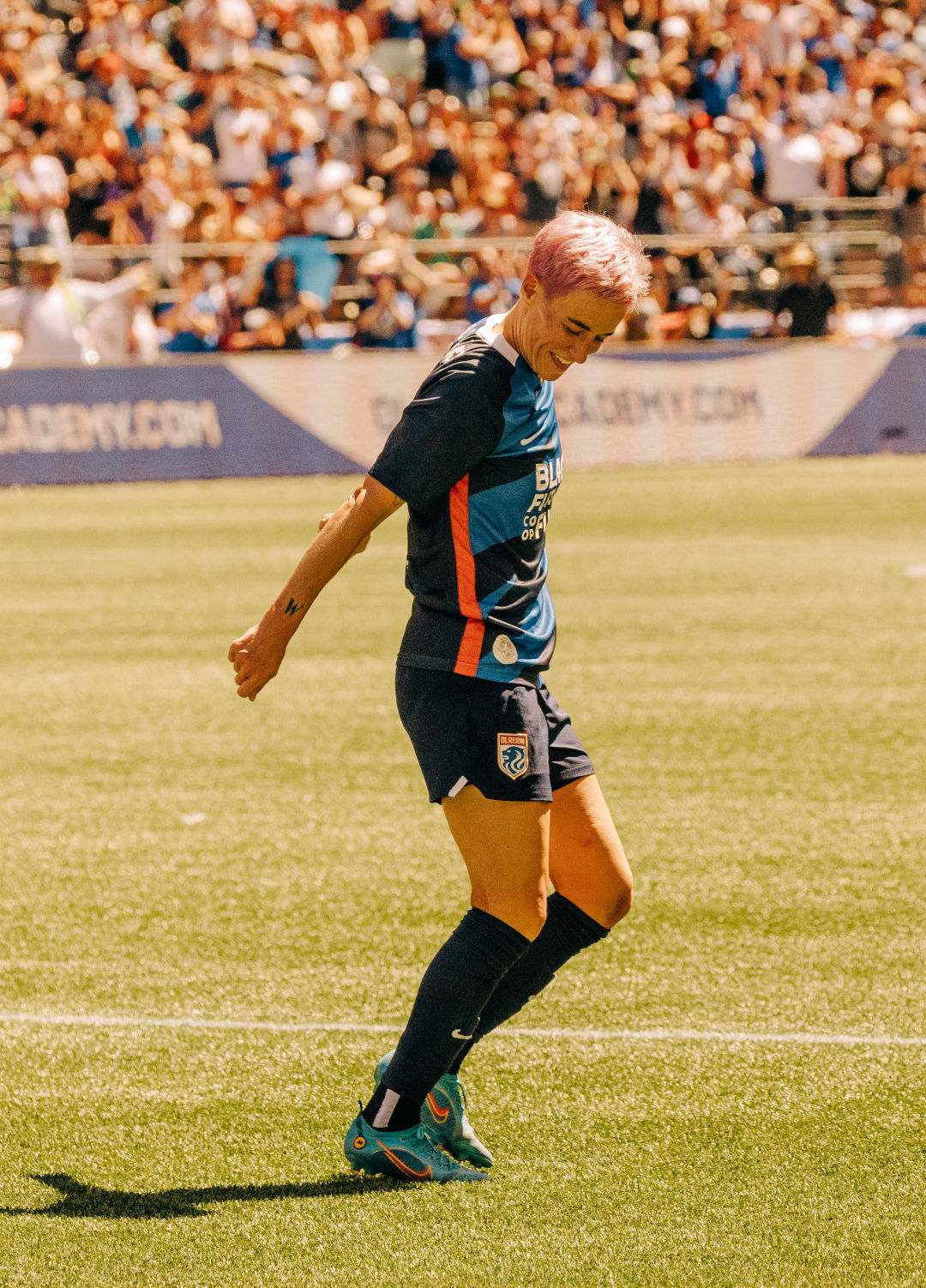
Image: David Jaewon Oh
6. Megan Rapinoe
A soccer star from a young age, Rapinoe grew up to become what so many girls dream of: a woman who doesn’t apologize for who she is.

Brash, unmistakable, outspoken, and iconic, Rapinoe lit a fire for a generation of soccer fans who spent their youth learning girls should strive to be smaller and quieter. Her pink hair inspired rose-headed copycats to dot Reign and USWNT stands, and her famous World Cup celebration pose is as recognizable in silhouette as Jordan.
Rapinoe uses soccer as a tool to advance justice, and is never afraid to use her platform to advocate for causes she believes in. She was the first soccer player to kneel for the anthem, has led the fight for equal pay for women, and continues to shout “Trans rights!” from the rooftops. In 2022, Joe Biden awarded Rapinoe the Presidential Medal of Freedom, calling equal pay “the most important victory” soccer had ever won.—BBB
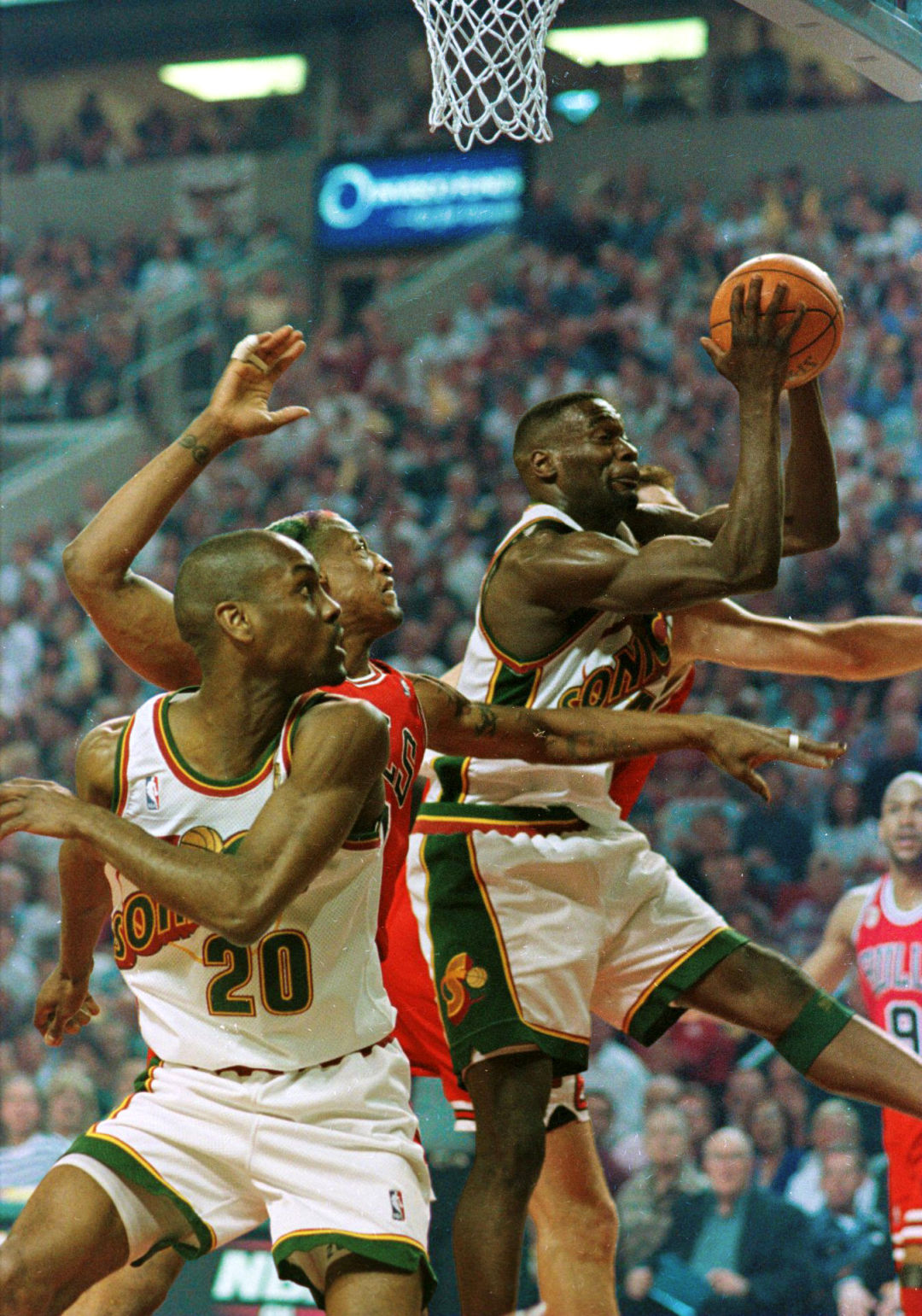
Image: Jonathan Daniel/getty Images
5. Shawn Kemp &
4. Gary Payton
No two athletes on this list are more connected in the hearts and minds of Seattle fans than Shawn Kemp and Gary Payton. Whether on the floor at Key Arena, on the screen of the NBA Jam machine at your favorite local arcade, or in the deep voice of longtime Sonics play-by-play man Kevin Calabro describing yet another monster alley-oop for the viewers at home, Kemp and Payton created an energy that was, well, supersonic. It just wouldn’t have made sense to write about them separately.
During their 1990s peak, the high-flying power forward known as the Reign Man (Kemp) and the trash-talking defensive mastermind guard known as the Glove (Payton) carried Seattle right up to the brink of a championship. They were superstars on their own. But together, they were something bigger: Brash and exciting, along with their less charismatic but extremely versatile third banana (and UW legend) Detlef Schrempf, they created an energy around Seattle hoops that made kids all around the world want to watch the Sonics.
The theft of the franchise orchestrated by Howard Schultz and Clay Bennett only gave more meaning to Kemp and Payton’s legacy on the court. It was the last golden era for men’s pro basketball in Seattle. And to their credit, both superstars have remained active in the community, showing up at fan rallies, and in Kemp’s case opening a series of businesses in Lower Queen Anne—first Oskar’s Kitchen, and now Kemp’s Cannabis, which of course sells a strain called Gary Payton.—EN

3. Ichiro Suzuki
He arrived in Seattle in 2001, carrying the weight of two whole countries on his slim shoulders. Americans were skeptical a Japanese position player could succeed in MLB; Japan was anxious to see their superstar shine on an international stage. To please them both, he would basically have to be perfect.
He was. Ichiro won both Rookie of the Year and MVP in his first season in MLB, plus a Gold Glove, Silver Slugger, and All-Star nod, carrying the Mariners to 116 wins in the best season in franchise history. His off-field exploits also became legendary, including flashy suits, clubhouse pranks, and a hilariously foul mouth in English. Ichiro understood that a superstar needed swagger as well as skill. He also seemed to understand everything that happened on a baseball field in a way few other players did.
Ichiro retired seven years ago, but he never really left. You can still catch him in uniform at T-Mobile Park before games playing catch with Julio Rodríguez. It could be that he just loves baseball that much.—BBB

2. Sue Bird
The greatest winner in Seattle sports history, Bird was the star point guard on all four of the Storm’s WNBA championship teams. And that was after she won two collegiate national titles at Connecticut; she took home five Olympic gold medals along the way, too, and won five EuroLeague championships playing in Russia.
But this list is about Seattle sports, and Bird’s impact here, specifically, was immense (and continues to be). A former no. 1 draft pick, she finished her 21-year Storm career as the WNBA’s all-time assists leader, made 13 All-Star appearances and had a street named after her. The bronze statue of her likeness unveiled outside Climate Pledge Arena last summer is the first-ever for a WNBA player. She was the master distributor—and a double-digit career scorer—playing alongside other stars like Jackson, Stewart, and Jewell Loyd. And Bird stayed loyal to the city in a way few athletes do, earning lifetime icon status from one of the strongest fan bases in all of women’s sports—one that she did as much as anybody to help cultivate.
In April 2024, she joined the Storm ownership group. She has long been an advocate for better pay and treatment for women’s athletes, work she pursued as vice president of the WNBA players’ union. Bird was instrumental in negotiating the league’s historic collective bargaining agreement of 2020—a precursor to the breakthrough CBA agreed upon this March.
In Esquire last year, as part of a profile alongside her then-fiancée, Megan Rapinoe, Bird recalled fielding a question about the future of women’s basketball: “I was like, ‘I hope I’m fifty-five and mad that I never had a million-dollar contract in the WNBA,’ because that means what we’re doing worked.”—CC

Image: Focus on Sport/Getty Images
Ken Griffey Jr.
The son of a major league star, Ken Griffey Jr. grew up walking among the greatest baseball players who ever lived. Then he became one. Drafted first overall by the Mariners in 1987, he debuted with the team in 1989, still a teenager. He hit a double in his very first MLB at bat. Then a week later, he homered in his first at bat in the Kingdome. The legend was writing itself from the jump. But it wasn’t just how good Griffey was—it was the way he played. Or as Griffey put it on his rap feature with Seattle emcee Kid Sensation, “The Way I Swing.”
Quite simply, Griffey was the coolest baseball player to ever live. The backwards hat. The acrobatic catches in center field. The smile. The swing, with its impossible aesthetic beauty. They all combined to make Griffey an international superstar, baseball’s answer to Michael Jordan. Griffey was all things to all people: to marketers, a dream; to children, a real-life superhero; to old-timers, a modern-day link to yesteryear greats like Mays and Mantle.

Image: Courtesy Robin Layton/MOHAI
Oh, and he also happened to carry the Mariners to the first sustained run of success in franchise history. It was Griffey whose charisma and prodigious home run power encouraged Nintendo to buy the team in 1992, preventing the Mariners from being moved to Florida. It was Griffey who scored from first on Edgar Martínez’s legendary double in the bottom of the 11th, sliding into home and securing the team’s first-ever playoff series victory in 1995.
When it was first constructed, sports writers were calling Safeco Field “The House that Griffey Built.” But in many ways, that’s an understatement. Griffey is the linchpin of the entire culture of sports fandom in Seattle. We’re lucky to have had him. —EN
ILLUSTRATION BY JANE SHERMAN
SOURCE IMAGES FROM LEFT TO RIGHT: Jim Bryant/Alamy Images (Martinez), Otto Greule/Getty Images (Robinson), Andrew Fredrickson/Southcreek Global/ZUMA Press/Alamy Images (Jackson), David Jaewon Oh (Rapinoe), Todd Warshaw/Allsport (Griffey), Jamie Squire/Getty Images (Lynch), Focus on Sport/Getty Images (Sikma), Christopher Halloran/shutterstock.com (Couples), Courtesy Joyce Walker/REJOYCE ACADEMY, JEFF HAYNES/AFP/Getty Images (Payton/Kemp), Nick Ut/AP Images (Moon), Keeton Gale/Shutterstock.com (Stewart), Grindstone Media Group/shutterstock.com (Wilson), ZUMA Press/Alamy Images (Hernández), Dmitry Argunov/shutterstock.com (Bird), Ringo Chiu/shutterstock.com (Morris), Alan C. Heison/shutterstock.com (SUZUKI), Al Messerschmidt Archive/AP Images (Largent), Bob Thomas/Getty Images (Akers), PA Images/Alamy Stock Photo (Armstrong), AP Photo (Lawrie), Paolo Bona/shutterstock (Ohno), Courtesy MOHAI (Madison), Keith Homans/shutterstock.com (Jones)


Kickin’ It
Guide to the World Cup in Seattle


Year in Review