Why Are So Many Asian Chain Restaurants Coming to Bellevue?

Image: Amber Fouts
Hours-long lines wrapped around Tendon Kohaku’s downtown Bellevue building for months after the Singapore-based chain opened here in 2024, with diners enduring the endless waits for their turn to sample delicate tempura shrimp, Wagyu beef, and yuzu-marinated salmon. Not long after, a few blocks away, the Japan-based LeTao opened in the Bravern, its imported cheesecakes arranged like fine jewelry in the case of Van Cleef & Arpels.
Both Tendon Kohaku’s and LeTao’s Bellevue outposts were each company’s first US locations. The previous year, the city hosted stateside debuts of Indian chains Farzi Café and Mavalli Tiffin Rooms. Already in 2026, BA Bakehouse, from China, opened its first US store in Bellevue. Chinese skewer shop Mama Xita BBQ is slated to open shortly, with Singapore-based Japanese restaurant Sushi Tei arriving later this year.

Image: Amber Fouts
Bellevue’s population—wealthy, worldly, and heavily Asian—makes for an appealing demographic mix for big-name restaurant chains from across the Pacific looking to plant a flag(ship) in the US market. But chalking the trend up solely to who lives here oversimplifies the full scale of just how much of Bellevue seems lab-designed as an ideal landing spot for incoming chains.
One of the fundamental characteristics of suburbs is that they inherently look elsewhere, a piece of their identity always fixed to the city in whose economic shadow they sprang up. That outward gaze has long manifested in the droll sameness of corporate and chain restaurants; in cookie-cutter copies of other places that crowd out originals. Applebee’s, Chili’s, Olive Garden. That equation changes for chains from overseas, which combine the allure of uniqueness with pre-proven concepts—and their associated, well-established capital.

Image: Amber Fouts
On the gold-trimmed marble counter of LeTao, each of the signature cakes in the front row (two fromage, two chocolate) has one piece cut and slid away until the tip just meets the perimeter of the remaining cake. Behind each one sits a matching, unsliced cake. The cakes are sold packaged in a round wood box, mimicking a triple-cream brie. Marketing materials boast of French inspiration, Japanese cream, Italian mascarpone, and Australian cream cheese.
It exemplifies a worldview that the best of any one place can be exported and eaten, well, anywhere. That a cheesecake baked in Hokkaido tastes the same when thawed in Bellevue. The city’s marketing arm leans into the idea, promoting “The Acclaimed Trail” of restaurants, including Farzi Café, Chicha San Chen, and the now-closed Jiang Nan, for their Michelin Guide recognitions. Michelin, however, doesn’t recommend any restaurants in Bellevue (or Seattle)—these accolades belong to other branches. “The Acclaimed Trail” also includes the Lakehouse, because Jason Wilson won a James Beard Foundation Award in 2010 for his Seattle restaurant, Crush, which closed in 2015.

Image: Amber Fouts
It’s a model Las Vegas proved could work: Serious chefs from San Francisco, New York, or Mexico City cashing in on glossy siblings of their flagship restaurants, gussied up and toned down to appeal to Iowans as much as Angelenos. Like Las Vegas, Bellevue created an economy of imports—from Seattle, from elsewhere in the US, and, often, from Asia.

Image: Courtesy Mama Xita BBQ
“In Chinese, there’s a word, 水土不服, which means, essentially, you come to a new country, and you open your space, and you don’t get the acquired taste from that specific community,” says David Zhao. Zhao’s Chubby Group will open the first US location of Mama Xita BBQ (known as Xita Lao Tai Tai in Chinese)—which has more than 450 locations in 31 cities across Asia—in Bellevue. It’s an important word to keep in mind when opening a restaurant known for its marinated and grilled beef diaphragm in the notoriously squeamish American market.
Zhao looked to geotargeted search data to see if Bellevue would be the right fit. Not only if people looked for specific types of food—Chinese barbecue, in this case—but for various cuisines, to see if consumers seem willing to try new things. “Are they searching for Chinese food? Are they searching for specific types of Chinese food? If that’s the case, we decide, Okay, this is the spot we want to open it.”
Having one successful brand helps draw others, and Bellevue has the crème de la crème of successful Asian restaurant chains: Din Tai Fung. Though the Bellevue location was its second in the US (it was the first US franchise location), it served as proof of concept for what many of these chains hoped to be: sprawling, shiny, and making money. “That’s the single most decisive factor,” says Zhao. “Are the people actually spending money?”
They are, found Allen Tan and Sonny Kurniawan, directors of Sushi Tei, the Singaporean chain bringing its Japanese food to Bellevue this fall. Kurniawan, who went to college in Seattle and has returned regularly since, campaigned for the area as the first US location. The direct flight from Seattle to Singapore, ferrying workers for Boeing, Amazon, Google, and Starbucks back and forth across the water, gave Tan confidence that some in Bellevue would already know Sushi Tei. The same companies and others appealed as potential clients. “Microsoft is a Seattle company, so they’re flying their people in from other parts of the US and the world to have corporate meetings,” says Tan. “The data backed up the vibes.”
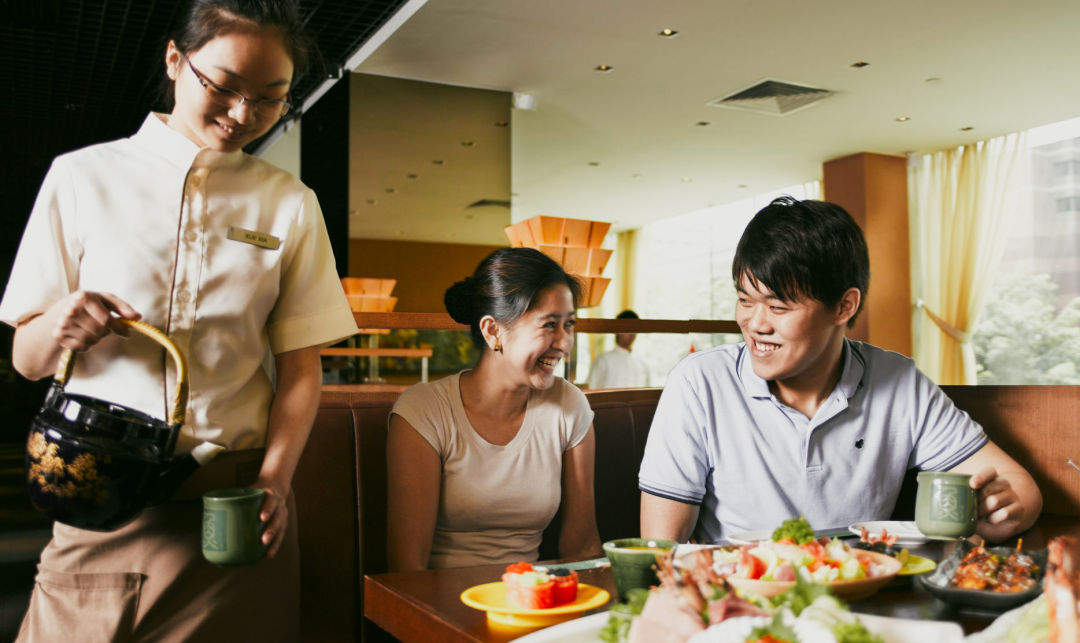
Image: Courtesy Sushi Tei
But Bellevue also offered a soft landing in other ways, too. “Bellevue, it’s a trendy spot,” Zhao says. “There’s a hype cycle there, people trying new things.” But not too many people: It’s got enough potential customers to create the four-hour lines, but not so many that any mistakes or snags will ripple beyond the region.
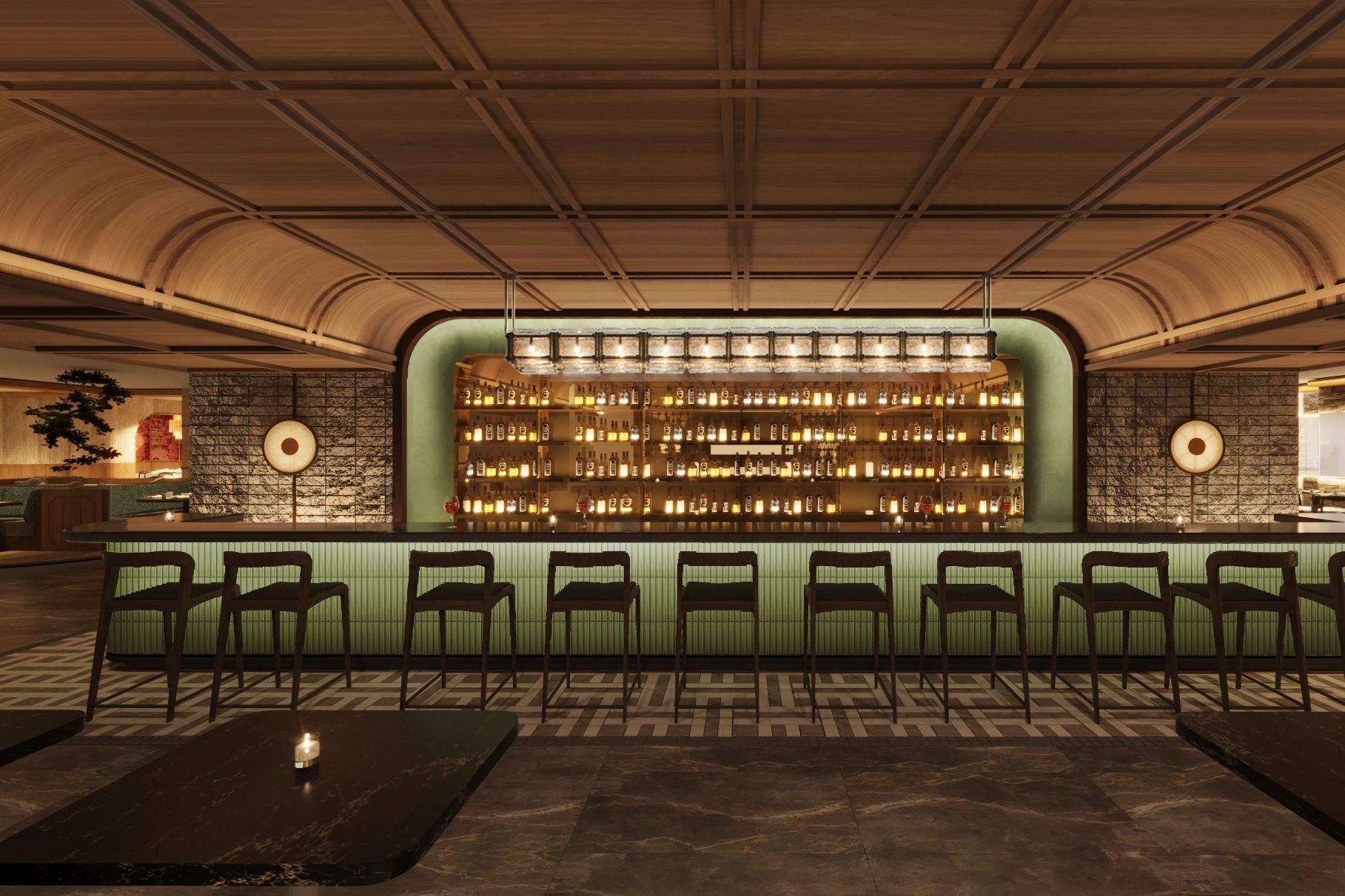
Tan describes it as “less noisy” than New York, LA, or San Francisco, with some familiar comfort. “It’s like what we’re used to in lots of urban Central Asia, and especially in Singapore,” says Tan. Clean, safe, with huge spaces—Sushi Tei will move into the 6,000-square-foot former P.F. Chang’s in the Bellevue Collection. “The whole energy, how it’s set up, and how convenient it is to get between different buildings, from hotels to malls, there’s parking.”

Image: Courtesy Sushi Tei
The Bellevue Collection, which is owned by Kemper Development Company, plays a huge part in the process. “They weren’t the cheapest, in fact, probably far from it,” admits Tan. But he was impressed by the smoothness with which everything functioned. “You don’t sometimes get these little dust balls in the corners of the tiled areas,” observed Tan. “In the mornings, people turn up and they’re washing down the sidewalk.” Kemper keeps the buildings buttoned up to strict standards, assists new businesses with marketing, and provides a built-in audience with its sprawling network of buildings and the offices within them.
“We’re easy,” says Jennifer Leavitt, the Bellevue Collection’s senior vice president of marketing. They offer free parking, in part to, as she phrases it, “reduce friction” for the customer.
Kemper Development Company was founded in the 1980s by Kemper Freeman Jr., but the Freeman family’s history in Bellevue started with moving Asians out of Bellevue, rather than into it. His grandfather, Miller Freeman, the son of a Confederate soldier, was serving as secretary of the state’s Veterans’ Welfare Commission in 1919 when he wrote that the Japanese owned too many of the hotels, too much of the good farming land, and had too many children. Immigration needed to be stopped, and those already here deported. “I am for a white man’s Pacific Coast,” he said to the Seattle Star. He continued to fight for the removal of Japanese Americans until they were, in fact, removed. In May of 1942, 60 Bellevue families, most of them strawberry farmers, were taken to incarceration camps under Executive Order 9066.
“Kemper Freeman Jr. is fond of recounting his first memory as a toddler: a bulldozer clearing the farmland for the family's shopping center,” reads a profile on HistoryLink. In 1946, Kemper Freeman Sr. cut the ribbon to open his new mall, Bellevue Square. Bellevue Square remains a cornerstone of the Kemper Development Company—which, notably, lists out the ownership history of the land on which the mall was built, as if ready to show that not a single Japanese name is on it. It is, of course, true: It was all purchased from white landowners, in part because of laws—many encouraged by Miller Freeman and his buddies—that prevented Japanese farmers from owning their own land.
In another universe, one could imagine old Miller Freeman rolling over in his grave as his grandson expanded his empire by welcoming the same people he sought to drive away. On the other hand, Kemper Freeman Jr. continued the tradition when he made a six-figure donation to Donald Trump’s campaign in September 2016, a week after Trump’s fiery Arizona speech advocating for mass deportation and promising to build a wall and make Mexico pay for it.
In 2016, Bellevue’s population was still about half white. Eight years later, as these chains found their home there, it was about half Asian and a third of the population was white. The city’s own webpage of its demographics reads, “Bellevue welcomes the world. Our diversity is our strength. We embrace the future while respecting our past.” Respecting doesn’t necessarily mean facing, however: A 2020 Cascade PBS exposé found that city-run art exhibits had censored multiple mentions of the Freeman family and their involvement in Bellevue’s anti-Japanese legacy.
The Asian chains speak Kemper Development Company’s language, though. A language that involves words like synergy, scope, sector, and market demand. “[We’re] looking for restaurateurs or retailers that have some experience, authenticity, some capital, and can really afford to come in and make a great entrance,” says Jana Koeberle, the company’s senior vice president of leasing. There’s politics and there’s business. This is business. The restaurants pay premium prices for the extras Kemper delivers, and the extras thrive on those first locations of Asian chains.
“Our customer really loves to be the first one to try the new, especially if it has a reputation outside of this market,” says Leavitt, of the Bellevue Collection. “From a marketing perspective, it is joyous, because you have so many new things to talk about.”
It’s a symbiotic relationship, adding a little coolness into Bellevue’s rise as an international business hub, while giving the chains a smoothly paved entry path into America’s restaurant megamarket. It embraces the future, for sure.
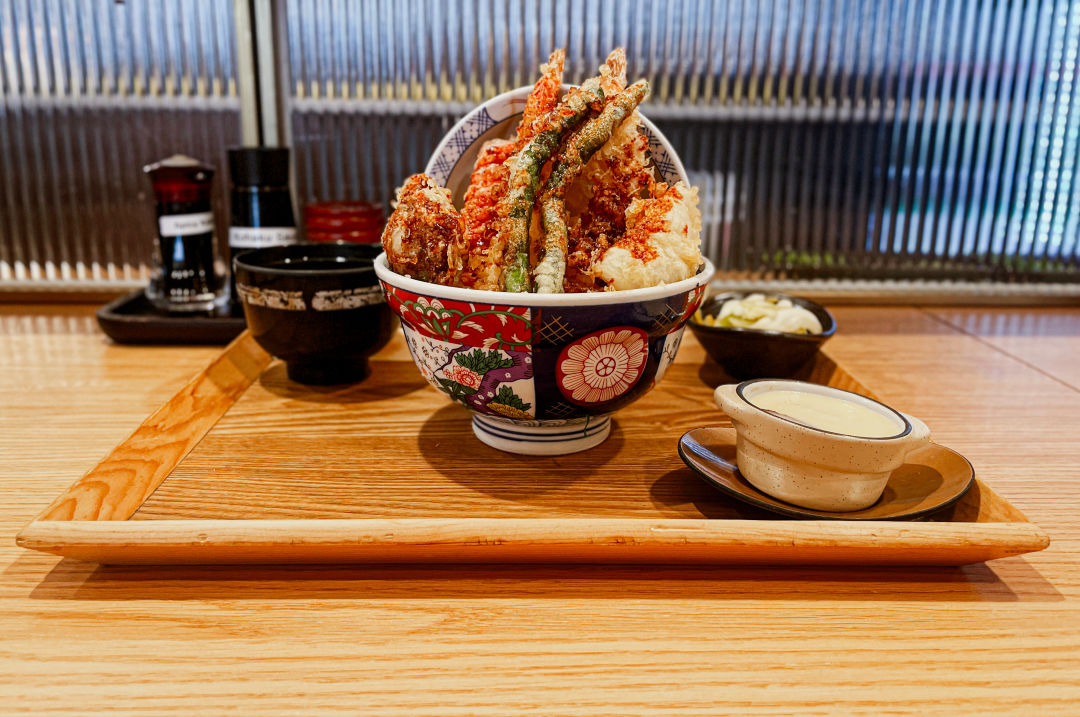
Image: Seattle Met Staff
The 34 glossy full-color pages of Tendon Kohaku’s menu follow a similar format as TGI Fridays or the Cheesecake Factory, truffle-showered steak and imported sea urchin replacing chicken tenders and mozzarella sticks. Chain restaurants thrive on consistency, on creating the exact same experience in Portland, Oregon, or Portland, Maine, in Tulsa or Tacoma. In Bellevue, or, as Tendon Kohaku will be soon, in Seattle. The color scheme, the menu, the aroma, and the flavors (mostly) stay the same, and customer loyalty comes from the comfort of the familiarity. But that doesn’t always hold internationally, where cultures and infrastructures diverge. Bellevue, with its sleek developments, well-traveled clientele, and Goldilocks-size media market, serves as a bridge between the continents, its pillars made with stacks of dollar bills.