How to See Bioluminescence in Seattle’s Waterways
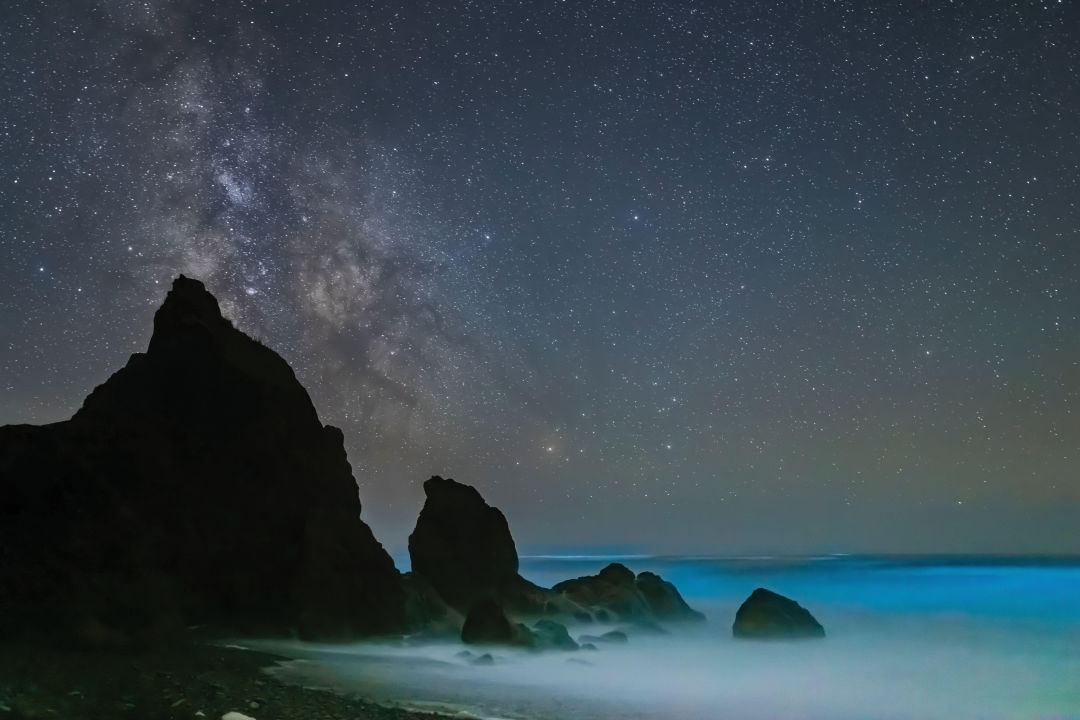
Image: Lee Rentz/Alamy Stock Photo
It’s a scientific fact that the population of Seattle expands tenfold the moment sunsets creep past 8pm. Beaches are suddenly populated like sold-out Capitol Hill Block Parties with picnickers and kids impervious to the water’s chill; on-water traffic returns too, with paddleboarders, sailors, and the occasional eFoil rider. It’s magical. But those long-awaited late sunsets might also get in the way of something even more magical in Seattle’s summer waters: bioluminescence.
OK fine, the sparkling blue glow in the Puget Sound isn’t really magic, but it might as well be. The underwater flashes of light are actually a defense mechanism of microscopic single-celled ocean organisms.
These organisms, phytoplankton, have organelles that emit light when “there is a change in the current close to the plankton,” Ali Chase, senior oceanographer at the Applied Physics Laboratory at the University of Washington explains. “That can be from the natural movement of the water, or the disturbance of a ship wake or a kayak paddle, or even a very small organism that wants to eat the plankton.”
The light is meant to scare away or trick potential predators; enthralling humans with a veritable underwater laser show is just a serendipitous accident. And enthrall they do. Imagine a trail of blue-tinged fireflies following your movements through the water—or those of a paddle, ferry wake, or crashing waves. Think sparkling underwater diamonds. Or fireworks.
So how do you catch it? Late spring through summer brings warmer temperatures and more sunlight, key ingredients in helping phytoplankton populations increase, or bloom. Don’t be scared off by all the bloom talk: Unlike some newsworthy algae, bioluminescent phytoplankton blooms aren’t harmful to humans or pets. If the urge for a nighttime cold plunge strikes, have at it.
While it’s possible to see the glow under the right conditions at nearby Puget Sound shores like Golden Gardens or Alki, escaping the city lights—perhaps via guided nighttime kayak tours on the San Juan Islands, Port Gamble Bay, and Hood Canal—makes for next-to-guaranteed viewing. Even bright moonlight can hinder the effect; opt for a new moon and wait until well after sunset (espresso martini recommended) for optimal viewing.
At the end of the day, Chase says phytoplankton populations are strikingly dynamic, and there’s no surefire way to know when or where they will bloom. Because the flash of light from each tiny organism is so small and quick, the human eye will perceive the collective glow only when populations swell.
With the right timing, though, it’s pure magic, the kind that has to be experienced firsthand. “As with a good northern lights viewing in person,” says Chase, “you really can’t capture it in a photo.”