The Seattle Light Problem and the Architects Solving It
Rain City Architecture focuses on bringing light into Pacific Northwest homes
Presented by Rain City Architecture
July 24, 2026
What’s This?
For much of the year, Seattle wakes under a muted sky — a soft, pearly gray that gives the city its unmistakable calm. Outside, it’s beautiful. Inside, it can be something else entirely. But dark homes don’t need to be the reality of being a Northwest resident. Rain City Architecture is tackling Seattle’s light problem head‑on, using thoughtful, daylight‑driven design strategies to transform dark homes into brighter, more uplifting places to live.
Why Seattle Homes are Dark In neighborhoods from Ballard to Bellevue, homeowners often describe that their homes feel dark and dreary. Why? Homes built decades ago were often designed with smaller windows, lower ceilings, and more compartmentalized floor plans.
These older layouts trap light, preventing it from traveling deeper into the home.
Layer in the region’s natural conditions, dense tree canopies, sloped topography that creates shadow pockets, and a climate with more than 200 cloudy days a year – it’s easy to see why so many interiors feel muted.
But the real issue isn’t just aesthetics. It’s how these homes feel.
Why Light Matters Humans are wired for daylight. Natural light boosts mood, reduces seasonal fatigue, improves productivity, and makes small homes feel more expansive. It shapes how we live our lives.
Clint Bailey, architect and owner of Rain City Architecture shared, “When we are designing a house, the goal is to not only make it functional and fit the needs of the homeowner but to also design the experience of living in that space. What is it going to feel like to wake up there? What does it feel like to move through the daily routine? Can we design the slow moments to be more calming, and the gatherings to be more cheerful? How can we romanticize the daily rituals of life? Natural light is a powerful tool that can help shape that experience.”
In the Pacific Northwest, where sunlight is precious, designing for daylight isn’t just a technical decision — it’s a lifestyle one.
Solving the problem Bailey understands the uniqueness of the Pacific Northwest. He shared a few strategies to address this issue — approaches refined over his years of practice:
Orienting living spaces toward the strongest natural light: even small shifts in layout can dramatically increase brightness
Using openings strategically: glass walls, interior windows, and borrowed‑light openings help daylight travel deeper into the home
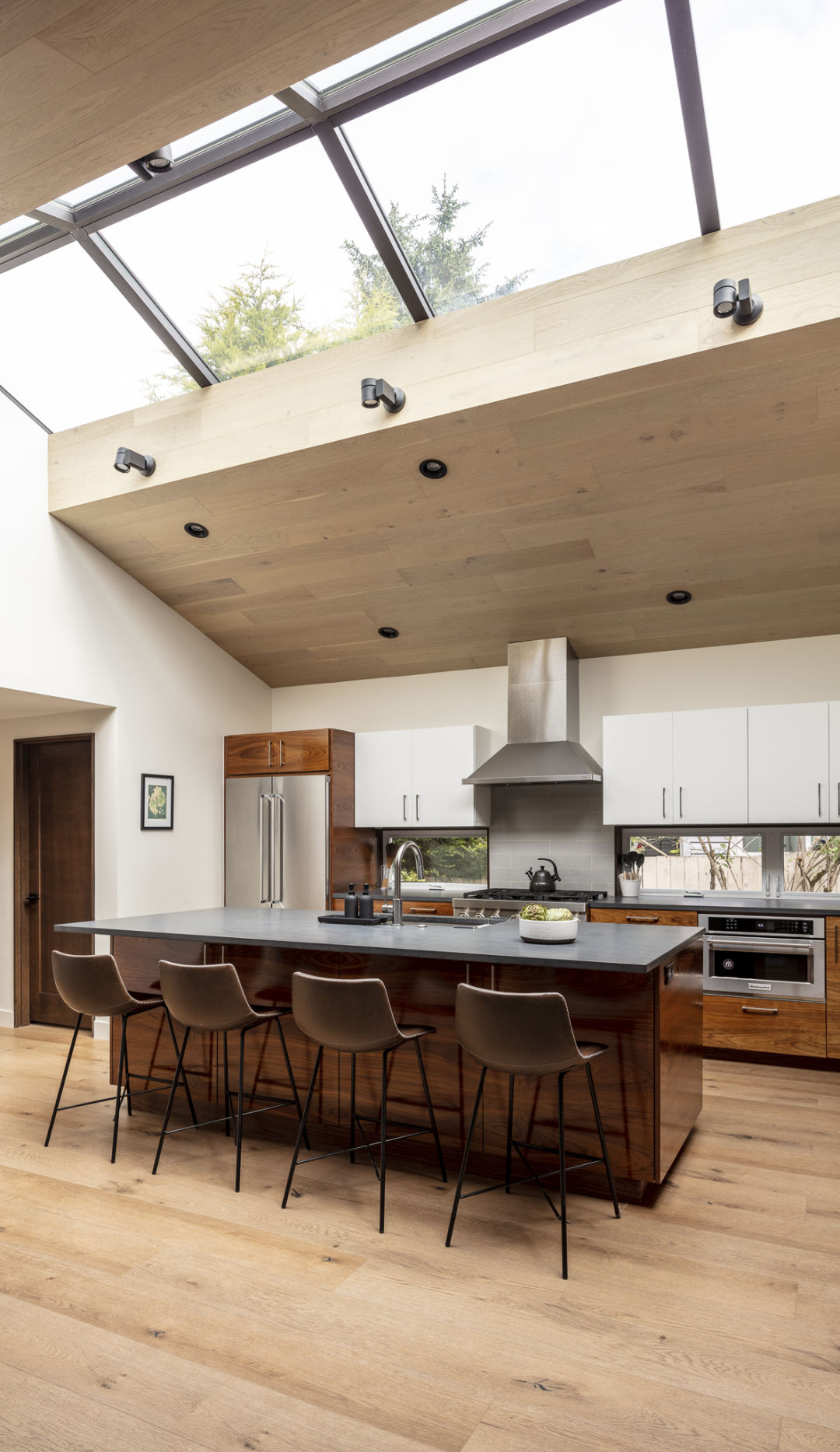
Adding skylights and clerestories where they matter most: these are especially effective in kitchens, stairwells, and upper‑floor living spaces
Leveraging materials that bounce light: matte finishes, warm woods, and soft neutrals diffuse light without glare. And where light is scarcer, more gloss in finishes can help light to reach further into the space.
“If your home doesn’t actively pull light in, it’s going to feel heavier than it needs to,” Bailey explained. “I think of daylight as a material, just like wood or concrete. You shape it, direct it, and let it do its work.”
If your Seattle home feels heavier, dimmer, or more muted than it should, you’re not alone and you’re not stuck. A daylight‑driven redesign can change how your home looks, feels, and supports your daily life. Begin the transformation here.