What to Know about the Monkeypox Outbreak in Seattle
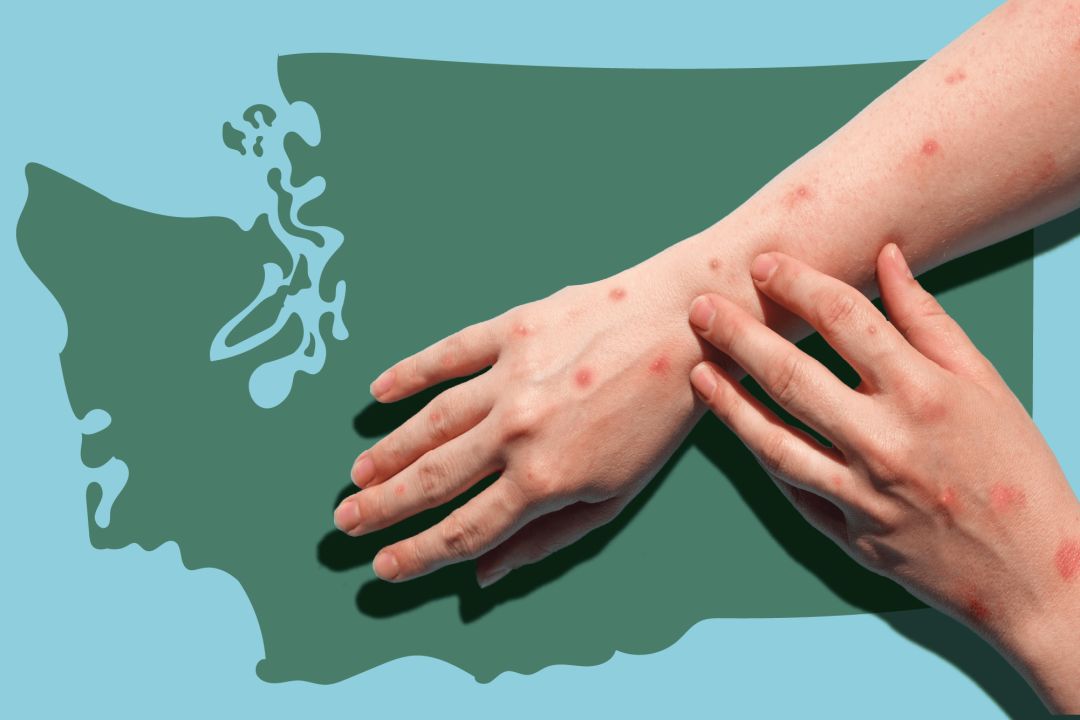
At the end of May, Public Health—Seattle and King County reported the first presumptive (later confirmed) case of monkeypox. We screamed a thousand internal screams before soothing ourselves with the fact that this disease doesn't seem to spread as easily as that other disease still ravaging the planet one subvariant at a time.
Then on July 23, the World Health Organization declared monkeypox a public health emergency of international concern, and on August 4, the United States designated the outbreak as a national health emergency. How did we get here, and where do things stand now?
Monkeypox cases in Seattle and King County
As of August 16, there are 254 confirmed cases of monkeypox in King County. According to the Centers for Disease Control, there are 272 total cases in Washington, although the Department of Health reports 309 total cases, including six non-Washington residents. That puts Washington in the top 11 states with confirmed monkeypox cases. New York has the most with 2,620; nationwide the CDC reports 12,689 cases. Worldwide there are about 38,019 cases and 12 deaths.
Monkeypox symptoms
As a refresher, monkeypox symptoms are eerily familiar to Covid-19 and the flu. It starts with things like a fever, headache, muscle aches, chills, exhaustion, and swollen lymph nodes. After one to three days, a rash appears and progresses through sores, bumps, and fluid-filled bumps before scabbing over and healing.
Some patients during the current outbreak have reported a rash without a fever; many note severe pain associated with the disease.
A typical bout of monkeypox can last from two to four weeks. Symptoms usually appear within one to two weeks after exposure, but the incubation period for the virus can be up to three weeks.
Monkeypox transmission
Like Covid, monkeypox can be spread via respiratory droplets (yet another reason to mask up) but, according to the CDC, it's largely being spread by direct contact, either with the rash or sores of an infected individual or with objects used by that person, such as bedding, clothing, or towels.
Monkeypox can affect anyone, regardless of gender or sexual identity, but the current outbreak is thought to have initially spread through intimate, sexual contact between individuals. Focusing on stigmatizing generalizations about the communities that have been most affected so far, though, can be dangerous and has shades of early HIV/AIDS public health messaging missteps.
Monkeypox testing
UW Medicine's virology lab, heroes back in the early days of the Covid-19 pandemic when testing was a mess, now offers testing for monkeypox. Unlike the proliferation of PCR tests today, though, the PCR test for monkeypox must be ordered through your doctor or other health care provider. Turnaround time is around one to two days.
Monkeypox vaccines
In early to mid-July, King County received 1,420 doses of the Jynneos vaccine, a two-dose vaccine to help prevent smallpox and monkeypox, from the Department of Health. When the shot is administered within four days of exposure, it has the best chance to prevent the disease. Then on July 27, the FDA approved an additional 786,000 doses to be made available nationally—King County will receive 3,300 of those doses—with more than a million doses to be released at a future date.
There aren't currently any plans for mass vaccination sites a la Covid boosters, but Public Health—Seattle and King County has held pop-up vaccine clinics in recent weeks. In general, vaccines are being prioritized for those who meet eligibility criteria: people who've had sexual or close intimate contact with someone who has tested positive for monkeypox and those who are at high risk of recent exposure. For more specific vaccine eligibility requirements, visit Public Health's monkeypox vaccine site.