Healing with Horse Power

Image: Courtesy Amy Herdy
When crime reporter and investigative criminal justice journalist-turned-documentary filmmaker Amy Herdy announced she wanted to make a film about a parrot, those around her were confused. She covered many heavy topics in her career, including domestic violence, sexual assault, and corruption, and people on her team questioned why the interest in the bond between a woman and her bird. “Because it’s an amazing story, and it’s a beautiful story, and it makes me happy," says Herdy. “Like, shut up, it brings me joy.”
Parrot Kindergarten came out last year, telling the story of a woman who grew up in a cult and teaches her parrot, Ellie, to read and communicate, ultimately finding healing through the process.
Working on the project shifted Herdy’s perspective, helping her realize she wanted to do more than just document healing from trauma. “I wanted to help make it happen in some way,” she says. “And in my experience, horses are the best healers.”
She's not the first to think that: The idea that horses can be therapeutic for humans has been around since ancient times, and modern research has found that equine-assisted therapy can help reduce anxiety and depression symptoms in children and adolescents. In a small study of first responders experiencing trauma, the benefits included a greater sense of peace and an increased trust in self and others. There’s also support for positive effects, such as increased self-confidence, better emotional attachment, and improved interpersonal skills.
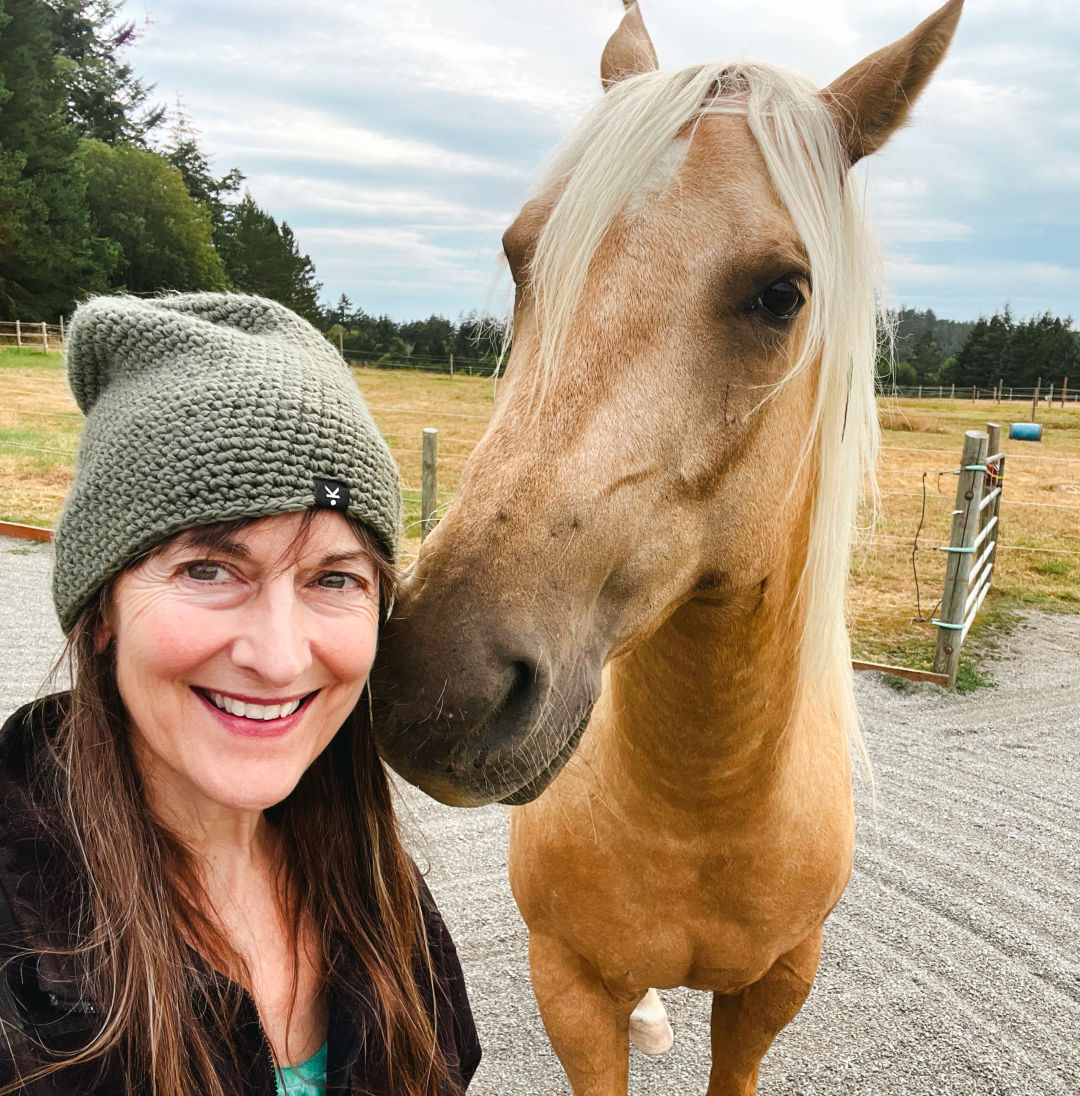
Image: Courtesy Amy Herdy
Herdy grew up in Kentucky, where, she jokes, it’s state law to be adept with horses, but was living in Colorado when she returned to the horse world by taking in a weanling—a baby horse that’s been weaned but is not yet a year old—from a slaughterhouse. Following a bout with breast cancer, she re-evaluated where she wanted to live and realized it didn’t include cold winters. She found a spot on San Juan Island, named it Gracie's Farm, and turned it into a home for herself and five horses. “I love it,” she says. “It’s like living in a state park.”
Also, an ideal location for hands-on healing: Come August, Herdy will host a retreat for women called Horses & Ocean Magic. She will team up with a variety of experts, including a licensed mental health counselor certified in equine-facilitated therapy, and a lifelong horsewoman experienced in liberty work—relating to the horses without using equipment or pressure.

Image: Courtesy Amy Herdy
Many years ago, on a wellness getaway in Texas, I did liberty work under the tutelage of a Zen cowboy. We used just our body language, energy, and intention to get the horses to respond. I’d done some riding growing up, so I was accustomed to using reins and stirrups to ask a horse to do something, not my brainwaves; I couldn’t quite imagine how I would telepathically communicate with a four-legged stranger.
After brushing Jasper, the sweet, energetic horse I’d been paired with, we headed to the round pen. When I wanted him to trot, just the smallest arm raise would get him to go, but slowing was another story. The instructor told me to imagine him walking. And—I kid you not—once I did this, he began walking. By the end, Jasper was following me around like a puppy, showing we’d built a level of trust. It was incredibly powerful—and, as my cowboy mentor told me on the way out, the techniques I’d used to calm down Jasper can apply to people, too.
“Horses respond to what’s inside us,” says Herdy. “They respond to your nervous system. You can’t fake that. No amount of words will change that. They innately have a sense of who you are and what’s going on with you from the moment that you walk up. And so it makes them incredibly honest therapeutic partners.”
I felt that with Jasper. I couldn’t wear any of the masks that I wear around people: The one that looks happy when I’m sad, the one that’s bubbly and extroverted when I’m shy and introverted, the one that’s alert as I’m fighting fatigue. Despite their size, horses are prey animals that are attuned to body language, emotions, and facial expressions. As Herdy says, “It’s a 1,200-pound biofeedback machine.” With Jasper, I had to let everything else fall away, be in the moment, and simply focus on communicating my true thoughts—when I did that, he responded beautifully.
“Horses don’t care about titles or accomplishments or what your body looks like,” Herdy says. “They just care about whether or not you’re present.”

Image: Courtesy Amy Herdy
Kamilah Willingham, who was featured in a documentary Herdy produced about campus sexual assault called The Hunting Ground, visited Gracie's Farm shortly after a foal was born. “I found it such a calming and grounding experience,” she remembers. “At that time in my life, I was dealing with a lot of trauma—and getting ready to speak to an auditorium of people about that trauma—so my nervous system was all over the place.”
Willingham watched as Herdy socialized the baby, and spent a little time with the older horses, too, plus the dogs and chickens on the farm. She noticed one horse reading her, just as she was reading it. “We were perceiving each other in a way,” she says. “It’s like experiencing yourself reflected through another creature. I don’t know how woo that sounds, but I think it’s remarkable.”
For the Los Angeles–based doula and writer, the time on San Juan Island was a totally different pace than her day-to-day. “In city life, we have a lot of transactional relationships. And then you meet a horse who’s like five times your size—these big, beautiful creatures who are very strong and also very intelligent—and you have to relate to them,” Willingham says. “You have to walk into those interactions open to a different kind of perspective, and you definitely come out of them with a new perspective.”
By the August retreat, there should be another new foal on the farm, and Herdy hopes everyone who attends comes out, similarly, with a new perspective—and the kind of healing offered by Ellie the parrot, and Herdy herself found through horses.
“I love what I do. I love documenting. I love digging. I love investigative work,” says Herdy. “When I come back to the farm, it’s such a necessary recalibration. It really helps bring me back and grounds me into what is real.”
The biggest factor in helping her do that? A horse, of course.
Haley Shapley is the wellness columnist for Seattle Met. She’s the author of Strong Like Her: A Celebration of Rule Breakers, History Makers, and Unstoppable Athletes and the forthcoming Night Owl: Staying Up Late in a World Built for Early Birds.