A Viewing Guide for the UW Cherry Blossoms
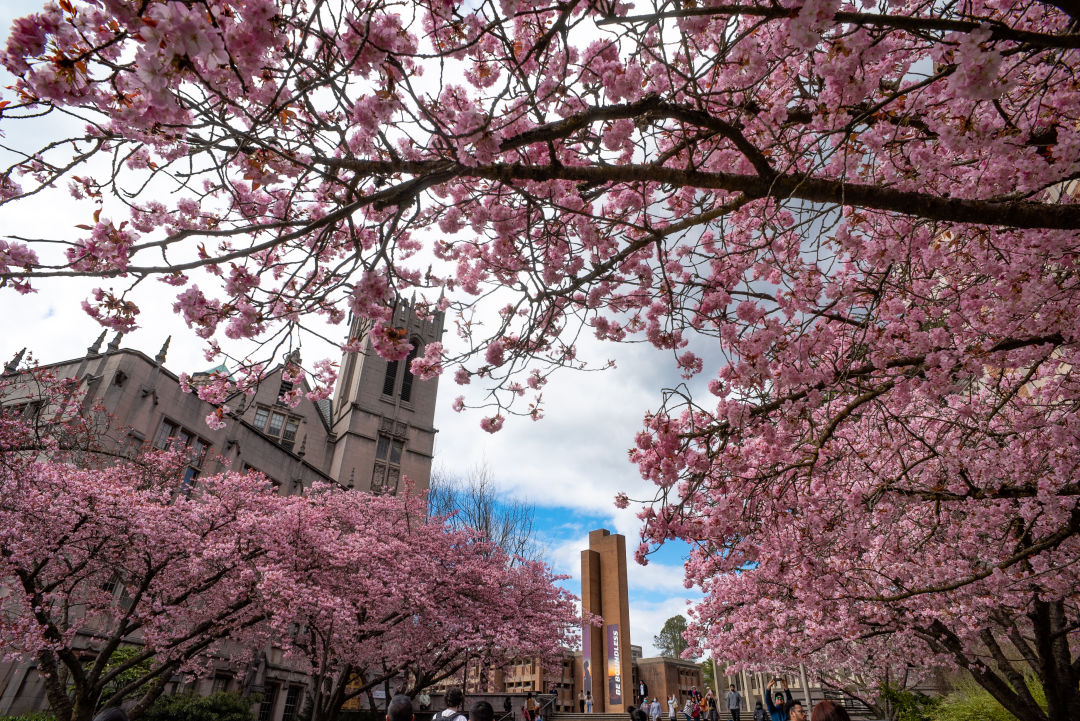
it might feel like spring has come early this year, but the cherry blossoms are right on time. Branches will soon burst with their perennial hues of pink, and swarming crowds of people will vie for a peek of the quintessential University of Washington blooms. But it's not just flora: cherry blossom–flavored treats, a race centered on the flowers, and a whole festival make the most of the annual spectacle.
What is it?
The bloom is less a festival and more an annual happening that everyone just seems to know about. University of Washington's 29 cherry blossom trees in and around the quad always draw a crowd. It's not just the area near Red Square, though. While the classic Yoshino trees cluster around the quad, another 18 of the variety live on a small street behind UW Medical Center. Three other varieties—Kwanzan, Shirofugen, and Hisakura—line the gently sloped path between the fountain and the quad near Rainier Vista. A handy map marks them all.

Image: Fei Huang/shutterstock.com
When will they bloom this year?
Cherry blossoms are frighteningly fickle and fleeting, so the bloom only lasts for a couple of weeks. The biggest factor impacting the timing of the bloom is the weather, with warmer temps encouraging the blooms' debut; the final weeks of March typically make for great viewing.
Employing student research at UW, PhD student Marlee Theil estimates that the quad's peak bloom (when 70 percent or more of blossoms are in full bloom) will land during the weekend of March 20. But, "peak bloom usually lasts about a week to 10 days, and the blossom display is beautiful and impressive both before that and after that," Theil says.
This year's predicted peak—calculated using 50 years of historical data tied to weather forecasts and bud progression—is well within expected timelines. Historically, peak bloom for the Yoshino trees in the quad has occurred between March 12 and April 3. The other varieties near Rainier Vista reach peak bloom slightly later.
UW has an Instagram account for periodic updates, or you can just take a peek on the campus webcam.
Why cherry blossoms?
Originally planted at Washington Park Arboretum in 1939—conflicting reports say they were either a gift from the mayor of Tokyo in 1912 or purchased for $1.25 a pop—the Yoshino cherry trees were relocated to the quad in 1964 to make room for the construction of State Route 520. Twenty-seven of the quad's trees are originals from the Arboretum. Then in 2014, the Japan Commerce Association of Washington, DC, gifted the university an additional 18 cherry trees, planted at Rainier Vista.
What can a Sakura enthusiast do?
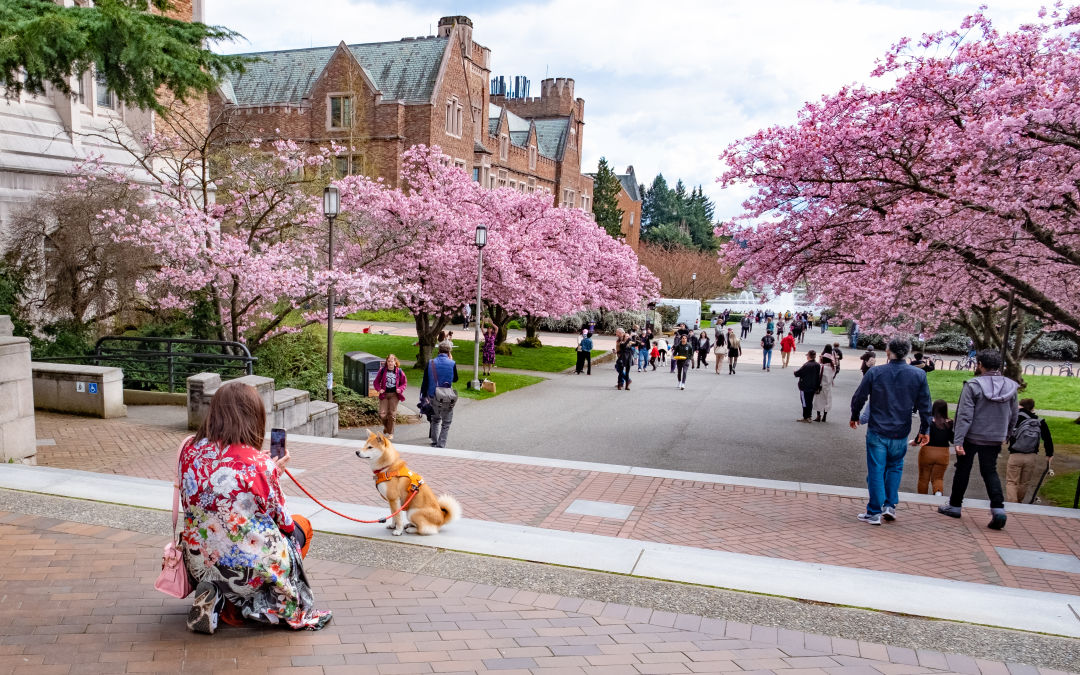
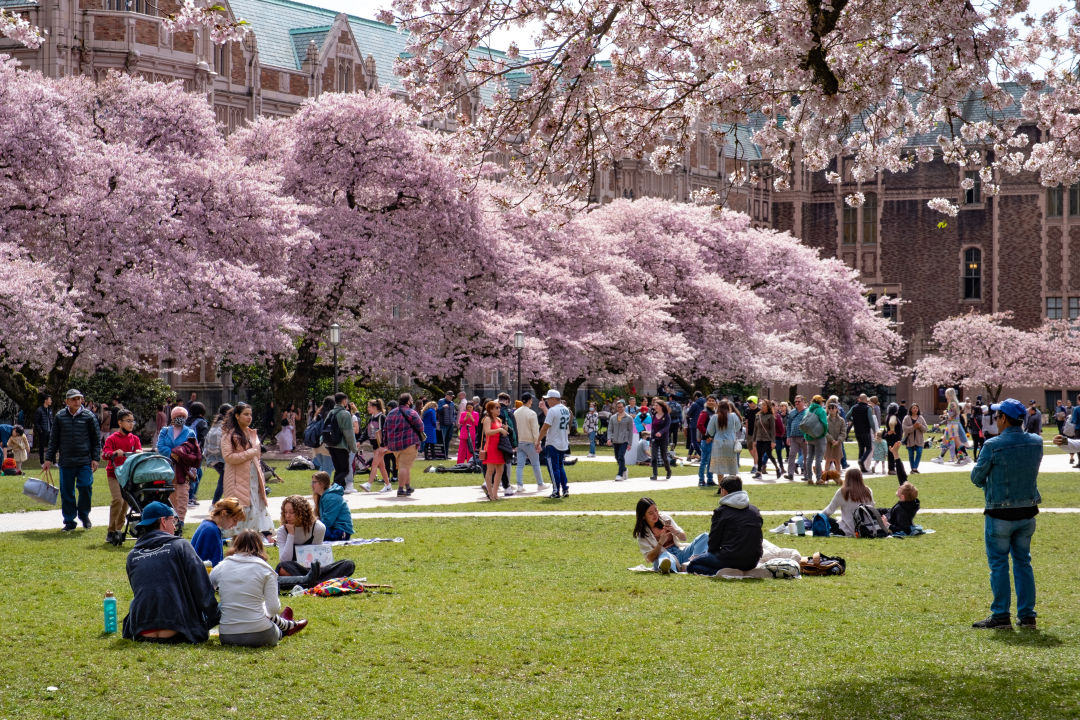
The most basic activity is hanami, literally "flower viewing." Most people stroll the quad and Rainier Vista for photo ops. Some people make it into a picnic, but don't expect any semblance of privacy or personal space. It gets crowded, especially on weekends. Sometimes you can find a food truck or two parked at Red Square, the brick-festooned plaza at the quad's north entrance.
If you prefer more organized activities, several concurrent events tag onto peak cherry blossom time. The annual Seattle Cherry Blossom Run (April 18 this year) winds its 5K, 10K, and half-marathon events through Seward Park and along Lake Washington's blooms rather than through campus. Nearby, though, the U District Cherry Blossom Festival brings Sakura-themed specials to nearby restaurants, cafés, and shops, many of them on the Ave.
What can you not do?
Remember how 27 of those 29 trees in the quad were originals from the Arboretum? That means they're old—over 90 years. So do not climb, pull, or shake those branches any which way. "Even a light person with sneakers on can damage the bark," says UW arborist Sara Shores. Bark damage can lead to insects, fungus, or disease, and endanger the health of the trees.
Shaking the branches to make it rain petals might make for a pretty photo but hastens the blossoms' demise. "We want to keep those blooms on as long as possible so everybody can enjoy them," Shores says. So don't touch.
What's the crowd and parking situation?