


Image: William P. Wright
“Moving house.” It’s not just a British colloquialism for the chaos of packing up furniture and loading a moving truck. The term stems from the practice of movers relocating an entire building, picking up the whole kit and kaboodle and plopping it down on a new lot.
Seattle has been doing it for a while, too: During the Denny Regrade in the early 1900s, the few houses that weren’t destroyed by the massive leveling project were meticulously lowered to the new ground level. One was taken across the Puget Sound to Lopez Island, although little information survives on how the feat was accomplished—or the state of the house upon arrival. But homes and barns have been moved for centuries. Today, engineers are still shuffling houses around Seattle, to the amazement and wonder of passersby. It’s not as outlandish as it sounds.
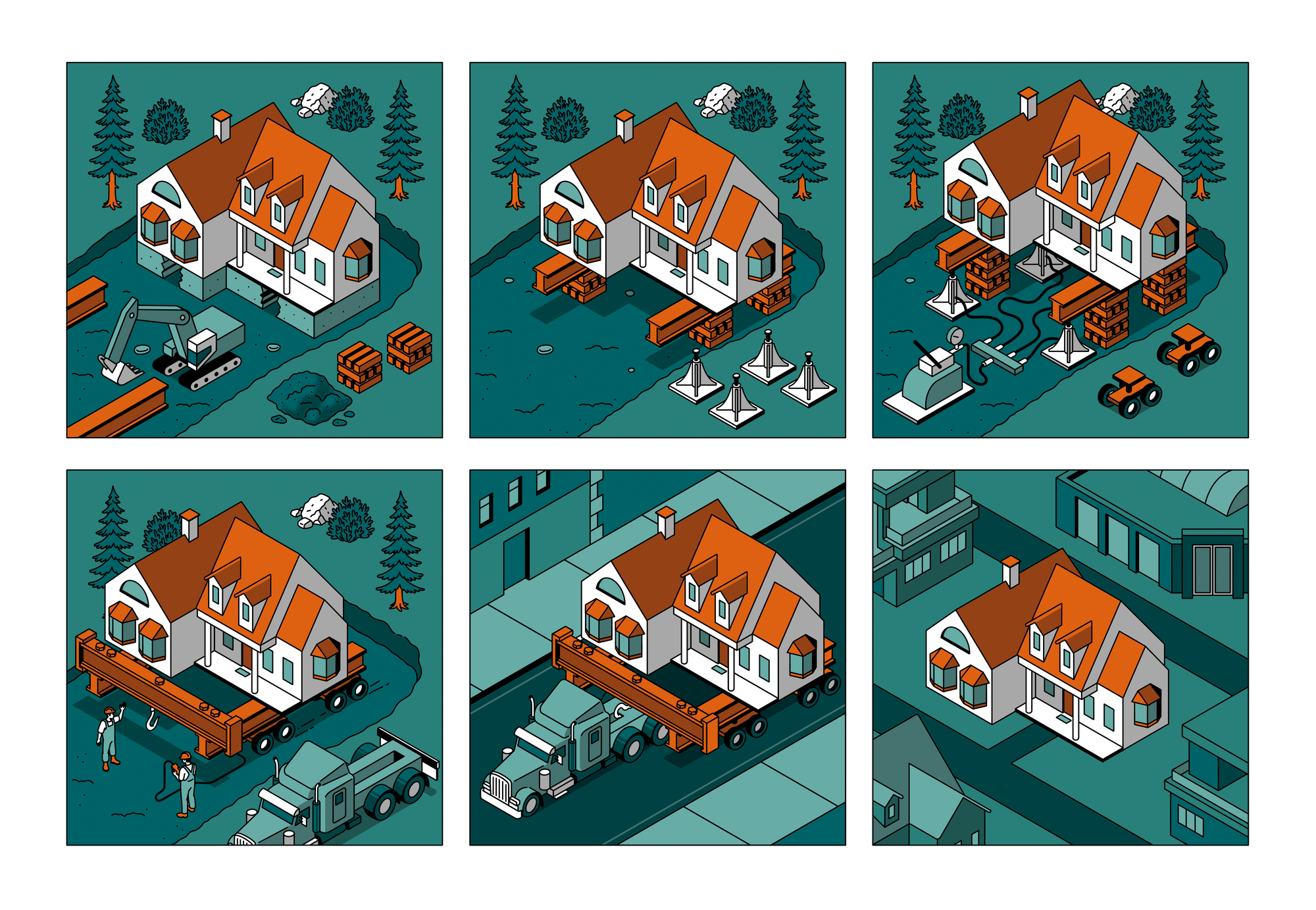
Image: Jacopo Rosati
The Nitty Gritty
It all starts with a few holes in the ground, access points for steel beams to slide underneath the house. Next comes what PNW house-moving company Nickel Bros’ Jeff McCord describes as “crisscrossed timbers that look like square Lincoln Logs.” Hydraulic jacks handle the heavy lifting, and hydraulic dollies—outfitted with brakes and independent axles for navigating all of Seattle’s tight turns—handle the moving.
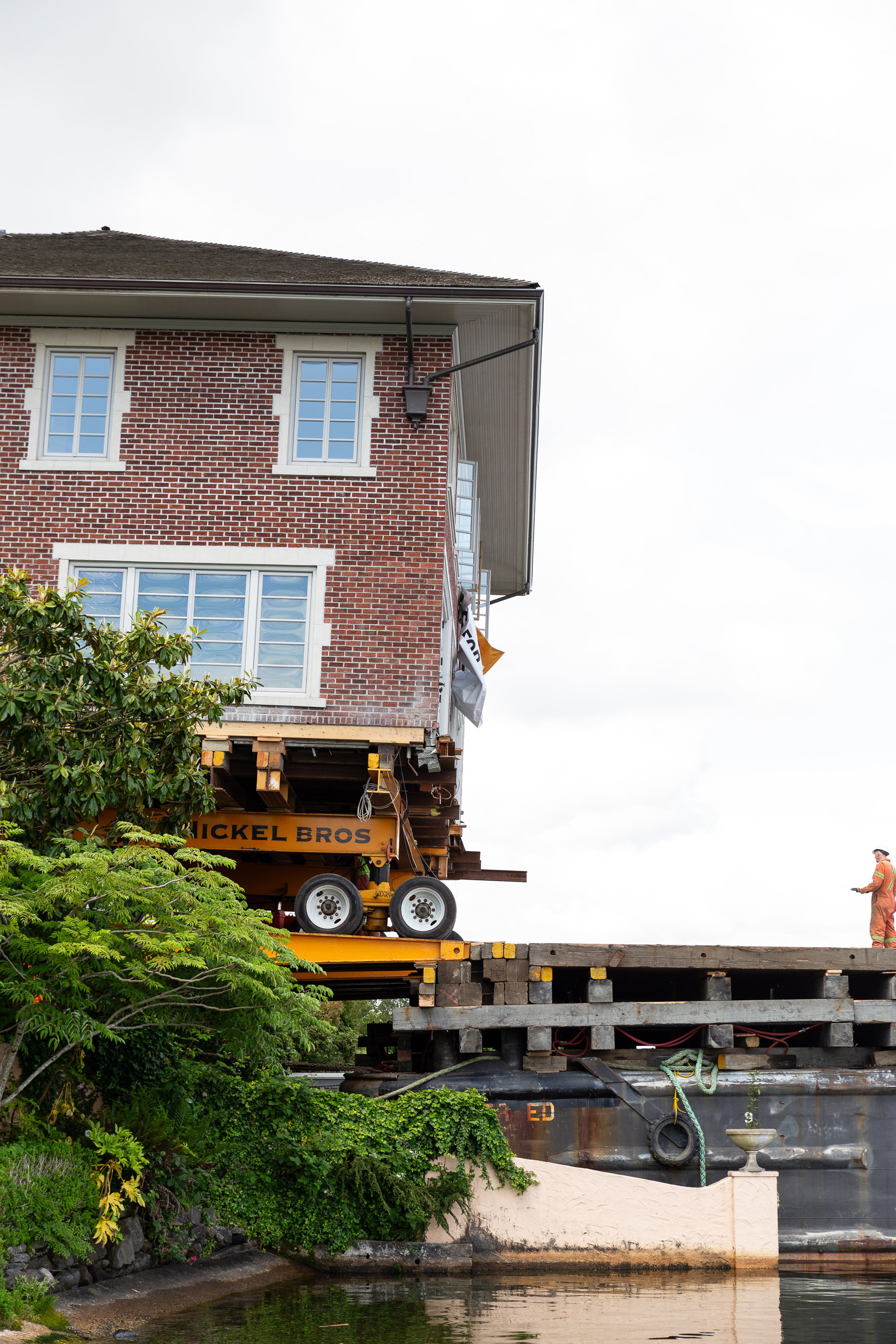
Image: William P. Wright
Move That House!
Any house, technically, can be moved. Should it, though? Size, height, location, and move distance all factor in. Often, moving a house more than about three miles becomes cost prohibitive, largely thanks to the cost of moving overhead utility lines out of the way. But cost isn’t the only motivating factor: Moving a historical structure is sometimes the only path to preservation in the face of development, or environmental sustainability might outweigh black-and-white costs.
Adopt, Don’t Shop
Since moving a structure is cheaper than building from scratch, especially with rising lumber costs, “We have taken the approach of proactively saving houses,” McCord says. They are listed for sale on the Nickel Bros website, starting around $80,000 (local delivery costs included). Developers save on demolition costs, a “perfectly good” home stays out of the landfill, and new homeowners get good bones, as the timber in most of Seattle’s older homes is fine-grain old-growth Douglas fir—estimated to be four times stronger than the lumber of the same dimensions you’d find at Home Depot.
Case Study 1
Madison Park Mansion
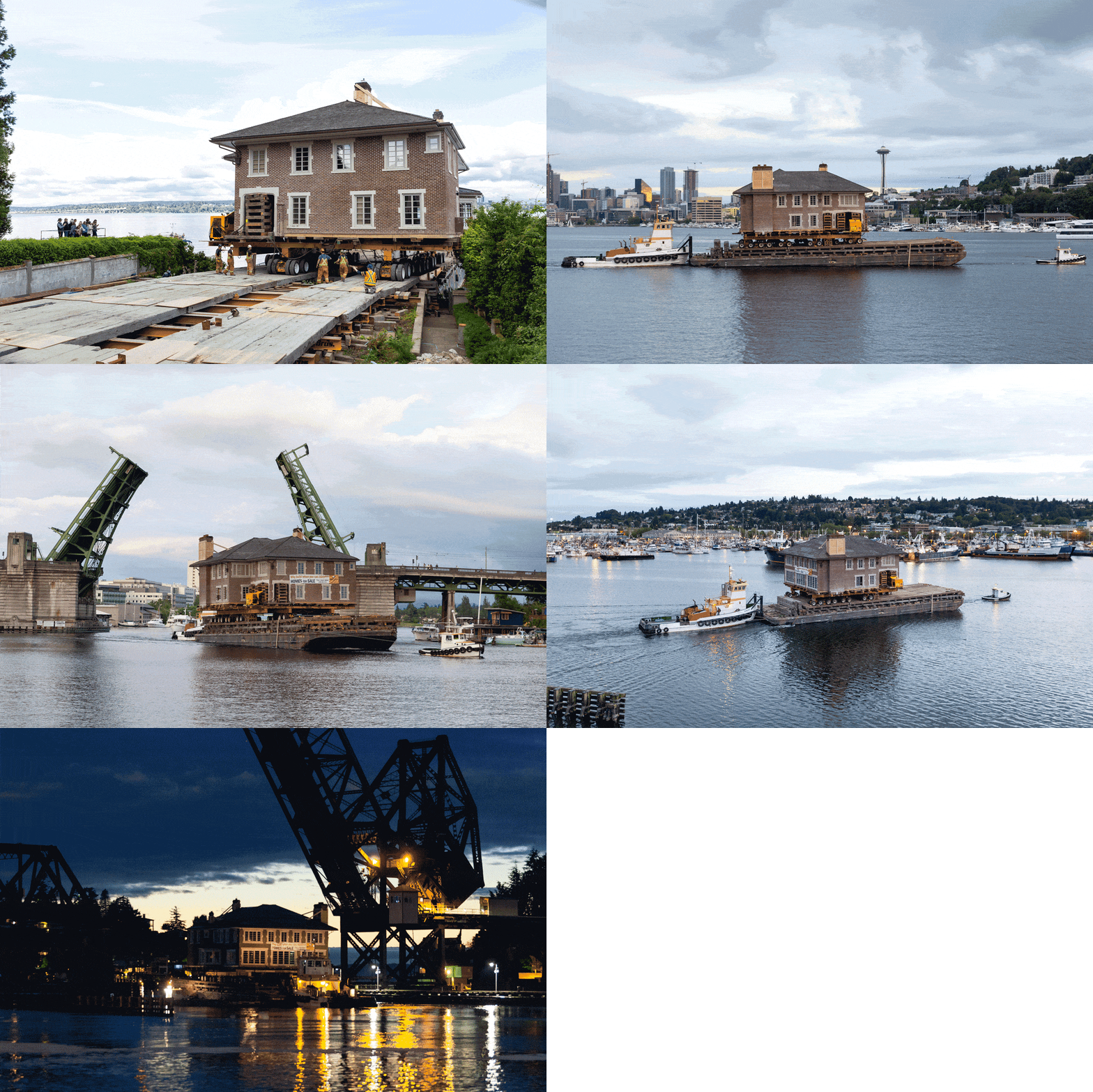
Image: William P. Wright
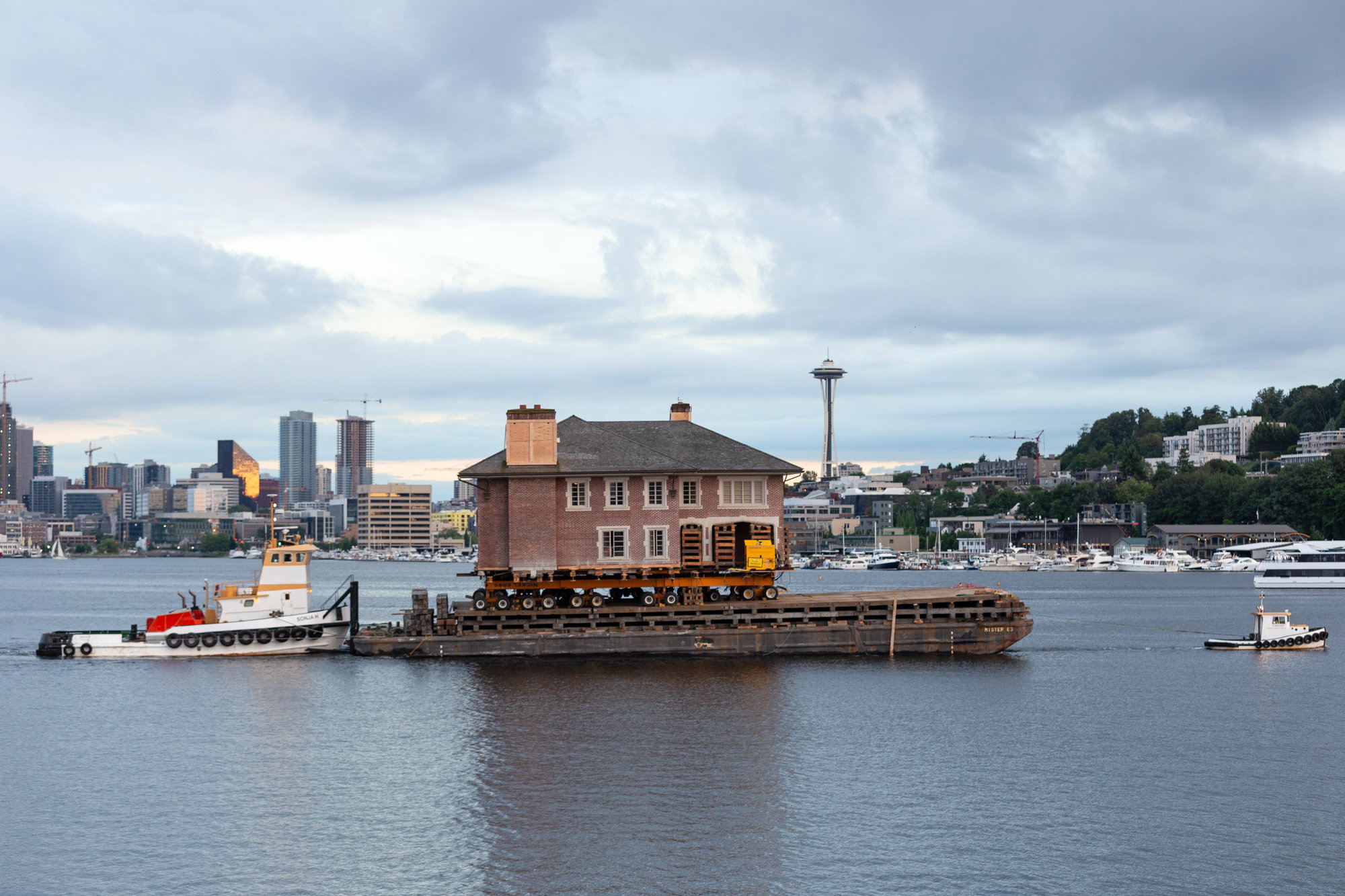
When the Montlake Bridge opened on a June day in 2015, it wasn’t for your typical sailboat or gravel barge. A whole house—a four-bed, six-bath, 6,200-square-foot mansion—floated through the Montlake Cut. It passed through the Ballard Locks and by all four Ship Canal bascule bridges en route to its new lot on Bainbridge.

Case Study 2
Ballard Pioneer Houses
This past summer, a pair of late 1800s vertical plank homes celebrated a unique anniversary: five decades living in their new neighborhood. The historic, carpenter-built wood houses called the International District home until 1976, when a nearby business expanded onto their lots. They could have easily been demolished, but instead, two of the oldest houses in the city were donated to Historic Seattle, a preservation nonprofit that found them a new home in the Ballard Avenue Landmark District. Today the relocated houses are living out an unlikely third act—host to the cozy, family-farm-to-table restaurant San Fermo and its handmade mafaldine and farm-grown bolognese.
50%
The cost of moving a house ranges wildly, but moving an existing home is typically half the cost of building the same structure from nothing. Moving a house within Seattle requires a Department of Transportation House Move permit ($180), plus any costs for foundation work, earth moving, barging, hookups, and other permitting.
Case Study 3
Vashon Vertical
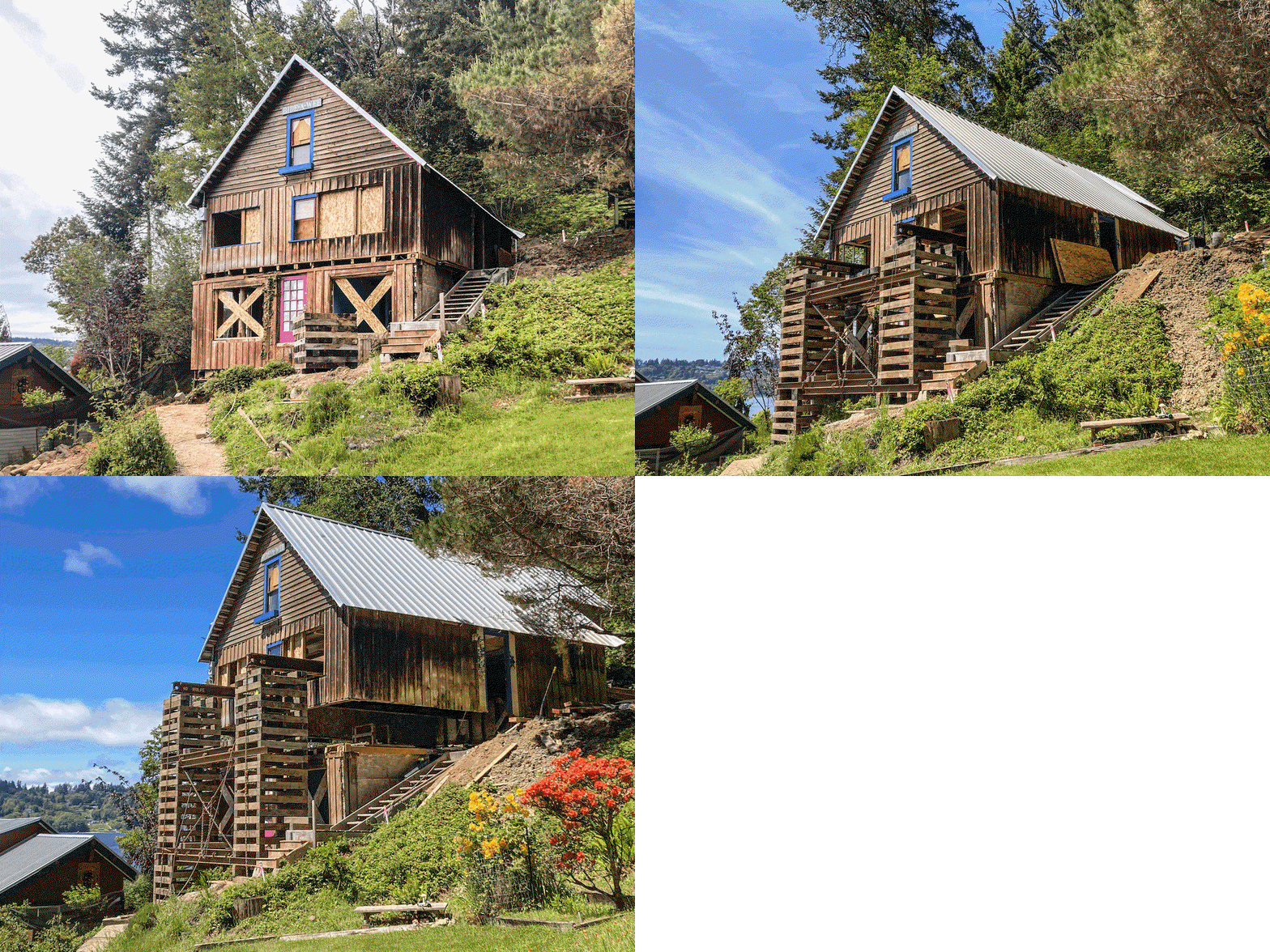
Sometimes the move is up in the air, not to a new lot. In 2024, Wolfe House and Building Movers lifted a Vashon cottage. Not only was the foundation replaced, but the ceiling was removed and the interior got an extra three feet of height.
Published in the The Innovation Issue issue of Seattle Met.
|
|
|