


Image: Meron Menghistab
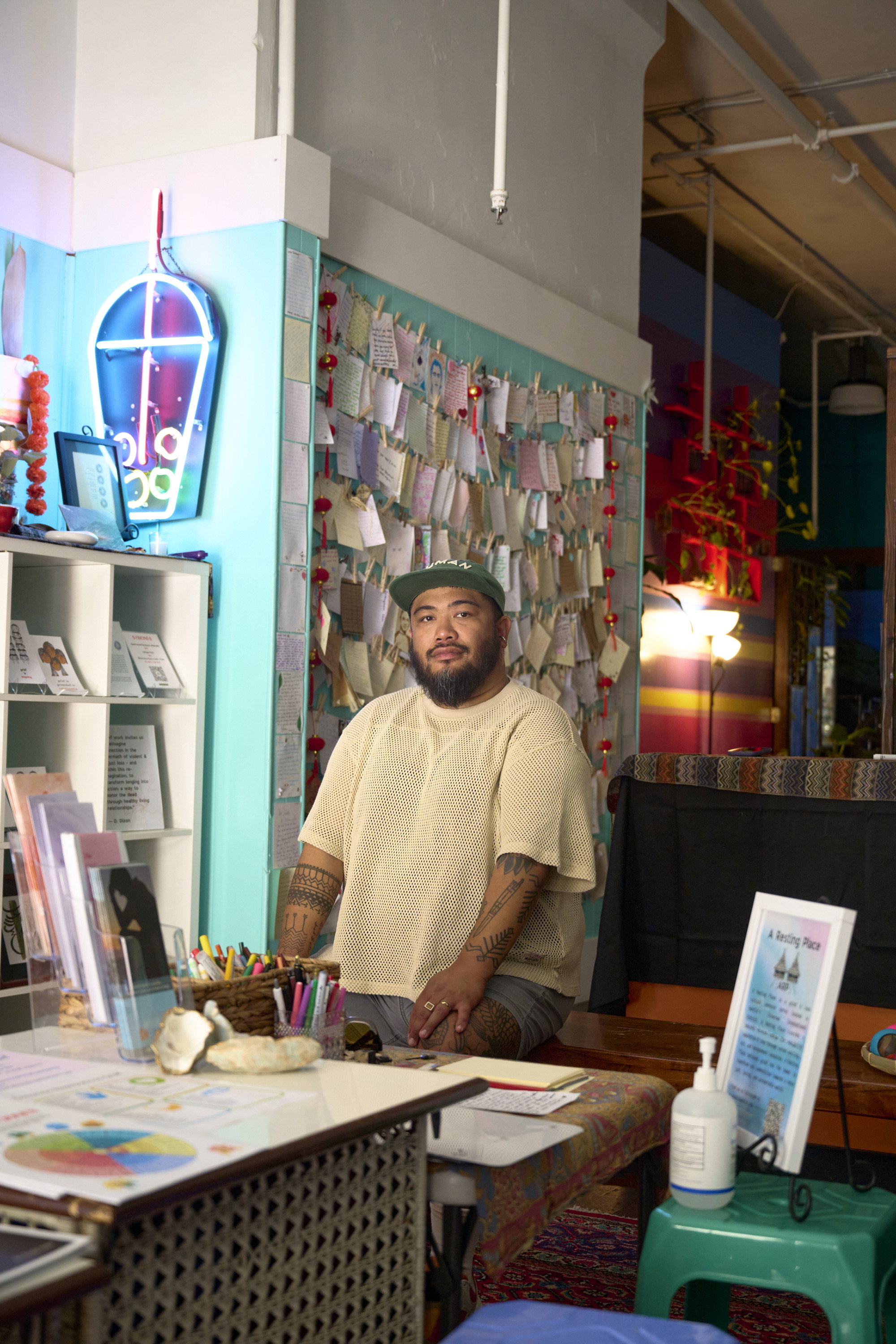
When terrible things happen, what kind of space do we create for them? It’s a question Derek Dizon has wrestled with for most of his life; when he was four years old, his mother was murdered.
Today, Phoebe Dizon is at the heart of her son’s work as founder of A Resting Place, a cultural resource center in the Chinatown–International District focused on Asian, Black, Brown, and queer/trans grief and loss. Her face beams out from the center of the community altar there, housed in a curio cabinet. In a family snapshot perched amid dried flowers, she wears a pin-striped blazer, her eyes sparkling.
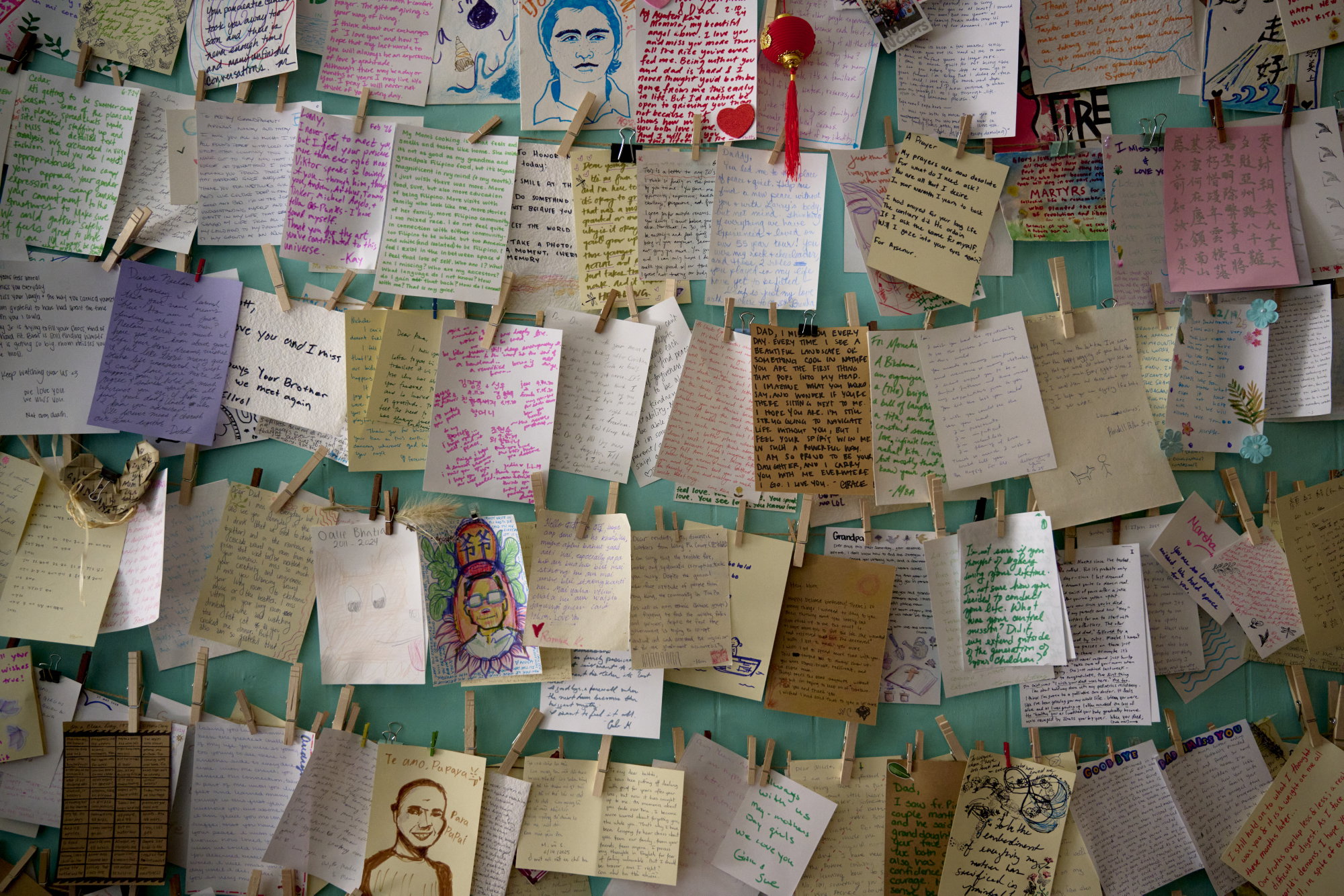
Image: Meron Menghistab
Visitors have left photos, keepsakes, and handwritten notes remembering loved ones. Art, poems, and remembrances dot the walls. In the grief resource library toward the back, people can recline on mats and pillows to write letters to their departed. “In our society, we don’t have an everyday ritual or everyday space to really acknowledge
loss,” Dizon says.
His mother’s case is a notorious one in Seattle history. In 1995, Phoebe was at the King County Courthouse supporting a friend, Susana Remerata, through a divorce trial when Remerata’s estranged husband, Timothy Blackwell, opened fire. He killed Remerata, Phoebe, family friend Veronica Laureta Johnson, and Remerata’s unborn child. The murders are the reason the courthouse now has metal detectors.
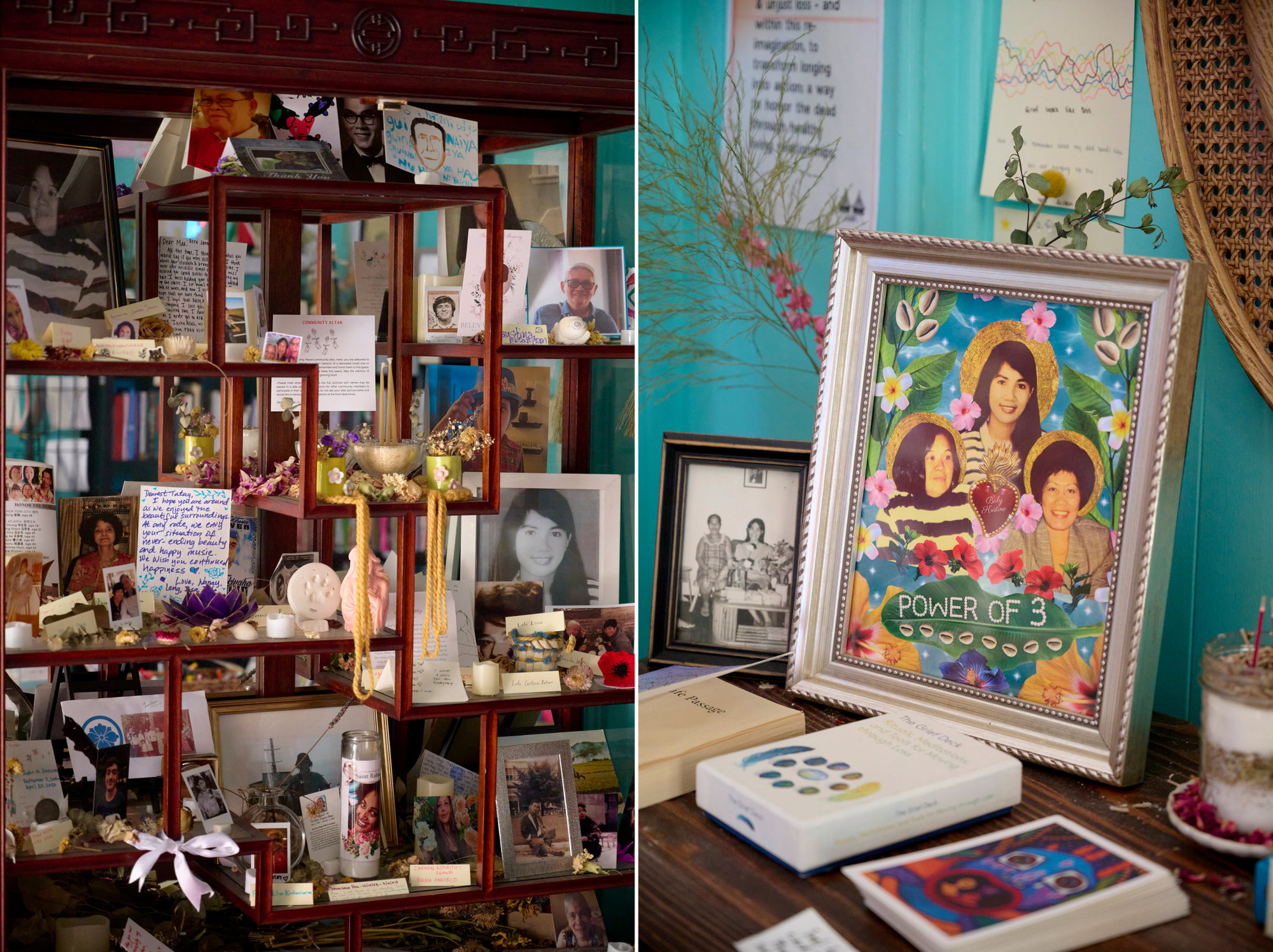
Image: Meron Menghistab
No one told young Derek exactly what had happened. “A lot of people kind of glazed over the wording, and said things like, ‘She’s in heaven now,’” he says. For years, he struggled to make sense of the loss. At the University of Washington for college and graduate degrees, Derek’s Asian American and social work studies helped connect the dots.
“My mother was advocating [for] and protecting someone who was experiencing domestic and sexual violence,” he says. “That was coded by misogyny and racism and colonialism.” All three women killed that day had emigrated from the Philippines; Blackwell had brought Remerata to the United States as a mail-order bride.
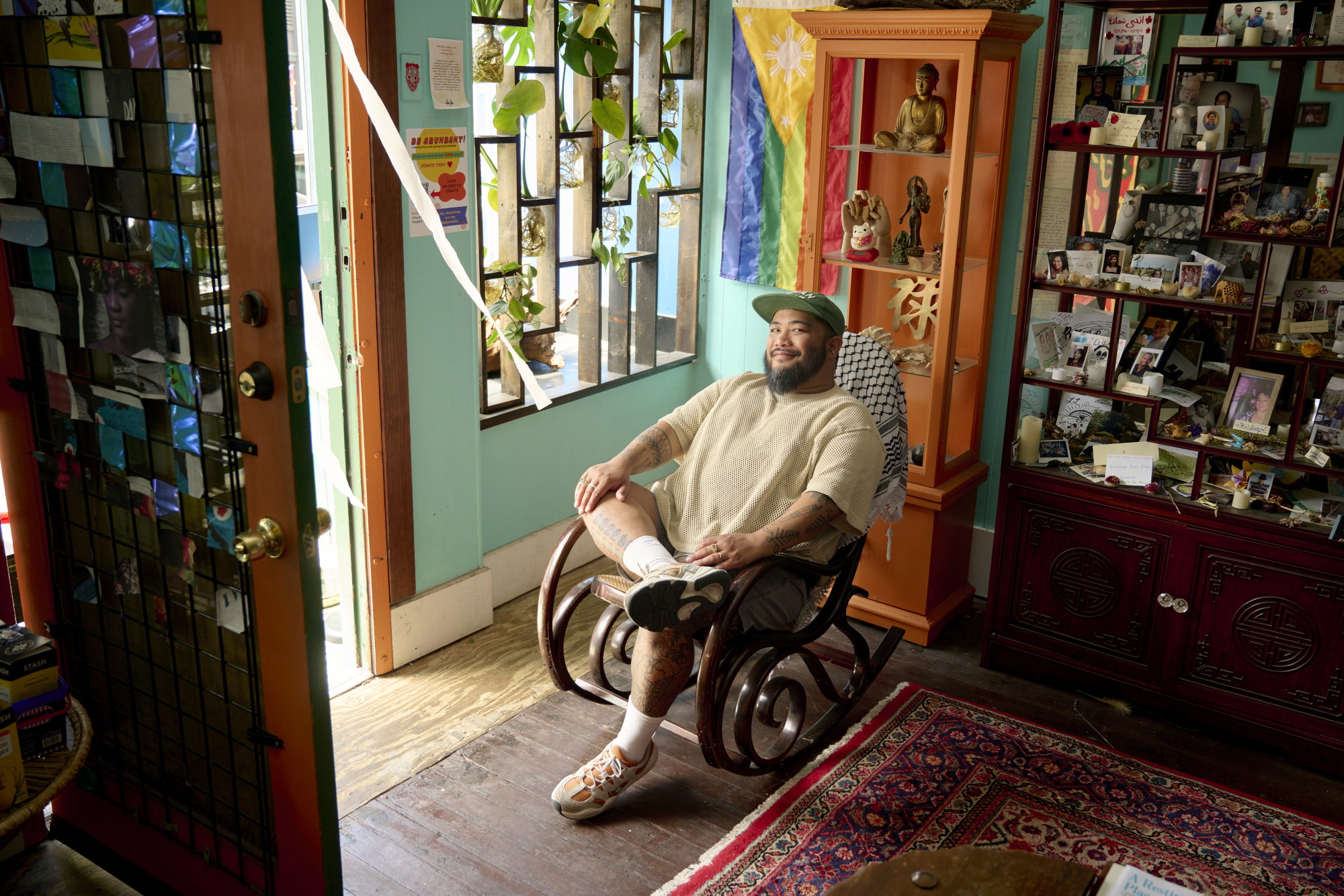
Image: Meron Menghistab
Derek now works as an organizer at API Chaya, a nonprofit supporting survivors of gender-based violence and human trafficking. At one of the organization’s annual vigils honoring victims, he experienced something he had rarely encountered growing up. “It was all Asian and women of color and queer people on this stage, like, being so loud about something that had been so secret,” he recalls.
He noticed barriers around language, culture, geography, and class in his grief work. While serving as artist in residence at Moksha Seattle a few years ago, he conceived the idea for a grief space where people could “drop in, honor their ancestors, maybe look at a book.” The project was supposed to last three months. Three years later, A Resting Place is still here.
Image: Meron Menghistab
The response, Dizon says, was especially powerful in the wake of the pandemic, when death and loss felt ever-present. Though A Resting Place hosts arts workshops, tea ceremonies, and even dance parties, Dizon is careful not to define it as an event space. “I wanted to create a space where you can feel the intenseness of your grief, but also the mundane of it,” he says. “Grief isn’t always, like, a big event.”
The location in the C–ID is central to its mission. Dizon wanted a free community space devoted to grief to exist within a neighborhood that experiences loss in many forms, from displacement and disinvestment, to the everyday challenges facing residents. A Resting Place’s most radical idea may be its simplest: that grief deserves a place in everyday life. A place where people can talk about a parent who died, a beloved pet, or the losses that shape a neighborhood. A place where memory is not hidden away, but welcomed in.
Published in the The Innovation Issue issue of Seattle Met.
|
|
|