


Image: Jane Sherman
Death is a part of life—and Seattle seems unusually comfortable acknowledging that. While some corners of the country fantasize about outrunning death with technology and others cling tightly to inherited traditions, Seattle asks, “How can we do death better?” The result has been practical, progressive, and influential enough that the rest of the US tends to follow us.
During the final years of the Great Depression, when funeral costs could devastate a working-class family, a tragedy helped spark a quiet revolution. After a 19-year-old woman was killed in a car crash in 1939, her grieving family asked the pastor of their church, the nonsectarian People’s Church in the University District, to accompany them to the funeral home. Instead of finding compassionate guidance, they encountered aggressive sales tactics.
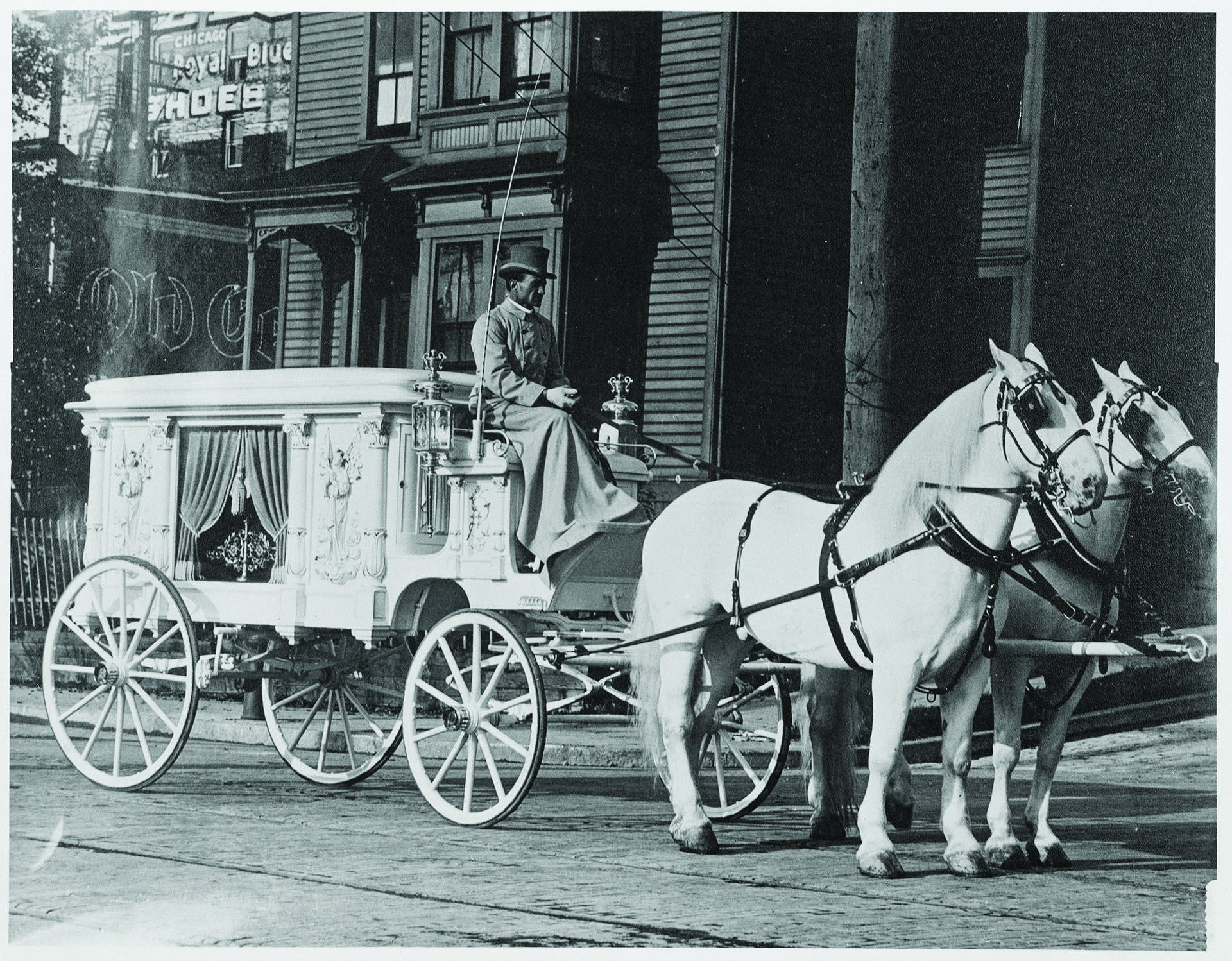
Image: Courtesy MOHAI/SHS18953
“They experienced a lot of, ‘Don’t you want the best for your daughter?’ and ‘Don’t you want to show the community your station in life?’” says Chris Ronk, managing funeral director of The Co-op Funeral Home. The family and pastor left feeling gross, Ronk says, and convinced there had to be a better way.
The result was the People’s Memorial Association (PMA), an organization that negotiated simple, affordable funeral services for People’s Church members via a handshake agreement with a local funeral home. The local experiment soon became one of the country’s most influential funeral consumer organizations. PMA helped found what is now the Funeral Consumers Alliance, a national nonprofit advocating for funeral consumer rights. Its funeral-price surveys and advocacy played a key role in the passage of the Federal Trade Commission’s 1984 Funeral Rule, requiring funeral homes to provide written price lists before discussing goods or services. Today, PMA is pushing for those prices to be posted online as well.

Image: Courtesy Recompose
As proponents of individual choice over guilt-driven upselling, PMA also helped popularize cremation at a time when it remained uncommon in much of the United States. Long viewed by reformers as a simpler, more sanitary, and more affordable alternative to elaborate burials, cremation gradually found an especially receptive audience here in the far-left corner of the country.
“I think because Seattle is so much more progressive and educated and unchurched, that took some of the barriers away from going in this direction,” Ronk says.
Over time, Seattle’s environmental values only strengthened that preference—cremation is often viewed as more environmentally friendly than conventional burial because it avoids embalming chemicals, burial vaults, and the wood, steel, and land required for traditional interment.

Image: Roger/adobe stock
“I think that’s why Seattle and Washington state are so far and away leaders of cremation in this country,” says Casey Husseman Brandt, executive director of PMA and The Co-op Funeral Home. “Very few states have a higher cremation rate than us.”
The Co-op Funeral Home itself was founded by the PMA in 2007, after industry giant Service Corporation International swept into the scene and made it clear PMA’s affordable contracts with local funeral homes weren’t going to continue.
That same willingness to rethink death care still shapes Seattle today, including in SoDo, where entrepreneur and designer Katrina Spade opened Recompose in 2020, after she invented human composting.
The method for turning human remains into soil recreates what happens every day on the forest floor, where fungi, microbes, and other organisms gradually return dead plants and animals to the soil. Bodies are laid into beds of straw, alfalfa, and wood chips inside gleaming white hexagonal vessels. Weeks later, the dead are nutrient-rich compost, suitable for adding to the rose garden or donating to a land conservation program.
Recompose is meant to bring green burial to the city, where space is at a premium. Since the process (technically called Natural Organic Reduction) was legalized statewide in 2019, 14 other states have followed Washington’s lead. “I’m pretty sure if I’d taken [the project] anywhere else, it would have been a lot harder,” Spade says. “Who doesn’t know what a nurse log is here?”
But there are other possible factors, too. Jeff Jorgenson, founder of Elemental Cremation and Burial, highlights Seattle’s Scandinavian heritage, which often encourages a no-nonsense approach. For him, that pragmatism makes us more open to discussing death without clutching our pearls. “Seattle’s like, ‘You know what? We’re humans, we’re not gonna be offended.’ Let’s talk about it.”
Published in the The Innovation Issue issue of Seattle Met.
|
|
|