


Image: Jane Sherman
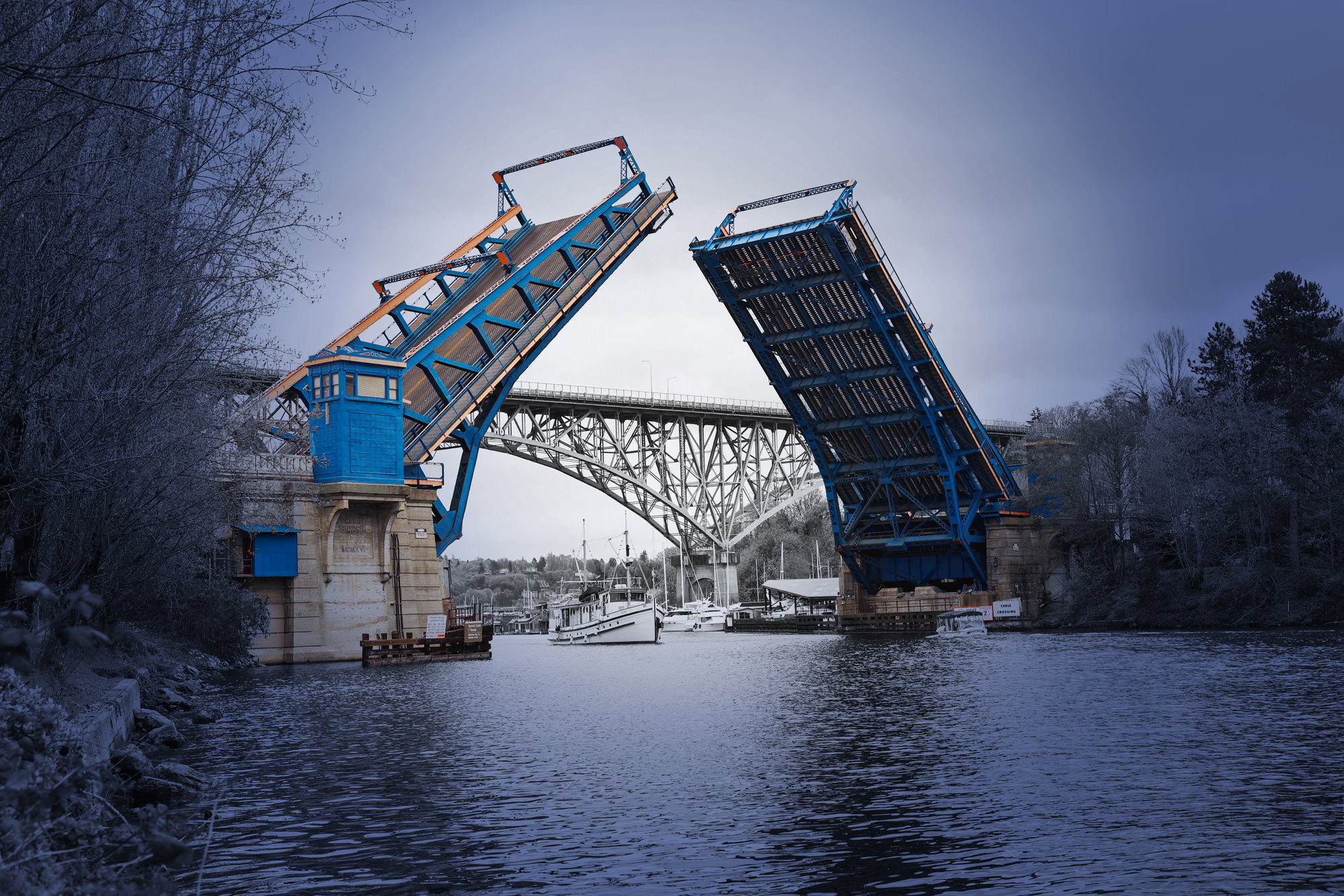
All cities have traffic; not all have the intersection of marine and vehicle. But navigating waterways and their traverses is part of life here. In neighborhoods severed by rivers, canals, and lakes, movable bridges form a compromise between travelers on water and on land, opening and closing to allow for peaceful coexistence—at least until the next time the Ballard Bridge gets stuck open.

Image: Jane Sherman
Hands On
“You could never automate these bridges,” SDOT Bridge Operations manager Greg Silcox says. Sure, you could. “But why would you?” With so much pedestrian and cyclist traffic shuttling across, the openings at Seattle’s drawbridges require a human hand.
In the Fremont Bridge’s southeast tower, that hand is Jared Hickman’s. For the past 18 years, he has opened the bridge by pressing a series of seven buttons on a control panel that looks like the cockpit of an airplane. From his penthouse of an office—a 9-by-14-foot room accessed by summiting two flights of narrow metal stairs built in the early 1900s—he monitors the sidewalks, oversees bridge maintenance, and responds to regular chatter on the handheld radio. “Nothing is surprising anymore,” Hickman says, surveying a 360-degree view before adding, “A shocking number of people hit the bridge with their boats.” A couple of overconfident sailboats meet their demise at the Fremont Bridge’s blue and orange deck each year.
SDOT employs 22 full-time bridge operators across the four bridges it manages, plus a handful of relief operators to fill in as needed. It’s a job people tend to stick with. “People are old-timers here,” Hickman says. For Silcox, bridge work runs in the family: His grandfather worked as a laborer in his teens, building the bridge before much of modern Fremont existed.
“It has its ups and downs,” Hickman and Silcox joke about the job of a bridge operator.
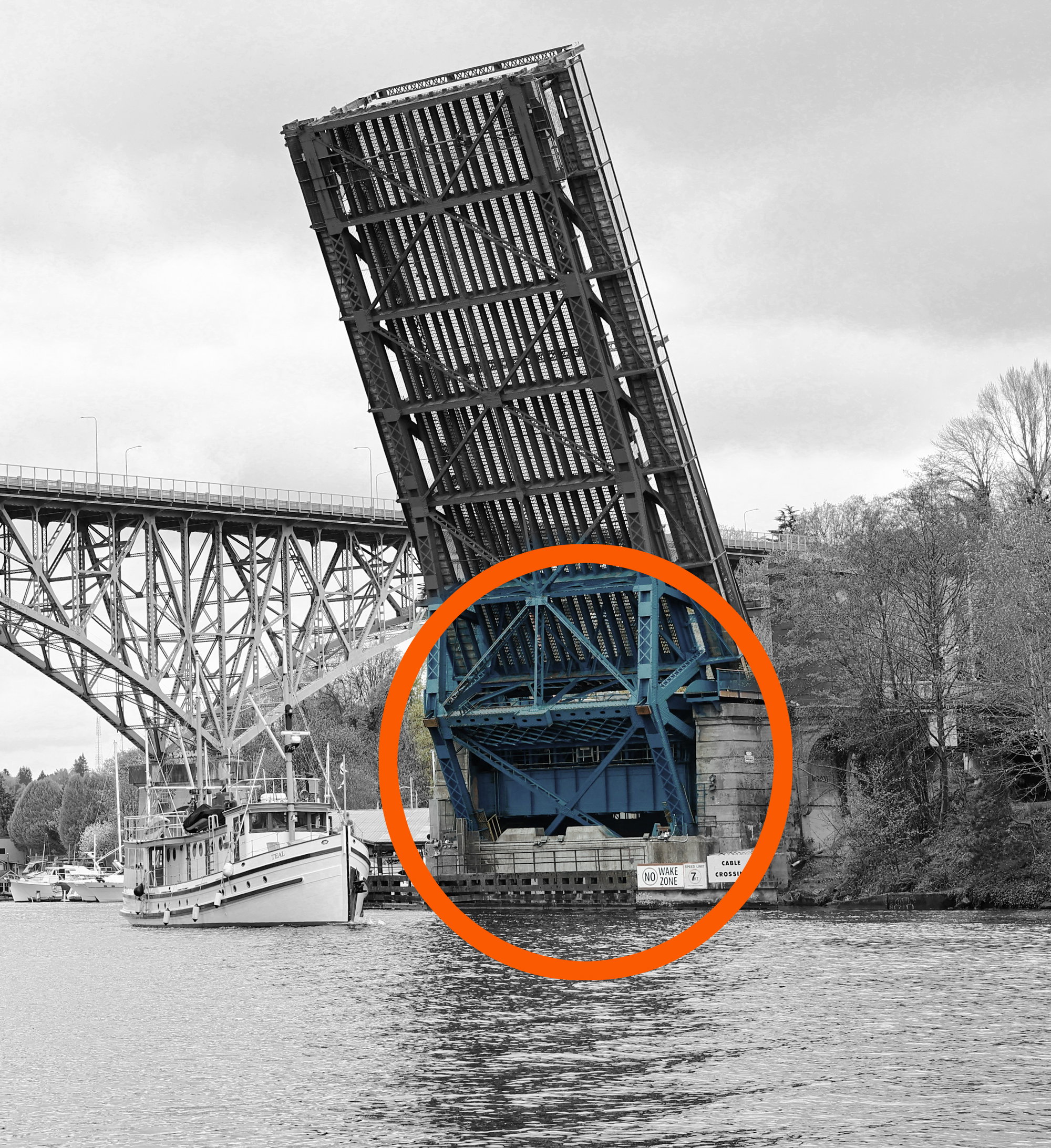
Image: Jane Sherman
Inner Workings
“There’s an old brake right there,” Silcox points to a large metal contraption in the corner of the Fremont Bridge’s artist studio. Seattle’s bascule bridges might have computerized braking systems nowadays, but their basic function harks back to early-twentieth-century engineering feats. Each leaf acts like a seesaw: underneath the bridge, giant counterweights swing down toward the canal to lift the street-level panels.
2025 Openings
- Fremont 4,134
- Ballard 2,969
- University 2,375
- Spokane Street 1,797
From the Water
Between 7am and 11pm, bridges will open by request via radio, sound, light, or flag; the tower will respond with horn blasts. During nighttime hours, bridges open by appointment only.
From the Road
Marine traffic has the right of way, aside from peak commuting hours (with a few exceptions for vessels with large loads). Opening duration depends on how fast boats travel through, but traffic is usually stalled for 10–15 minutes for bascule bridges and 10 minutes for the Spokane Street Swing Bridge, which will swing open for boats even during rush hour. One of busiest days for bridge openings along the Lake Washington Ship Canal? The serendipitously named Boating Opening Day, the first Saturday in May.
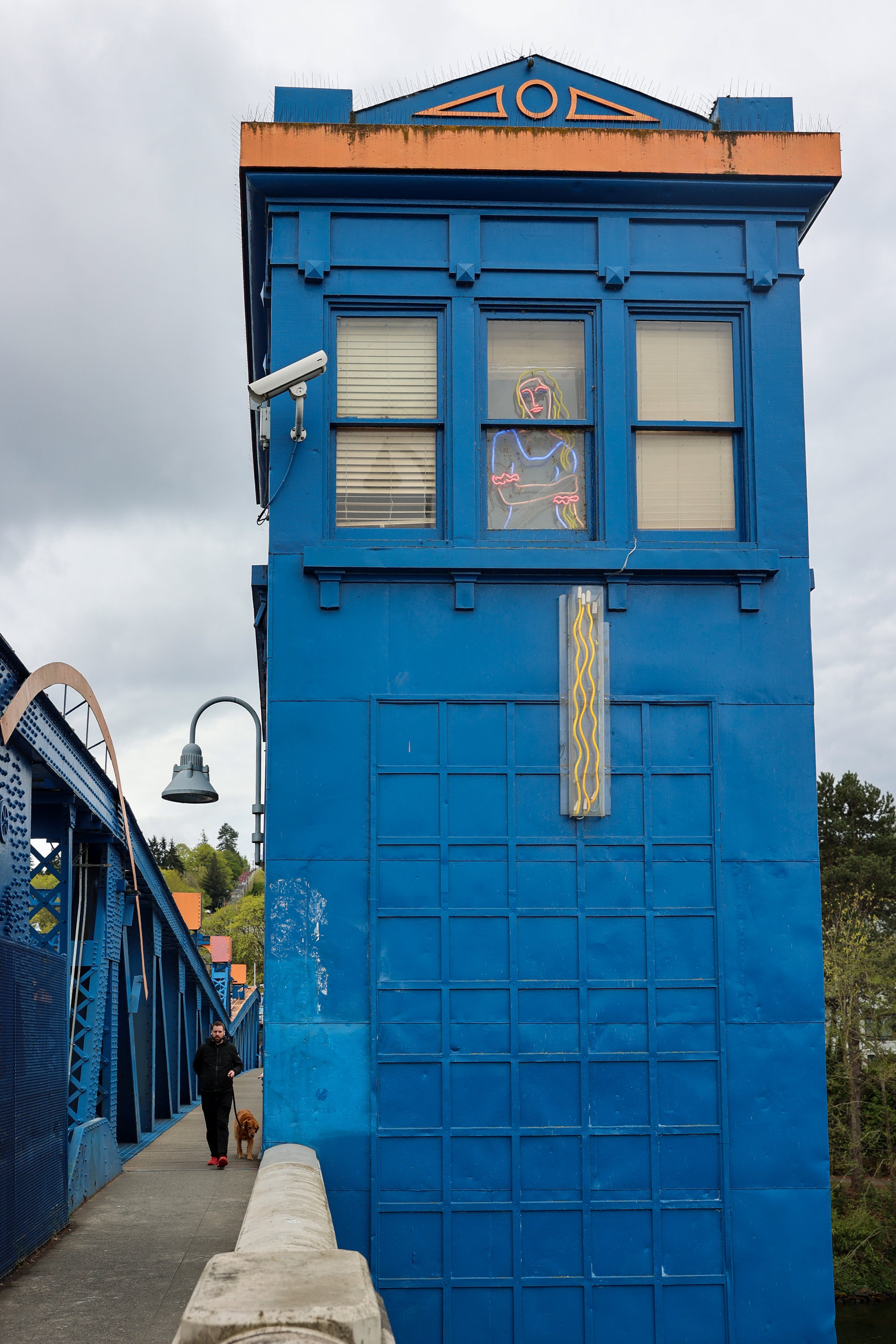
Image: Jane Sherman
From the Studio
Fremont Bridge operators keep watch over traffic—both maritime and road—from their tower on the eastern side. The northwest tower is another matter. Guarded by a neon-lit Rapunzel, the tower was remade by artist Rodman Miller in the late 1990s. More recently, a joint program between Seattle Office of Arts and Culture and SDOT has deposited artists over the summer into the cozy studio here and another at the University Bridge.
Vivian Cho called the University Bridge studio home last summer while crafting an animated short film. Perched in the liminal space between the University District and Eastlake neighborhoods, the office space felt reflective of the transitional life phase the Tacoma native and recent UW grad occupied.
“There was this great blue heron that would come to visit semifrequently to the bridge,” Cho remembers. That heron would become a pivotal character in their film, the bridge a portal to an “underwater, dreamlike world.” The final work is on display at King Street Station this summer.
Meet the Bridges
The Artist
Fremont Bridge | 109 years old
Once fully painted orange, this bridge currently sports a blue and orange palette that was selected by a 1985 poll of Fremont residents and by the Fremont Arts Council. An official count of 1,029,510 bikes and scooters crossed the bridge in 2025.
The Seafarer
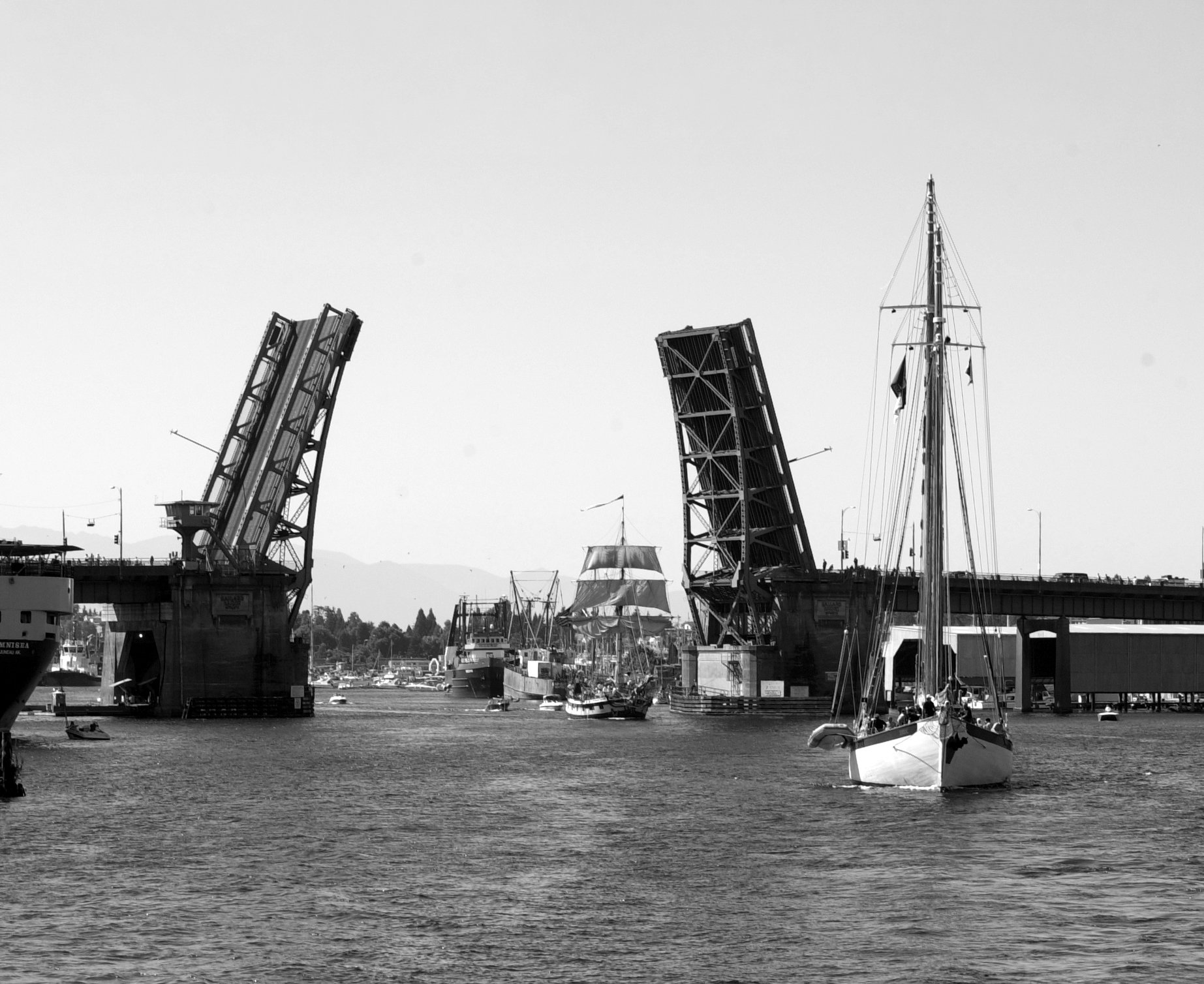
Ballard Bridge, a.k.a. 15th Avenue Bridge | 109 years old
The bridge was added to the National Register of Historic Places in 1982.
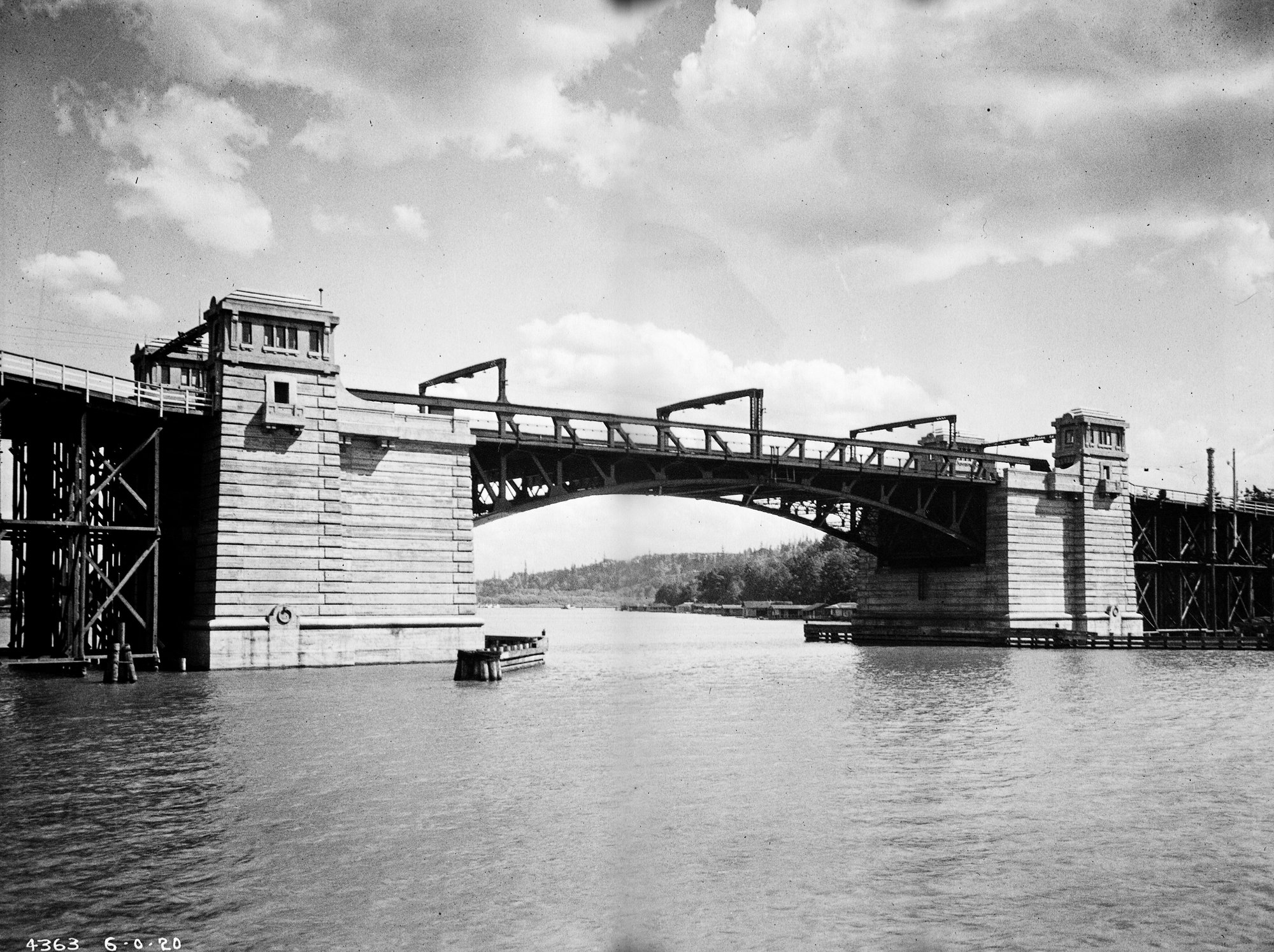
The Professor
University Bridge | 107 years old
As metal expands with summer heat, all metal drawbridges can get stuck, but this one is the most common troublemaker. When temperatures hit 85 degrees, SDOT crews spray all their drawbridges with cool water to decrease the risk of expansion.
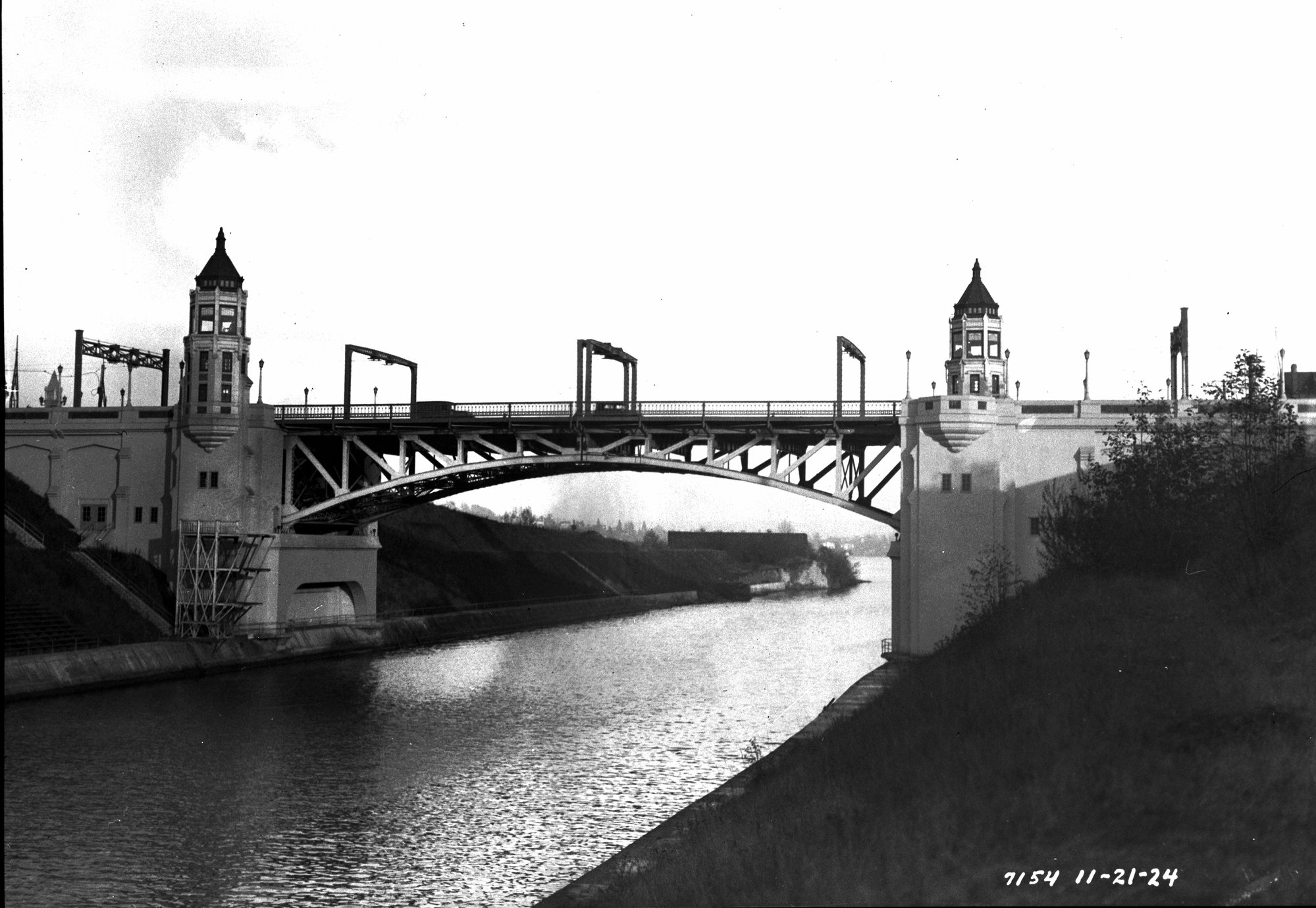
The Lakeviewer
Montlake Bridge | 101 years old
A great spot to watch rowers speed their way below through the Montlake Cut during the annual Windermere Cup, it sports a Gothic architectural style to match the buildings at the nearby University of Washington.
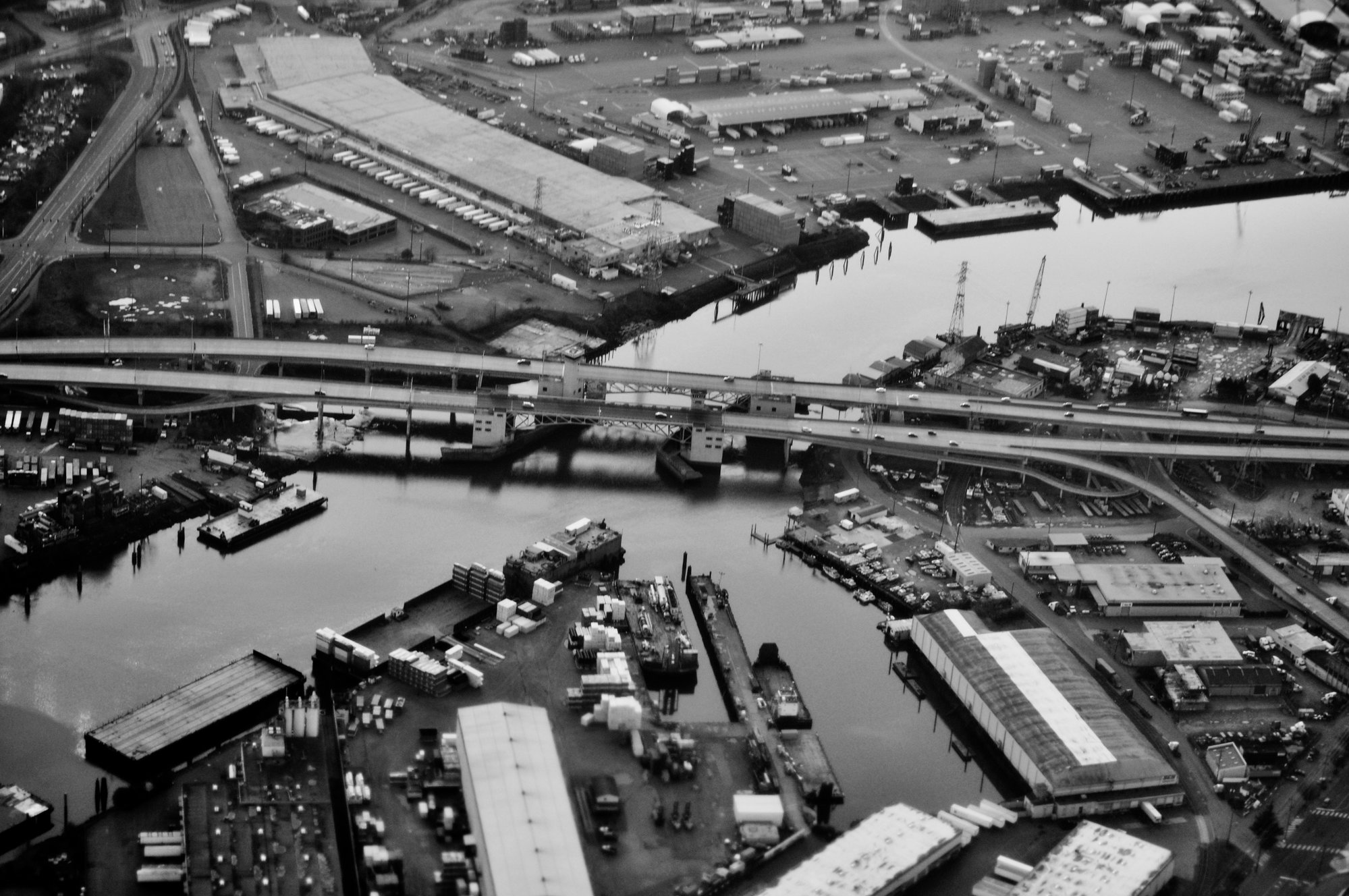
Image: Joe Mabel/CC
The Twins
First Avenue South Bridge | 70 years old (northbound) and 29 years old (southbound)
Two separate spans, one northbound and one southbound, carry vehicles over the Duwamish River via State Route 99. Like Montlake, this bridge is operated by WSDOT, not SDOT.
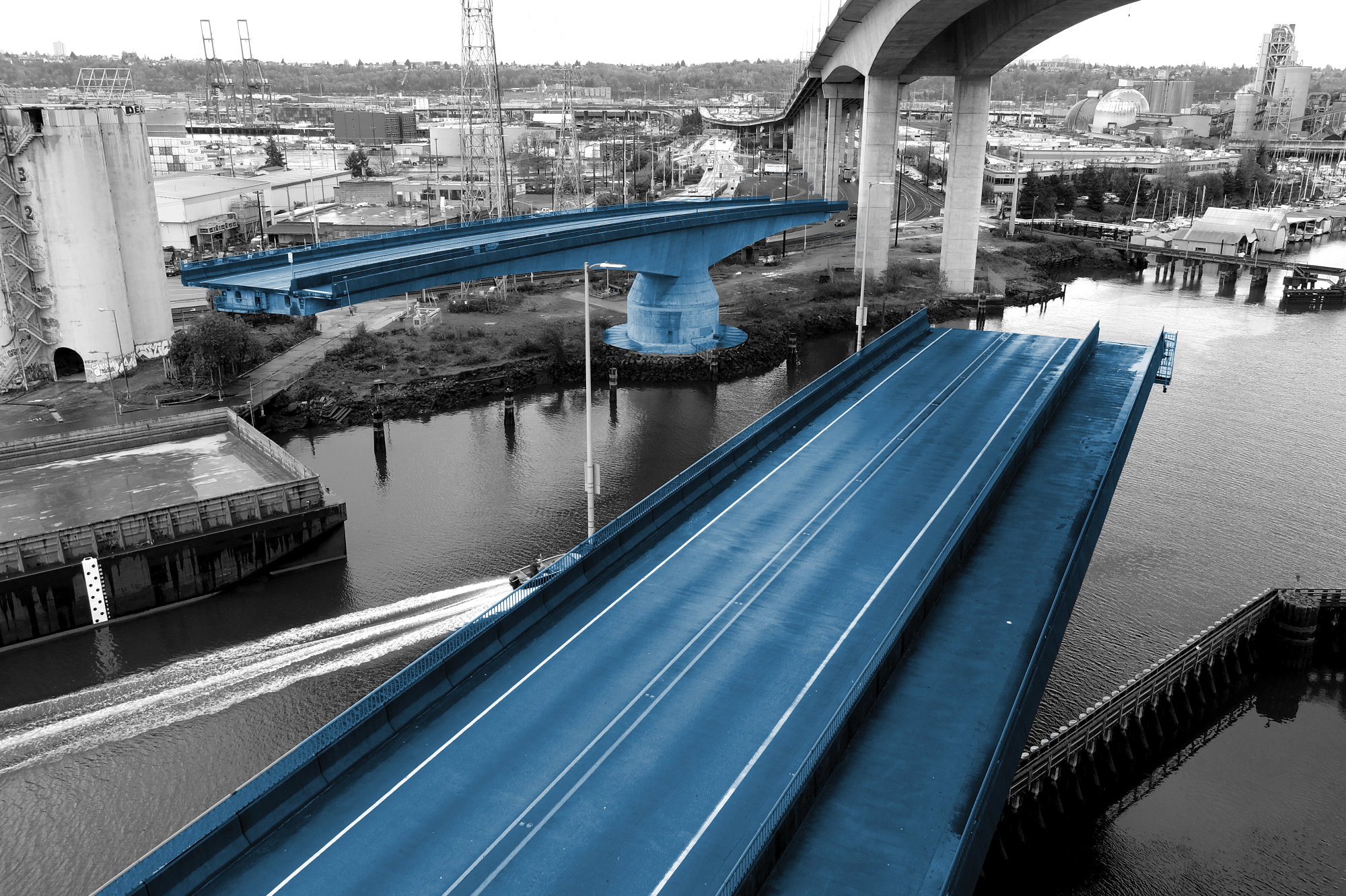
The Oddball
Spokane Street Swing Bridge | 35 years old
Seattle’s only swing bridge opens for vessels about 500 times each year. Instead of two rising panels, it has two concrete leafs that rotate about 45 degrees to allow river traffic to pass. After working overtime while the higher West Seattle Bridge was closed, it’s undergoing a multiyear rehabilitation.
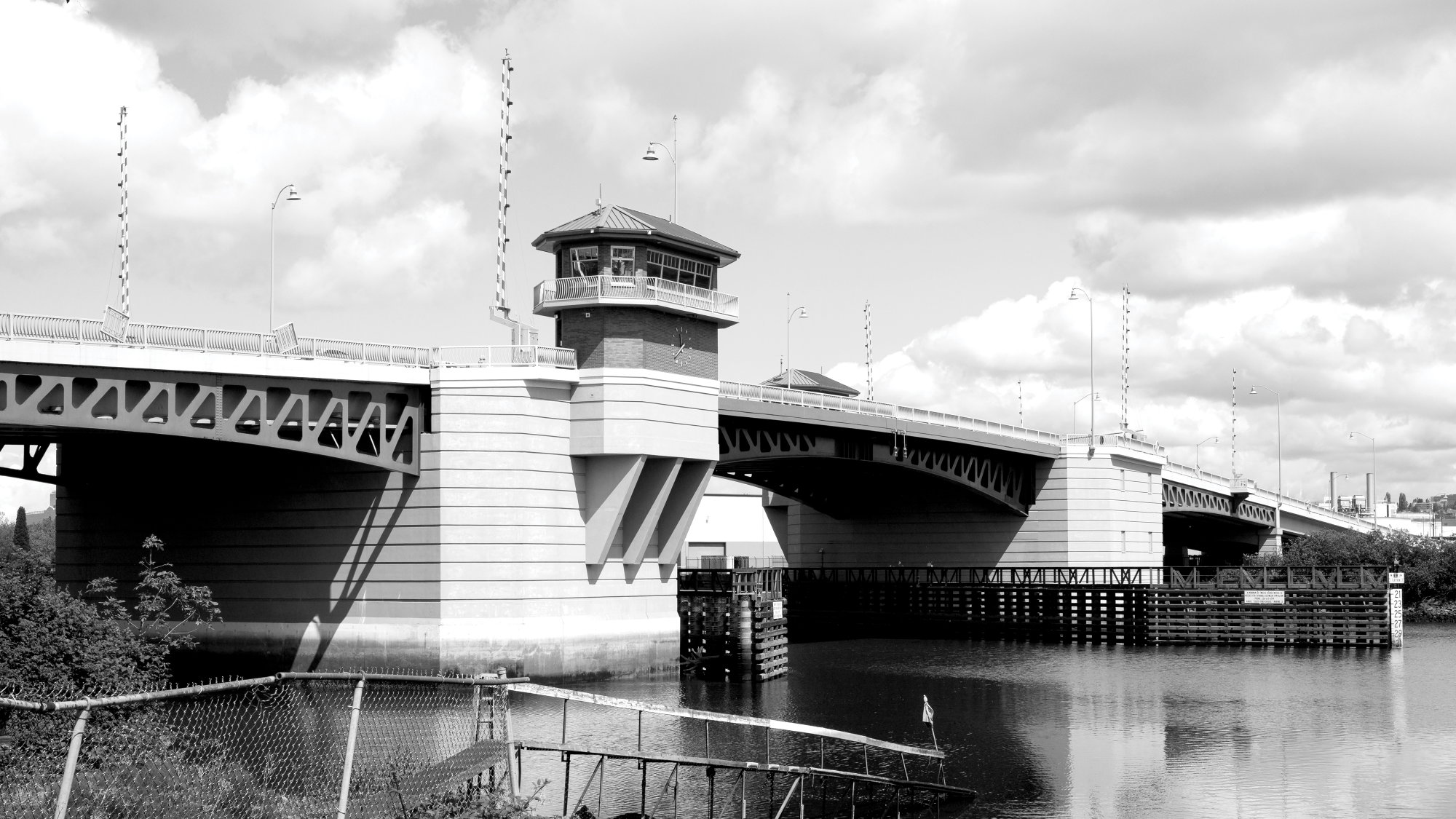
The Laborer
South Park Bridge | 12 years old
The current, rust-red-colored bascule bridge replaced its predecessor in 2014; the older one had been in use since 1931. A pocket park at the base of the bridge showcases salvaged parts from the old structure.
Published in the The Ultimate Sports City issue of Seattle Met.
|
|
|