
LATEST

Photos: Behind Sea-Tac Airport’s Locked Doors

More than 19,000 people go to work in the airport, fueling 737s, shining shoes, and hauling the 50-pound Samsonite monster you checked. We snuck behind some of the roped-off areas to see Sea-Tac at work.
All photos by Mike Kane

1
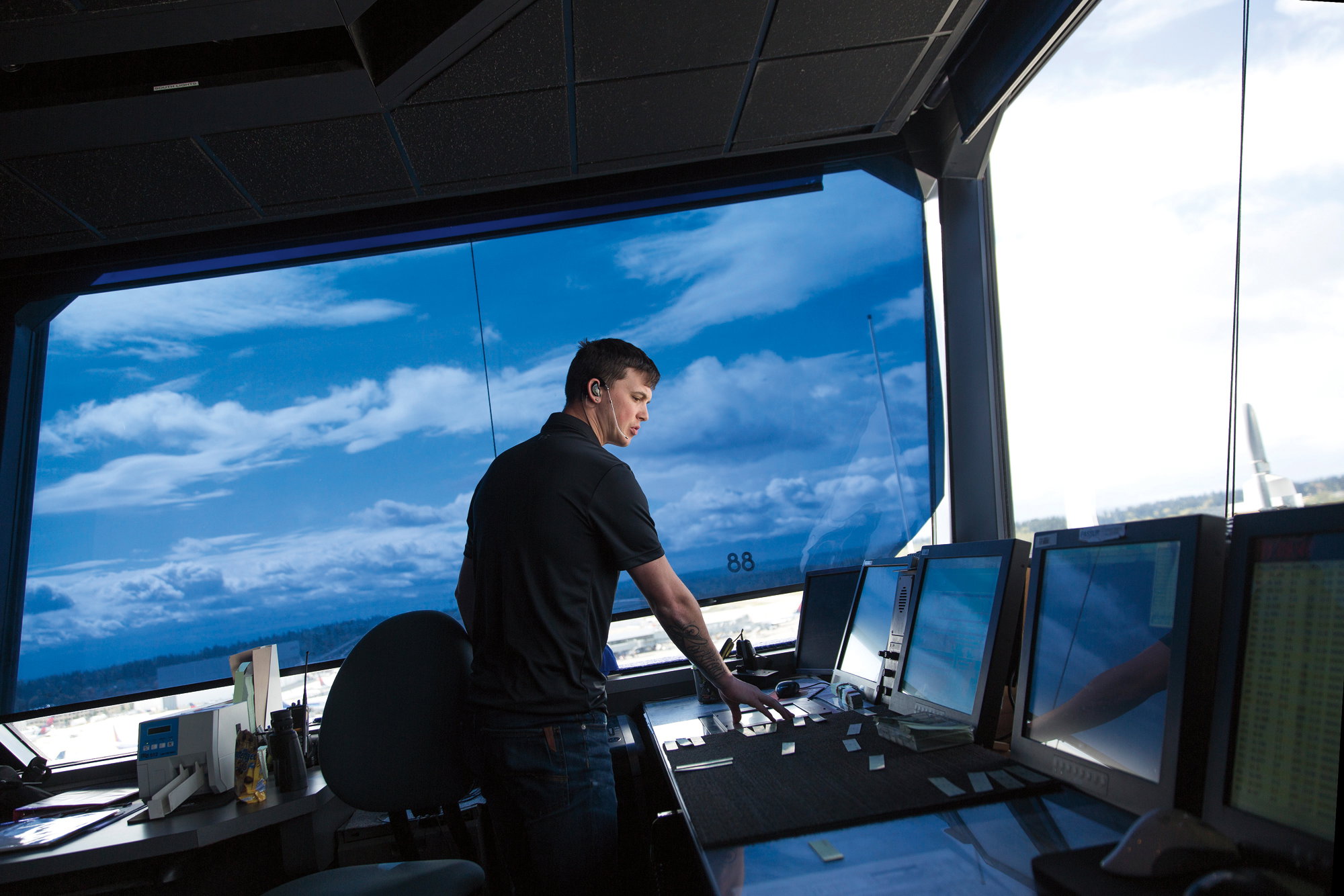
Though Zachary Finkbeiner and Tyler Lockhart  keep track of planes at 90 gates from the airport ramp tower, directing each to and from the runway and passing them off to the taller FAA control tower, Lockhart has perspective. The air force vet worked a tower in Afghanistan, and “delay someone over there, lives are lost.”
Though Zachary Finkbeiner and Tyler Lockhart keep track of planes at 90 gates from the airport ramp tower, directing each to and from the runway and passing them off to the taller FAA control tower, Lockhart has perspective. The air force vet worked a tower in Afghanistan, and “delay someone over there, lives are lost.”
2
Though Zachary Finkbeiner and Tyler Lockhart  keep track of planes at 90 gates from the airport ramp tower, directing each to and from the runway and passing them off to the taller FAA control tower, Lockhart has perspective. The air force vet worked a tower in Afghanistan, and “delay someone over there, lives are lost.”
Though Zachary Finkbeiner and Tyler Lockhart keep track of planes at 90 gates from the airport ramp tower, directing each to and from the runway and passing them off to the taller FAA control tower, Lockhart has perspective. The air force vet worked a tower in Afghanistan, and “delay someone over there, lives are lost.”
3
The controllers still move physical slips of paper around to organize aircraft, some 1,200 per day. “All these years,” says supervisor Ed Appleberry, “and they’ve never come up with a system better than this.” 
4
The controllers still move physical slips of paper around to organize aircraft, some 1,200 per day. “All these years,” says supervisor Ed Appleberry, “and they’ve never come up with a system better than this.” 
5
6
7
Sea-Tac’s longest runway closed April 1, 2016, for repairs, including extending the blast pad at the end and scrubbing the rubber off the tarmac with a brush that applies 40,000 pounds of pressure per square inch—and could tear a hole in the concrete if left in place too long. “All I know is that it has got to be open by cherry season,” says field crew manager Eric Schaefer, pointing to the cargo planes that will carry produce to China. “When those 747 freighters are weighted down, they use every inch of the runway.”
8
Sea-Tac’s longest runway closed April 1, 2016, for repairs, including extending the blast pad at the end and scrubbing the rubber off the tarmac with a brush that applies 40,000 pounds of pressure per square inch—and could tear a hole in the concrete if left in place too long. “All I know is that it has got to be open by cherry season,” says field crew manager Eric Schaefer, pointing to the cargo planes that will carry produce to China. “When those 747 freighters are weighted down, they use every inch of the runway.”
9
Sea-Tac’s Satellite Transit System is 43 years old, the second-oldest in the country. Its trains shuttle 16 million people annually between the Central Terminal and the North and South Satellites, on a system made by Bombardier, which also makes airplanes.
10
The underground baggage system is a Rube Goldbergian tangle of conveyor belts, scanners, and handlers tossing the bags onto electric-powered carts. In spring there’s time for the handlers to lift barbells between batches of bag arrivals, but they’re prepared for the approaching summer rush. “Our city is booming,” says Navi Mattu, a Delta baggage handler. “A lot of people will be coming.”
11
Cars are repaired in an underground shop, where mechanics like Mike Hurley (pictured) bring expertise gleaned from “working on every type of vehicle the port has—backhoes, truck hoes.” From underneath the STS car, he says, “It’s more like a truck from here.”
12
Sea-Tac’s Satellite Transit System is 43 years old, the second-oldest in the country. Its trains shuttle 16 million people annually between the Central Terminal and the North and South Satellites, on a system made by Bombardier, which also makes airplanes.
13
The underground baggage system is a Rube Goldbergian tangle of conveyor belts, scanners, and handlers tossing the bags onto electric-powered carts. In spring there’s time for the handlers to lift barbells between batches of bag arrivals, but they’re prepared for the approaching summer rush. “Our city is booming,” says Navi Mattu, a Delta baggage handler. “A lot of people will be coming.”
14
Cars are repaired in an underground shop, where mechanics like Mike Hurley (pictured) bring expertise gleaned from “working on every type of vehicle the port has—backhoes, truck hoes.” From underneath the STS car, he says, “It’s more like a truck from here.”
15
16
17
18

Published in the Secrets of Sea-Tac issue of Seattle Met.


Allison Williams
Allison Williams
Since joining Seattle Met in 2011, Allison Williams has overseen the magazine’s travel and outdoor coverage, including deep dives into Olympic National Park, the Columbia River, and a Burger King drive-thru in Canada. She edits the travel-focused blog Tripster and contributes service, news, interview, and narrative pieces to the magazine, including long-form features about mountain mysteries and puppies in prison. She’s earned awards from the Society of Professional Journalists and been nominated for a City and Regional Magazine award.  Allison was raised here in Olympia and studied writing at Duke University, Oxford University, Columbia Journalism School, and University of Alaska. She began her career in New York City in the newsrooms of Metro newspaper and Time Out New York, then hightailed it back to her native habitat so she could write guidebooks and climb mountains.