


Image: Chris Smith
The new Seahawks era is full of big questions, and not just about a repeat trophy. In July, when tech billionaire Vinod Khosla announced his plans to buy the reigning Super Bowl champions, it marked the end of a process that began with Paul Allen’s death in 2018. Allen instructed that his assets—including the Seahawks and Portland Trail Blazers—be sold after he died and the profits distributed amongst charities. Allen’s sister and executor, Jody, found a buyer willing to pay a record-setting $9.16 billion for a sports franchise.
The Khosla group’s purchase was approved by the league’s owners in late August, making Vinod the chair, his son Neal vice chair, and Vinod’s wife Neeru the controlling owner. But as the Seahawks enter their next phase, the city is wary. What will the new owners expect from Seattle?
A lifetime fan and recent part owner of the San Francisco 49ers, Khosla seemed a surprising purchaser for their bitter division rivals. Some fans feared he’d follow in the footsteps of Howard Schultz and devastate the city by moving a Seattle team out of state.
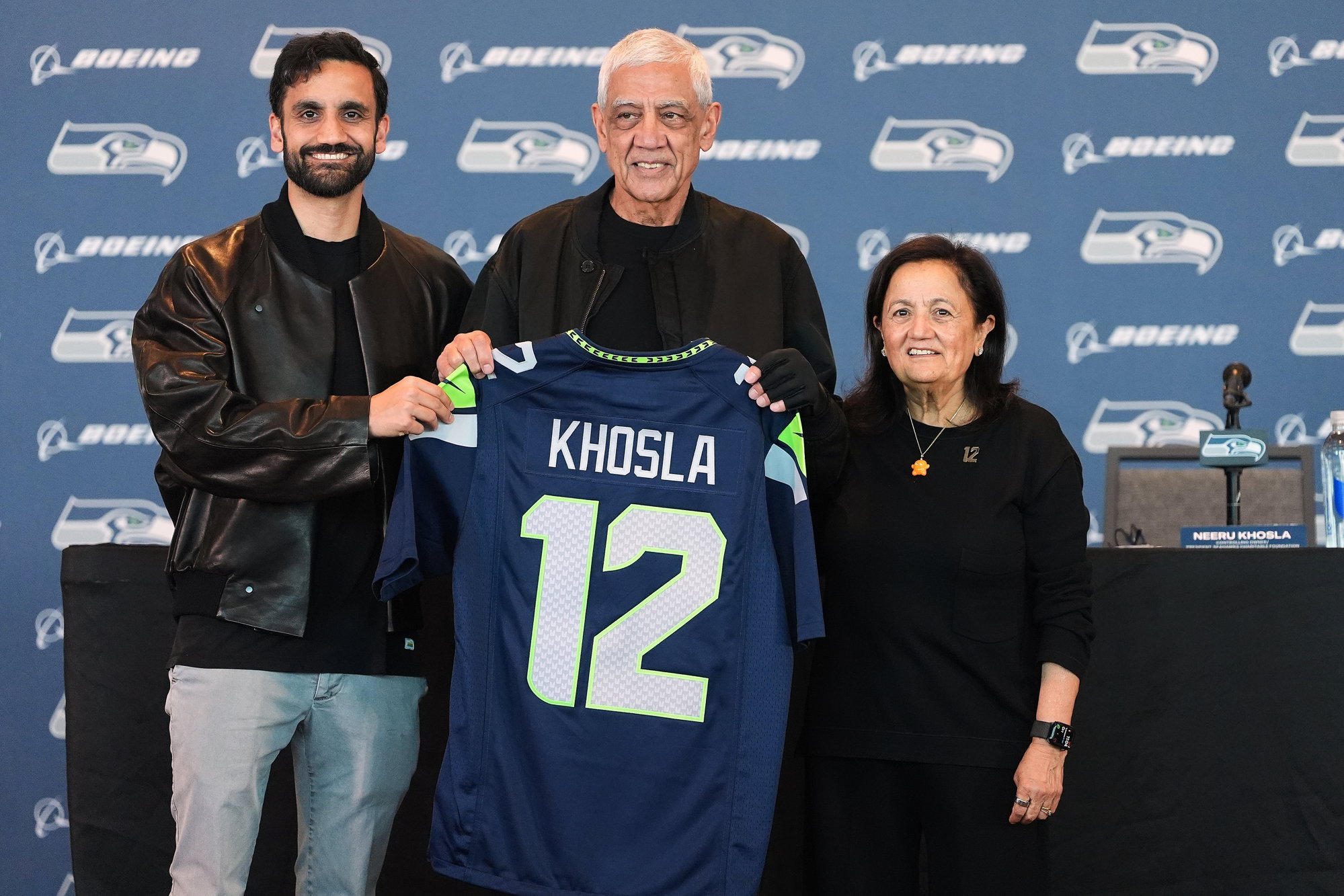
Image: AP Photo/Lindsey Wasson
This worry is not without precedent; it was only Allen’s purchase of the Seahawks in 1997 that kept the team in Seattle after previous owner Ken Behring announced his intent to relocate. Three other NFL teams relocated within two years of Behring’s attempt. The current era has seen a similar spate of moves, with three franchises—all on the West Coast—moving house in the past decade. For a city still reeling from the loss of the Sonics, it’s a scary prospect.
Khosla played his cards close to his chest at first, then in October posted, “We have no plans to move the team, have never discussed it,” on social media platform X. “End of story.” Realistically, there are no obvious incentives for either an owner or the NFL to move a competitively and financially successful team. More believable is that Khosla may push for a new stadium, and on Seattle’s dime.
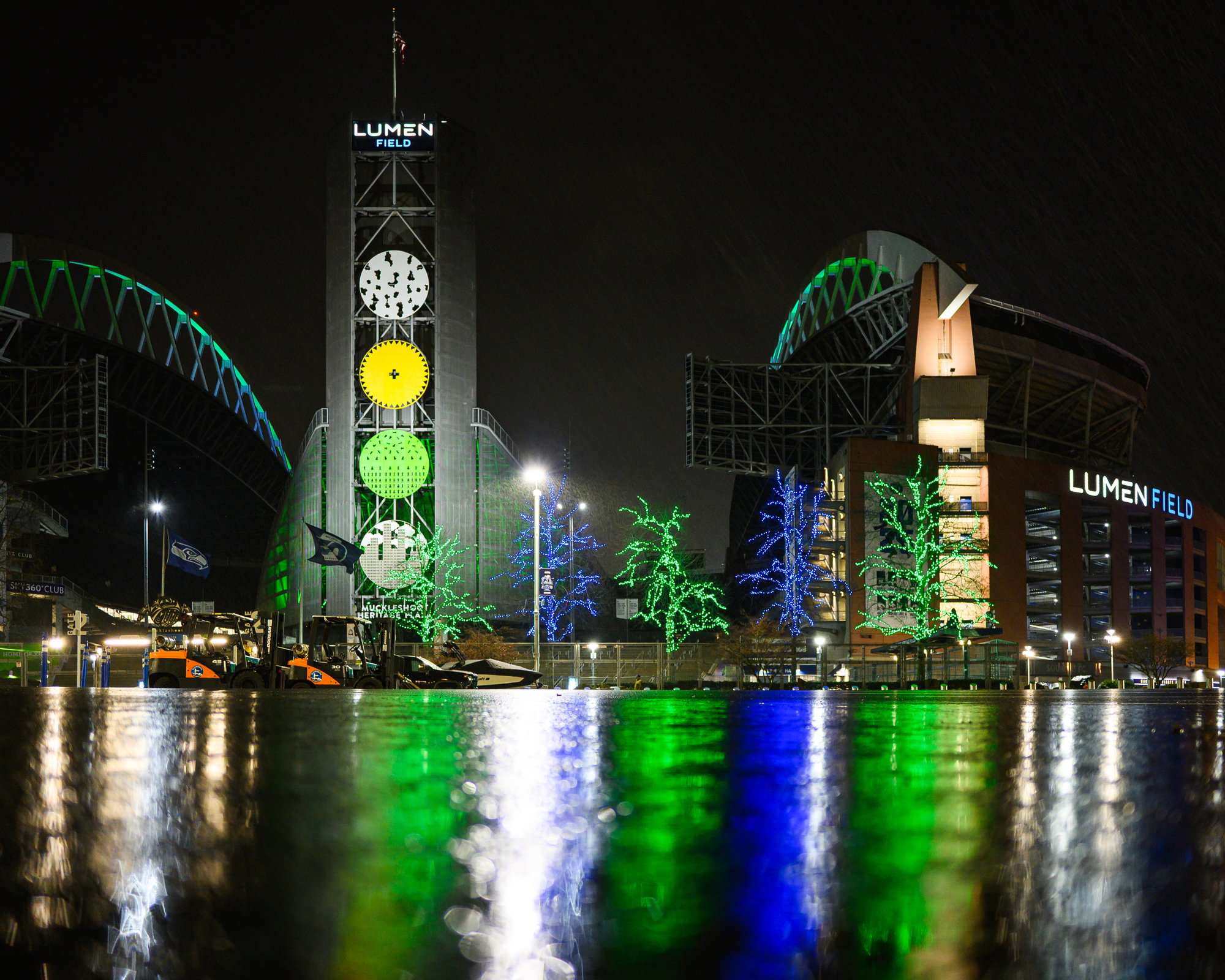
Lumen Field is only 24 years old, but the structure is approaching the expected lifespan of most modern NFL facility. Only 6 current NFL stadiums are over three decades old, and 13 of the 30 are newer than Lumen. DC, Denver, and Cleveland are already moving on from stadiums close to Lumen’s age. The majority of new parks have received some public funding, most notably $1.26 billion for the Tennessee Titans’ newly constructed Nissan Stadium.
But Lumen isn’t past its prime, especially with the extensive upgrades made last spring before the World Cup. Video boards were enlarged, suites were upgraded, and the benches in the Hawk’s Nest were replaced with individual seats in an intimidating bird’s-eye design. Media and visitors consistently praise the fan experience: The Athletic ranked Seattle’s stadium number one among World Cup host cities, and in August USA Today awarded Lumen Field the title of “Best NFL Stadium.”
The modern stadium business, however, is focused very little on the average fan. Luxury experiences are the name of the current game, targeted largely at corporations or wealthy attendees of prestige events, like concerts or championship games. Owners make room for VIP boxes, private boardrooms, and highly engineered roofs. Glittering entertainment districts around suburban arenas have become common, but Seattle has no room for one. Lumen’s narrow footprint and open roof contribute to the famously loud stadium’s beloved roar, but they also disqualify Seattle from hosting a Super Bowl.
Any attempt to replace Lumen would likely include a request for public funding. Already managing a complicated tax system and challenging budget cuts, Washington legislators wouldn’t be keen to answer the call. Seattleites may also point to Climate Pledge Arena, whose renovation from KeyArena was well received and entirely privately financed. Even with the explicit threat of a relocation, the 1997 referendum that financed Lumen’s construction only received only 51 percent of the vote; a modern attempt seems unlikely to pass the finish line at all.
If Khosla does want to shake things up, a more popular change he could push for is the installation of real grass in Lumen Field. Grass is mightily preferred by soccer players and fans, who fill the stadium 30 times a year for Sounders and Reign matches. When FIFA temporarily installed natural sod this summer—a field requirement for the World Cup—both local squads also got a chance to play on the surface. As the Sounders themselves threaten to relocate to Renton, could a grass field make them stay?
Even more persuasive to the Khoslas could be pressure from NFL athletes, whose players’ association recently launched a pro-grass PR campaign and who poll at a 92 percent preference for natural playing surfaces. Players feel that playing on grass is both more comfortable and safer; at least one study backs them up on the latter claim. Most notably, Seahawks leaders Cooper Kupp and Leonard Williams told reporters this summer they wished Lumen’s World Cup grass could’ve remained.
The new owner began the season noncommittal on the question of grass, suggesting “the team that got us the Super Bowl” should make the decision internally. In fact, Khosla has been reluctant so far to indicate any specific intentions at all.
Khosla, a Sun Microsystems co-founder and OpenAI investor, is an artificial intelligence billionaire arriving in a town deeply divided about both, at least as broad concepts; in June Seattle City Council passed a one-year moratorium on the large data centers that house AI infrastructure. Certainly more popular in the blue city will be Khosla’s politics: He has feuded extensively with Elon Musk on X, called out President Trump for his depravity, and donated over five million dollars to Democrats in the past five years. But he began his first season reluctant to indicate many specific intentions.
Will he remain a hands-off owner, happy to let a successful franchise keep rolling? Or is he simply not ready to reveal what plans he has in store? Either way, Seattle will be watching him like a hawk.
|
|
|