


Image: Chona Kasinger
“You made your bed,” her grandmother told her. “Now lay in it.”
It was sixth grade. Rebellious preteen Laura Comenote had run away from home and her grandmother had drawn a line: She wasn’t allowed back. That was fine with her, though.
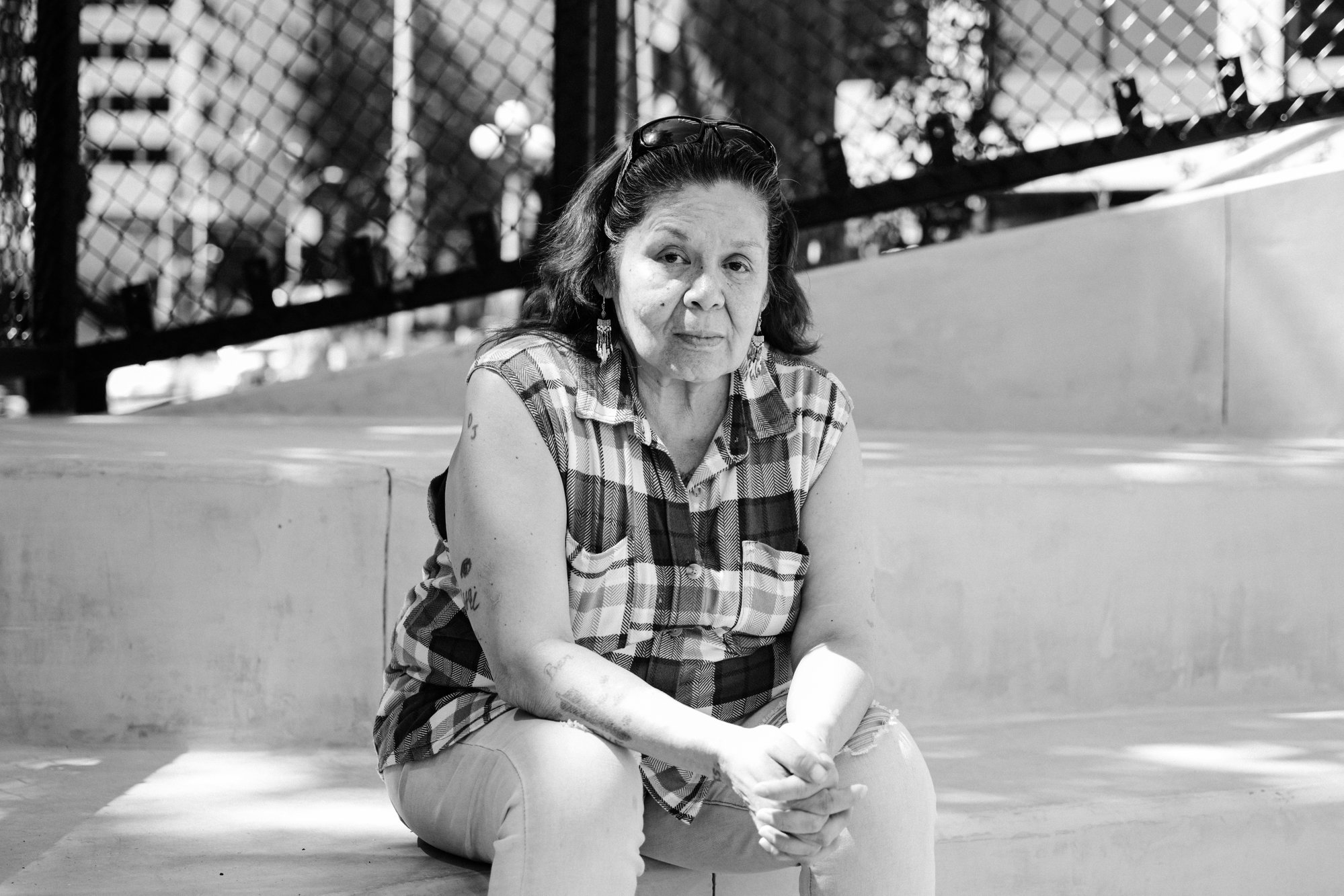
If you meet Comenote today, at 56, you might notice her hair. Shoulder-length. Bright red like a crayon. It’s for the No More Stolen Sisters cause, which calls attention to the missing and murdered Indigenous women.
Another thing you might notice is a big scar that runs from Comenote’s left tear duct down almost to her neck. It’s from when she was a teenager. Straight razor, all the way through her cheek. Afterward, Comenote was able to put her tongue through the wound. Twenty-six stitches sewed up the outside of her face. “It gives me character,” Comenote says. “That’s what I think.”
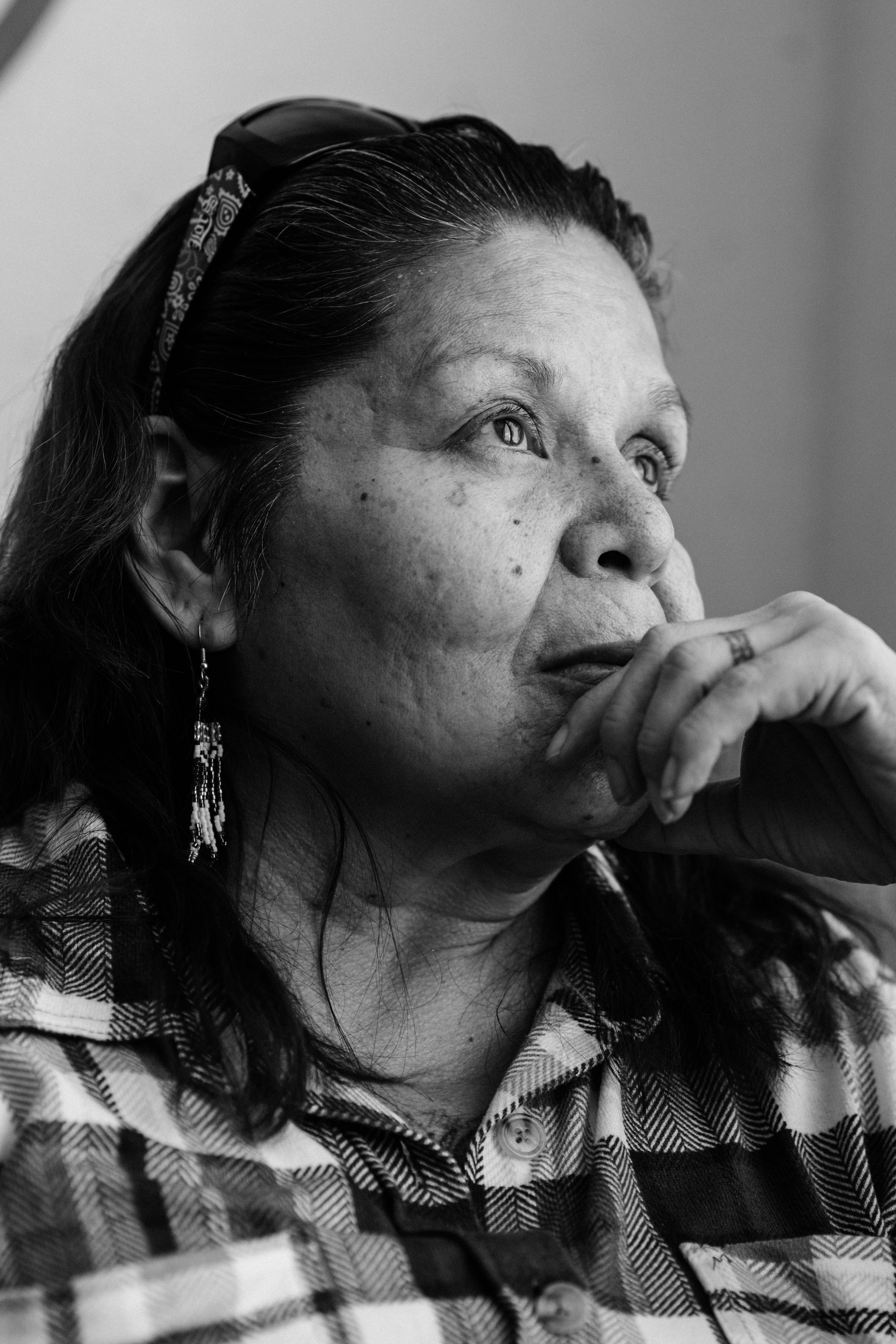
Image: Chona Kasinger
Tattoos are all over her hands, arms, chest, back, and neck. One just under her right eye, too—an outline of a little teardrop. It’s tiny, about half the size of an aspirin and represents the person Comenote killed.
Life hasn’t been easy for Comenote since she left home; alcohol ensnared her as a teenager. For the next 40 years or so, Comenote bounced around all types of housing. Foster care. At least one apartment, briefly, after getting pregnant at age 15. Motels. Jail once, prison four times. Mental health institutions. Hospitals. Addiction treatment facilities. A car. And she experienced unsheltered homelessness, too, on the streets of Seattle.
Her unhoused era came to an end four years ago, when she got an apartment in Pioneer Square through Chief Seattle Club, a nonprofit that assists Native Americans like Comenote with housing and human services. But the Trump administration is trying to reshape how the federal government tackles homelessness, and and hard-won stability like Comenote’s could be disrupted.
Homelessness in the US reached an all-time high in 2024—an estimated 771,480 people, with only a minuscule improvement in 2025. That’s according to the US Department of Housing and Urban Development’s (HUD) Annual Homelessness Assessment Report to Congress.
Native people—across the nation, in Washington, and in King County—are overrepresented in this group. In June 2026, King County Regional Homelessness Authority’s Point-in-Time Count showed an estimated 4.2 percent of the overall homeless population in the county identified as American Indian, Alaskan Native, or Indigenous, although they make up just 0.4 percent of the county’s total population.
Derrick Belgarde, CEO of Chief Seattle Club and an enrolled member of the Confederated Tribes of Siletz Indians, thinks he knows why. He cites the Termination Era of 1953–1968, a series of federal acts that disrupted tribal sovereignty and led to lost federal aid and services for tribes. It pushed Native Americans to move as part of the Indian Relocation Act of 1956, wherein Native people were coerced to go from rural areas to major metropolitan cities, including Chicago, Denver, Los Angeles, Cleveland, and Seattle.
The federal government said it would help those who chose to move with housing assistance and jobs. “But they were just poverty traps,” Belgarde says; aid did not come. According to him, a large percentage of Native Americans in the US—including in Seattle and King County—come from families where generations have stayed stuck in a poverty loop that’s played into housing insecurity and homelessness.
Born in Seattle in December of 1969, Comenote grew up in West Seattle. Home was a six-bedroom house she lived in with her grandmother, step-grandfather, three uncles, an aunt, and two sisters.
Comenote’s family comes from the Lakota Sioux from South Dakota, Hesquiaht from Canada, and Quinault from Washington. When Comenote was little and would get in real big trouble, her grandmother—also Native—would tell her that she’d end up on Skid Row. That she would be just like her mother when she grew up.
The Comenote sisters were the only Native Americans at their elementary school, and kids picked on Comenote for her race. “I used to say I was Mexican,” she says. “People just knew I was Native. And I looked very Native.”
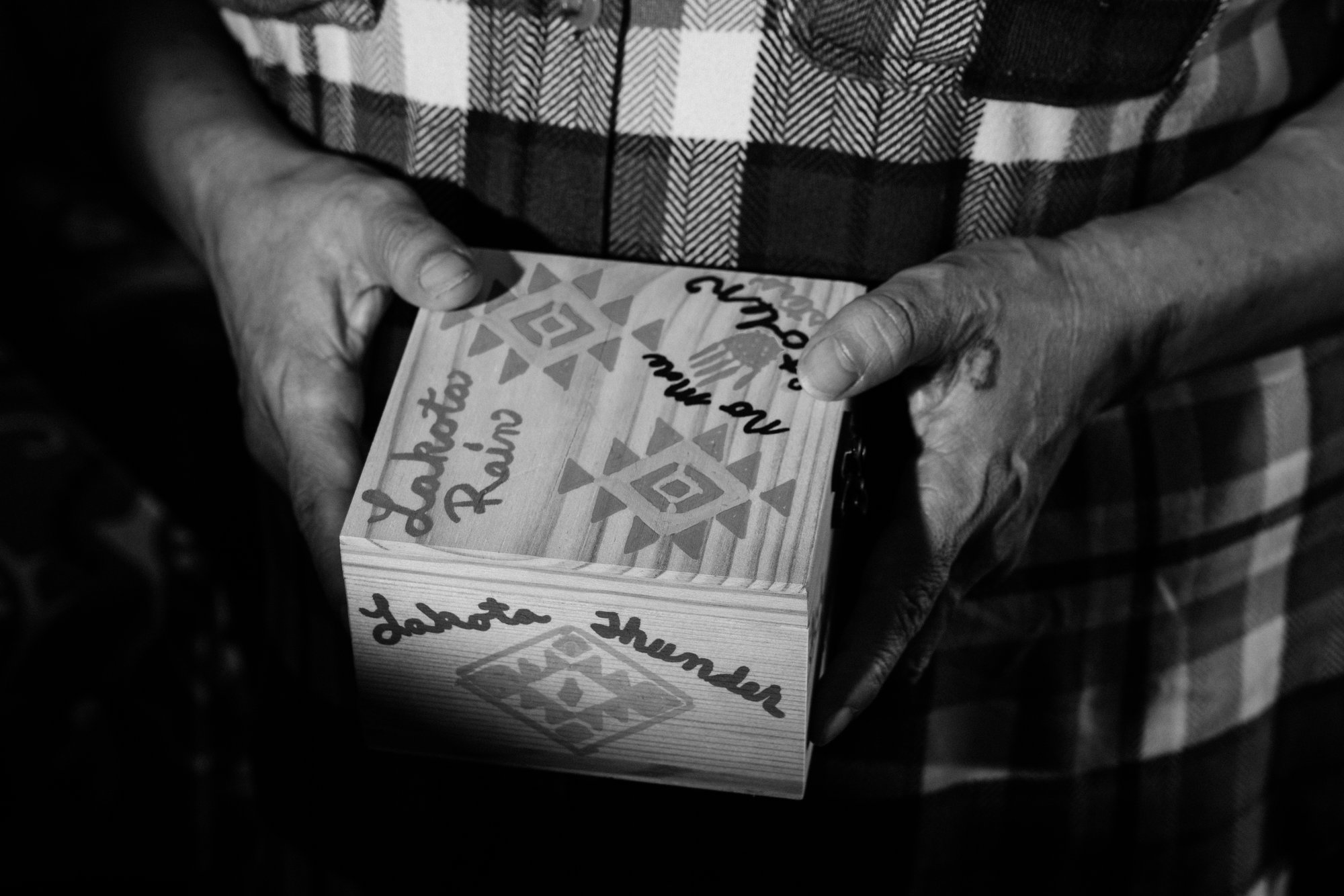
Image: Chona Kasinger
In sixth grade, Comenote had had enough, and she started fighting her schoolmates. That same school year, she ran away from home. She went into the foster care system and was placed in Federal Way, but ran away from that, too. Later, she turned herself into the police; it was wintertime, and so cold. Comenote wanted warmth. Time at a group home on Capitol Hill followed, then a group home in Tacoma, and a Seattle youth shelter after that.
Comenote started living on the street when she was 14 years old. Throughout downtown Seattle during the day and Victor Steinbrueck Park at night. By then, Comenote was a member of the Bloods and would remain in the gang for a few years. Comenote was also drinking heavily by age 14.
The following year, Comenote was pregnant and living in an apartment. Time there was fleeting, though. She got kicked out. Her little girl was taken away. Comenote would eventually have two more girls and two boys. She lost custody of all five children, she says, due to homelessness, incarceration, institutionalization, and alcoholism.
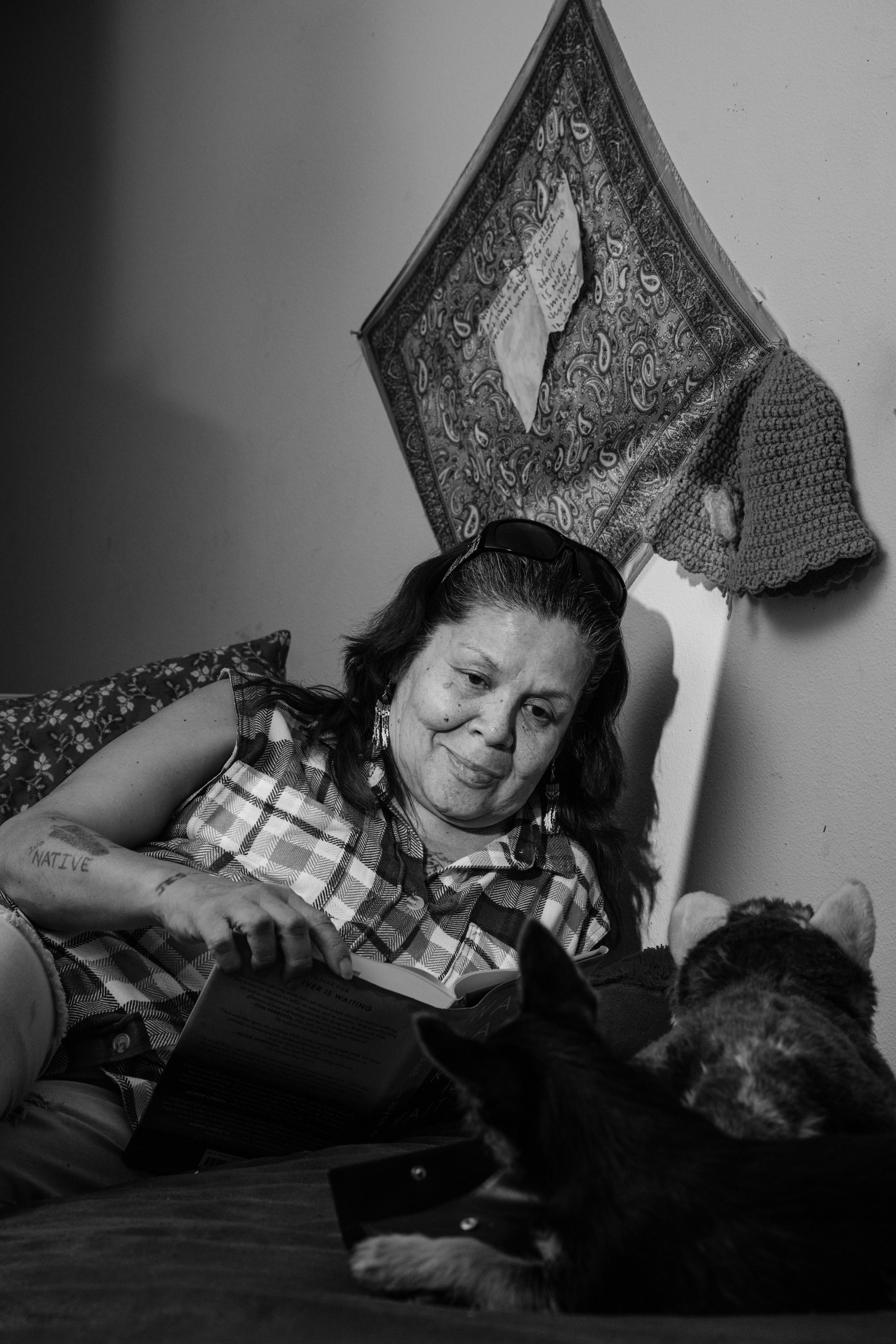
Image: Chona Kasinger
“My whole teenage life and my whole adult life revolved around alcohol,” Comenote says. She nearly drank herself to death and was hospitalized. “It didn’t matter if I had nothing else,” she says. “I mean, I had to drink.”
There were ways to get money for alcohol. Comenote’s big sister would give her some. Comenote sold drugs: lots of meth, lots of morphine. And she stole. Stuff like hair products, makeup, body sprays. Comenote stole from Safeway, Albertson’s, Bartell Drugs, Walgreens, Walmart, the dollar store, and the mall, and earned money by selling what she stole. When she’d get caught and kicked out of stores, she would use her big sister’s name.
Over the years, Comenote tried to wriggle free from alcohol’s grasp. She went to treatment three times; her sister helped. All were inpatient programs, and all were specifically for Native people. Incarceration brought sobriety. But time and time again, alcoholism would win out. Stress was a trigger. It still is.
“I just wanted to be intoxicated all the time,” she says, “because it was easier to be intoxicated and maybe artificially warm from the alcohol than face my street life.”
Street life in her mid-thirties included Seattle weather: the rain, the snow, the cold. The hardest about being Native and homeless was being prejudged by others. It was embarrassing, at least for a while. “Being exactly what they thought,” Comenote says. “Drunk. Native. Homeless. Not showered.”
At the time, Comenote was homeless in Ballard. She didn’t have the energy to shower because she was sick from alcohol. Her clothes were dirty. Lice lived in her hair, which had become a massive tangle and was tied up in a matted bun, then hidden under a beanie. Alcohol made her face really red; dehydration brought her face to the point of peeling.
“I feel like people didn’t really see me. They just—I was there,” Comenote says. Moments later, she adds, “I think I became invisible or something, you know? They didn’t want to see, so they just looked past me. And then, it just didn’t matter after a while.”
Day centers in Seattle for homeless people became a part of Comenote’s life, first when she was a teenager. She continued going to them in her twenties and for a little bit in her thirties and forties. There was a chance to shower, get food, and warm up. Maybe get a little sleep. For a while, in her later years of homelessness, she would go to hospitals to warm up.
Of the forty or so years that Comenote was homeless and dealt with unsettled living situations, twenty-two of them were spent either incarcerated or institutionalized, the latter for her mental health. Most of her thirties and forties were spent behind bars, five times in total. All five of the crimes that led to incarceration were violent. The first was manslaughter.
At around 20 years old, she repeatedly stabbed a woman who was fighting Comenote’s little sister. The woman later died. In Comenote’s eyes, she was defending her little sister, and she stepped in only after her little sister started bleeding. The conviction sent Comenote to jail. The other four were assault, which sent her to prison.
Being homeless for the rest of her life was something Comenote started thinking about in her early thirties. She figured she’d die on the streets, from cirrhosis or someone killing her. It was just an occasional thought, especially during Thanksgiving and Christmas, when Comenote would wish she could go home to an apartment and cook a turkey.
“It’s something that people just live with,” she says about that fate. “Or just get used to in their head.”
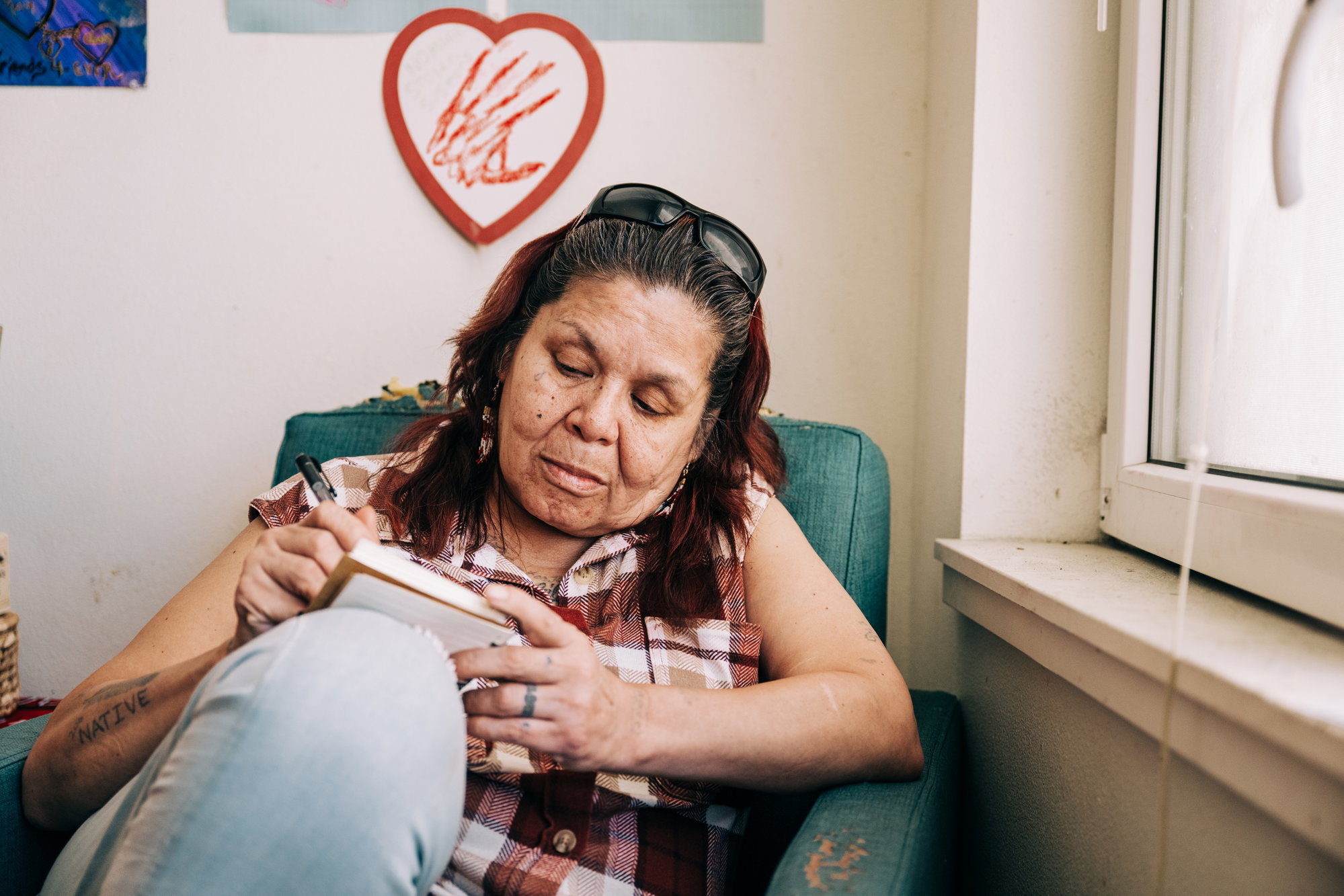
Image: Chona Kasinger
Homeless Native Americans experience unique hardships that homeless non-Native people don’t.
Belgarde has an idea about the cause. There’s distrust of non-Native systems, the US government’s history of Native cultural genocide, and the theft of their land. But the biggest unique challenge that Native Americans face, in Belgarde’s opinion, is a lack of a sense of community. He says the federal government broke Native communal structures, right down to the family unit.
“White people in these urban cities, right?” Belgarde begins. “They can walk into a Walmart, they can walk into a Safeway store, not know anybody in the entire store, but they have a sense of belonging.” He adds, “They have a sense of collective community, even when they don’t know anybody there because they’re all from like cultures and, usually, like skin, and like people. Native people don’t feel that, don’t get a chance to feel that when we’re in these urban cities, when we’re off the reservations.”
A consequence of a lack of a sense of community, he says, is the impact on unmet needs and resources for homeless Native people. There isn’t a safe environment for them to be receptive to help, specifically for food and housing.
In King County, Belgarde says, the inclusion in a community for Native Americans depends on socioeconomics. Those who have money can live in the suburbs and drive to cultural events. Others, who endure poverty, are disconnected from cultural activities. There are also Native people who are homeless and just trying to survive.
All that said, Belgarde thinks Washington is one of the top places to live in the US for governmental social justice, from the municipal level to the county level and the state level. “I think about our brothers and sisters in other cities that don’t have that,” he says.

Image: Chona Kasinger
No more troublemaking. Stay out of lockup. Her big sister laid it out for Comenote as the two had lunch at Outback Steakhouse in the summer of 2020. Her sister had picked her up earlier that day from the now-closed Mission Creek Corrections Center for Women in Belfair. Comenote knew that the next time she got incarcerated, she wouldn’t get out, ever. A third strike meant imprisonment for the rest of her life.
Before the day was over, Comenote entered a clean-and-sober house in North Seattle. The stay wouldn’t last long, just over a month. She got kicked out over disputed urine analysis tests.
Stressed and in limbo as her sister searched for a new place for her, Comenote started drinking. But she also had Antabuse in her system. Also known as disulfiram, it’s a medication that discourages alcohol abuse. Her Four Loko and the Antabuse didn’t mix, and she started throwing up.
The smell of alcohol was on Comenote late that night when her older sister picked her up and took her to a motel. Over the next three months or so, she stayed at two different motels on Aurora Avenue. Her sister paid.
More hopping around followed. Two more motel stays were sponsored by Chief Seattle Club. While living at one, Comenote took a cooking class—online, due to the pandemic—from FareStart, which teaches job and life skills. She also checked in at a clean-and-sober house in Vancouver, Washington, for a short-term stay.
In February of 2022, Chief Seattle Club opened its first affordable-housing community in Pioneer Square: ?ál?al. Pronounced “all all,” it means “home” in the local Lushootseed language. The following month, Comenote moved in.
Life at ?ál?al brought safety. Comenote didn’t have to deal with the danger that came with living on the streets. It brought responsibility, too, and a sense of freedom. She pays $115 in rent monthly, along with her phone bill—things she had never done.
Comenote is an introvert, even though she’s also a ham, so she likes to spend time alone. She likes singing Christian music, and she writes poetry and short stories. Her work is dark, and she’s a fan of Edgar Allan Poe. She continues to foster her interest in cooking.
“I had plans to do something spectacular. But I ended up drinking at the beginning,” she says. “I was drinking a lot.” She drank pretty heavily off and on over the first few years at ?ál?al, knowing she had a problem. She didn’t want to fall into alcoholism again, and she went to treatment. After completing an inpatient program in Sumner last year, she says she hasn’t been perfect—but much improved.
Today, she has a roof and resources. Comenote gets $290 per month in food assistance, and she utilizes food pantries and other charitable services. Medicaid covers her healthcare, and she doesn’t pay out of pocket for her medications that treat her bipolar disorder, anxiety, PTSD, and depression. A monthly naltrexone shot that fights alcohol cravings is also covered.
Therapy is free. After moving into ?ál?al, Comenote started attending sessions, working on managing her anger and PTSD.
Some of her diagnoses made her eligible for $450 per month from the Washington State Department of Social and Health Services’s Aged, Blind, or Disabled Cash Assistance Program, although it limits how much she would be able to earn if she were working. When she has leftover money, Comenote likes to treat herself once per month with Jollibee fried chicken or a caramel macchiato from Starbucks.
Comenote has held jobs before. For a week or so at a fish-and-chips restaurant in Georgetown when she was 16. For two weeks at a Wendy’s as part of a work-release program that she dropped, which caused her to finish a sentence behind bars instead. For a few months or so at a coffee shop on Beacon Hill, after moving into ál al.
She quit for various reasons. The coffee shop job ended because she started drinking with a coworker. A lot. Comenote felt herself backsliding into alcoholism. “Alcohol leads me to—almost every time—to being locked up,” Comenote explains. “I just couldn’t risk that.”
She has also volunteered. About a year after moving into ?ál?al, Comenote started occasionally making soup and sandwiches and distributing them to homeless people. Some ingredients came from a food bank, and she’d buy whatever else she needed and prepare the food herself. That was before she broke her knee last November; after that, she handed out food to homeless people in Seattle through a church program a few times. Still, she says, she really wants a job.
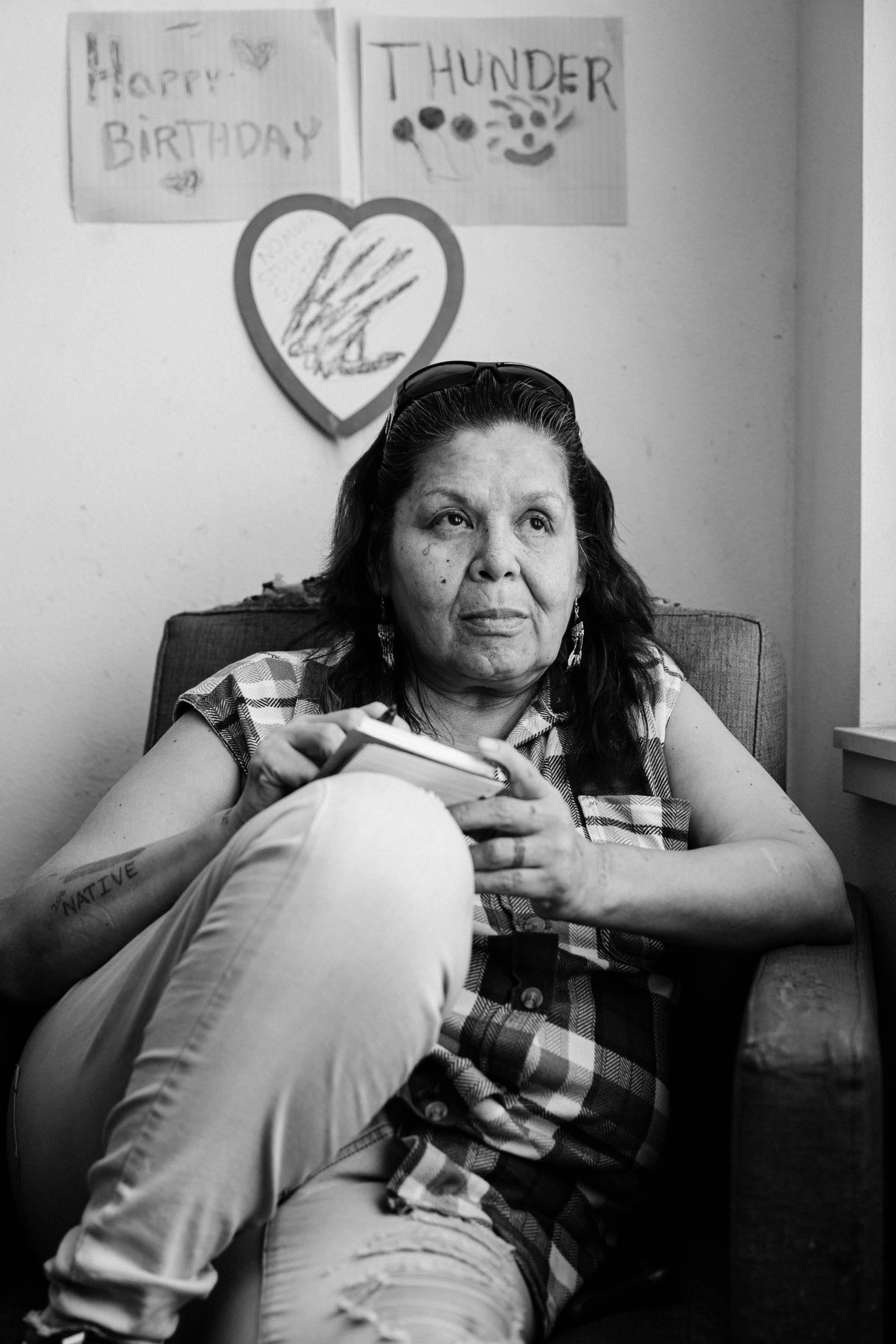
Image: Chona Kasinger
The type of housing Comenote has at ?ál?al is called permanent supportive housing (PSH). According to the National Alliance to End Homelessness (NAEH), a nonpartisan organization that aims to prevent and end the US’s homelessness crisis, PSH is for people and families who have endured long-term homelessness or repeatedly been homeless and suffer from health issues. Those include mental health issues, disabilities, and substance use disorders.
PSH is part of a two-pronged methodology to tackle homelessness called Housing First, described by the NAEH as a philosophy that values flexibility and autonomy. Supportive services are part of Housing First—formal ones like doctors or social workers as well as informal ones like family or faith groups—but are not prescribed. People can choose what they want and need.
Gregg Colburn, a University of Washington professor who studies housing and homelessness, points out that Housing First is a socialist program. And that the George W. Bush administration implemented it to tackle the US’s homelessness problem. Why? “Because they looked at the evidence,” he says.
As a result of the Housing First program, chronic homelessness dropped by approximately 30 percent from 2005 to 2007. Studies would go on to prove that PSH is more effective at confronting homelessness—and economically beneficial—than the opposite approach, a method called Treatment First. Housing First isn’t perfect, Colburn says, but “it’s more successful than the alternative.”
Chief Seattle Club has five PSH communities with 423 total housing units, which began with ?ál?al. Chief Seattle Club had a multiyear plan for more, with a target of building 1,000 units by 2029, but the plan got put on hold last year. Belgarde points to uncertainty surrounding the Trump administration’s “incoherent leadership.”
Late last year, HUD announced it was changing its competitive Continuum of Care grant funding program in a way that “redirects funding to transitional housing and supportive services, ending the status quo that perpetuated homelessness through a self-sustaining slush fund.” The alleged “slush fund” was the money that funded Housing First programs. According to Washington’s Office of the Attorney General, the state gets about $120 million each year in Continuum of Care funding. The majority goes to King, Pierce, Snohomish, Spokane, and Clark counties, and Chief Seattle Club is among the local recipients.
Lawsuits sprang up trying to stop HUD, one of which was led by Washington. King County was among the plaintiffs in another. While the legal system was at work, Congress approved funding that protected Housing First as part of a larger package to fund the federal government, and President Trump signed it into law in February.
Eventually, the two lawsuits merged. On April 1, an appeals court denied the Trump administration’s request to overturn a lower court’s decision to stop HUD. Despite the court victory, long-term federal support for Housing First isn’t guaranteed. The Trump administration could try to take another stab at closing its coffers to Housing First programs.
Losing its share of that federal money, Belgarde says, would impact his nonprofit. Chances are, he believes, Chief Seattle Club and the homeless Native people it helps wouldn’t be alone.
“It’s horrible to think about, to be honest,” Belgarde says, referring to the overall potential impact on homeless Native people in the US if federal support for Housing First disappears. The work that’s being done, he says, took generations to build. “All these cities and Indian organizations, like Chief Seattle Club, that have been getting people housed, it has the potential of just dismantling any of that great work and putting us back another couple generations again.”
In late April, Comenote sits in her small studio apartment on the ninth floor. Outside, light rain and mist earlier in the day have given way to afternoon clouds. Comenote is wearing a long, white, flowy dress that her sister gave to her. Her crayon-red hair is in a messy ponytail at the top of her head with tendrils sticking out everywhere.
Her hair is up because Comenote had been cooking a pot of beans. Earlier that day, she had seen a TikTok video about tacos that use fried cheese as a shell. “I’m trying to find a bunch of recipes, just in case I decide I want to cook or something,” she says. “Like a little job.”
Another of her ideas: Make food and give it to homeless people, like she used to. Fried burritos—a friend will help her pass the food out, she thinks. Her knee isn’t fully healed yet, but that’s not going to stop her. Comenote will just go out next Friday in her wheelchair. She’s pretty excited to feed the homeless on her own again.
On an earlier visit to her apartment, Comenote showed off a room with a television and a table with two tiers of books. One wall is covered in art: drawings of Native chiefs that her friend made and a modest-sized picture of Johnny Cash. Poetry. There’s a certificate from Comenote’s time at the drug-and-alcohol rehab center in Sumner last year. Just above the certificate is a rectangular sticker, red with a silver border and silver letters, that reads: “HOPE IS ALIVE.”
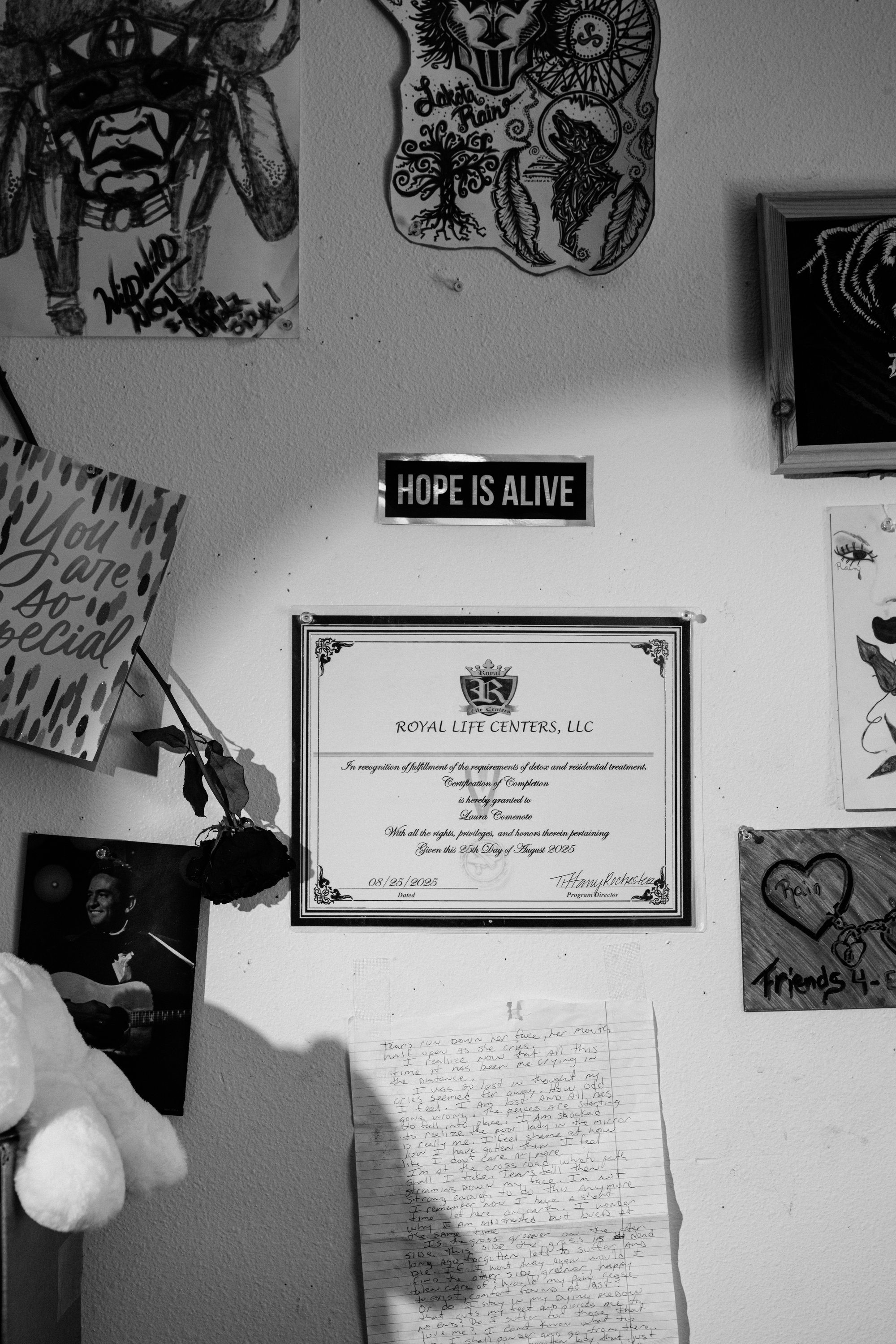
Image: Chona Kasinger
Today, Comenote says she doesn’t worry about becoming homeless again. The only way she’d be back on the streets again, she thinks, is if she starts drinking again. And even if she didn’t have her monthly naltrexone shot, she doesn’t believe she’d start drinking again. But, she points out, anyone can slip up.
“That’s why I was homeless for so many years—besides running away—is because I didn’t want to stop drinking. I didn’t want to have any responsibilities,” she says. Now she hopes to do an online college course to become a drug and alcohol counselor. Later, she texts, “I feel I’m on a good path, and I want to make a lil difference.”
Published in the The Innovation Issue issue of Seattle Met.
|
|
|