


Image: Amber Fouts
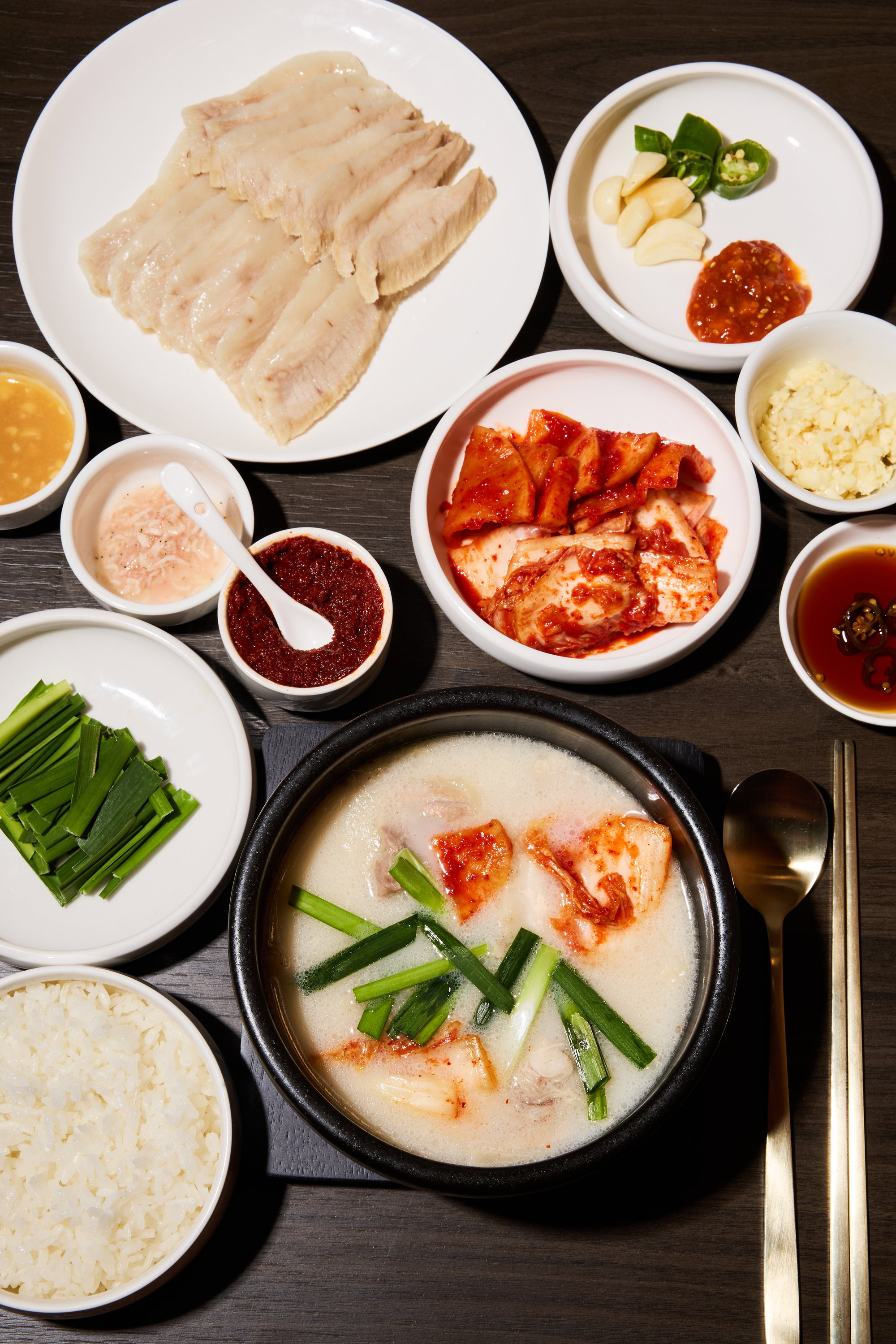
Busan Jeong serves a single dish, a precise laser aimed directly at the part of you that untangles tensed muscles and opens your lungs to breathe deeply. Comfort often comes in shapeless forms, like heavy blankets that weigh down feelings and bodies. Busan Jeong’s gukbap represents the opposite: The rice soup burbles with soothing porkiness, but feels as light as the peachy-cream shade of the broth.
The Capitol Hill restaurant emanates the vibes of a spa waiting area, its serenity signaling relaxation. Textured brown panels run along the lower third of the walls, matching the dark wood tables, and on the white expanse of the remaining walls hang bilingual odes to founder Hoyeon Park’s roots and the restaurant’s signature dish. “The gukbap that started in the hot alleyways of Busan has crossed the Pacific and arrived in Seattle,” reads one. Another calls the broth simple and pure, “like the sea and the wind.” They may be overwrought and dramatic, but they are rooted in the reason the restaurant works so well: “Even in a foreign city, a bowl that feels like home is needed.”
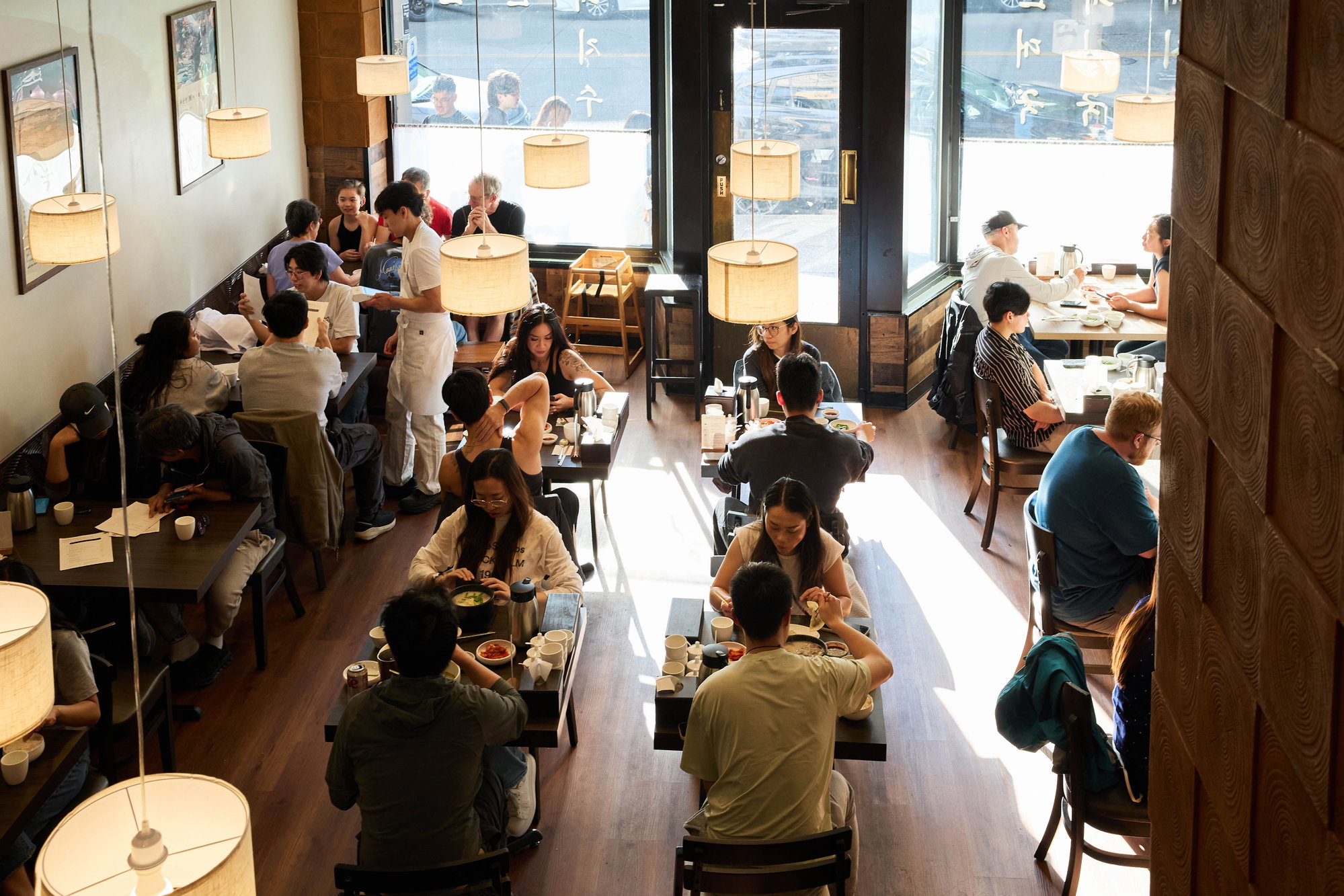
Image: Amber Fouts
Though he operates around 20 restaurants in South Korea and Hong Kong, this is Park’s first in the US and, he says, his most personal. “I wanted to build a restaurant that does one thing really well,” he says. He chose dwaeji gukbap, a simple rice soup dish that evolved out of refugee kitchens in Busan following the Korean War. “It’s a food that holds a lot of people’s daily lives and memories.”
Park named the restaurant for his hometown, and for jeong, one of those difficult-to-translate-across-cultures words that means, essentially, warmth between people—a connection that grows, deep and emotional, over time and shared experiences. I envision jeong as a feeling that evolves in much the same way the pork stock does at the restaurant: time and heat slowly enticing the pork legs, trotters, and bones to relinquish their essence into a milky, nutty broth.
Ten hours of simmering builds the layers of complex collagen richness necessary for the signature gukbap. The menu also offers three variations on the pork soup: a lighter clear-broth version, a soondae (blood sausage) version sprinkled with perilla leaves whose bitterness counteracts the meat, and a more ramen-like stylized noodle soup with green-onion oil and a jammy egg.
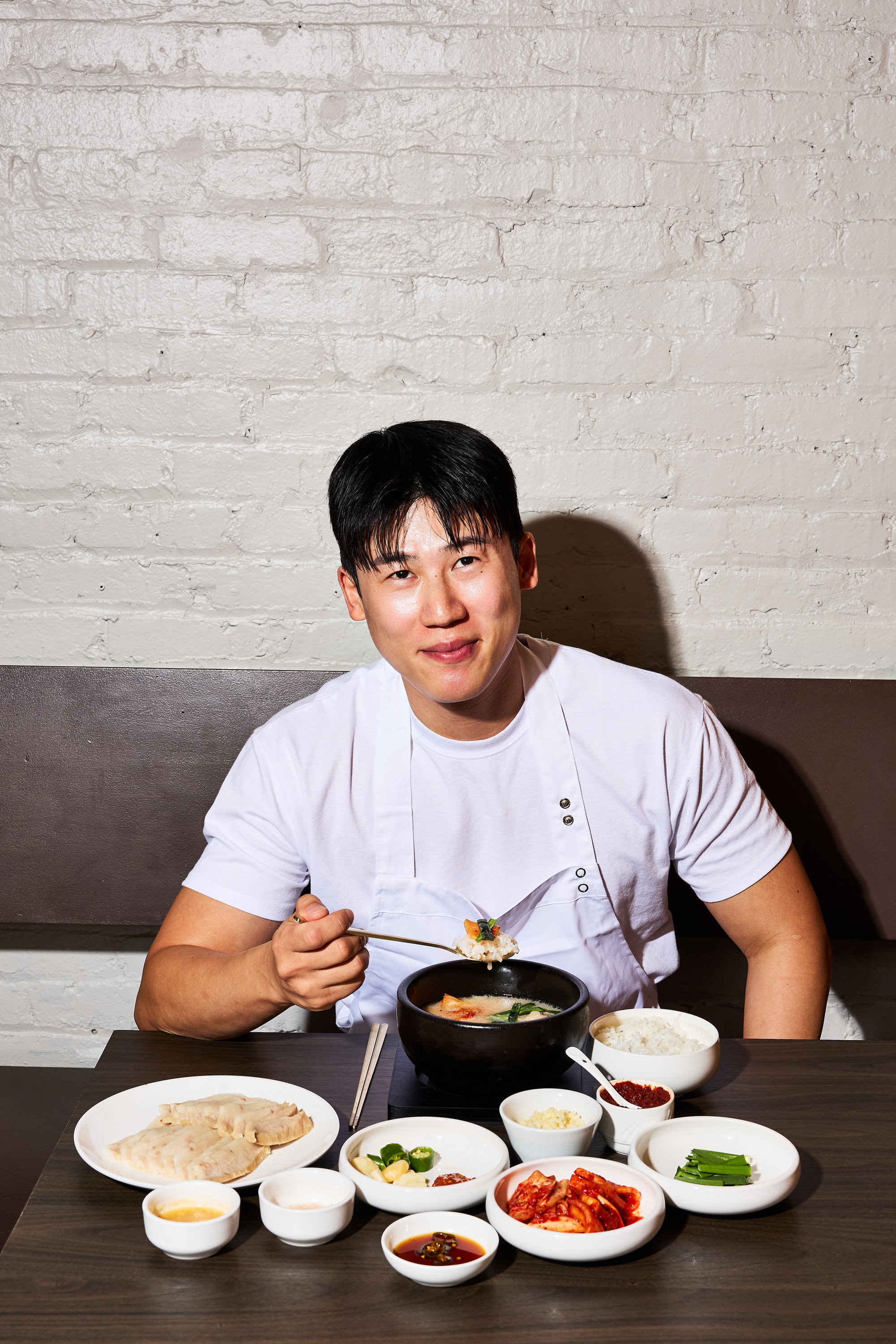
Image: Amber Fouts
Each day, the restaurant carefully cleans casings and stuffs them with pork meat and blood, glass noodles, and vegetables for the soondae, and folds pork and garlic chives into the dumplings. Most importantly, it salts and ferments napa cabbage and radishes for its kimchi, rendering the fire-engine-red pickles crisp and clear, unmuddled and faintly sweet. “That process is what makes one proper bowl,” says Park. “When a guest eats and thinks ‘Something here is different,’ I think it comes from exactly those small differences.”
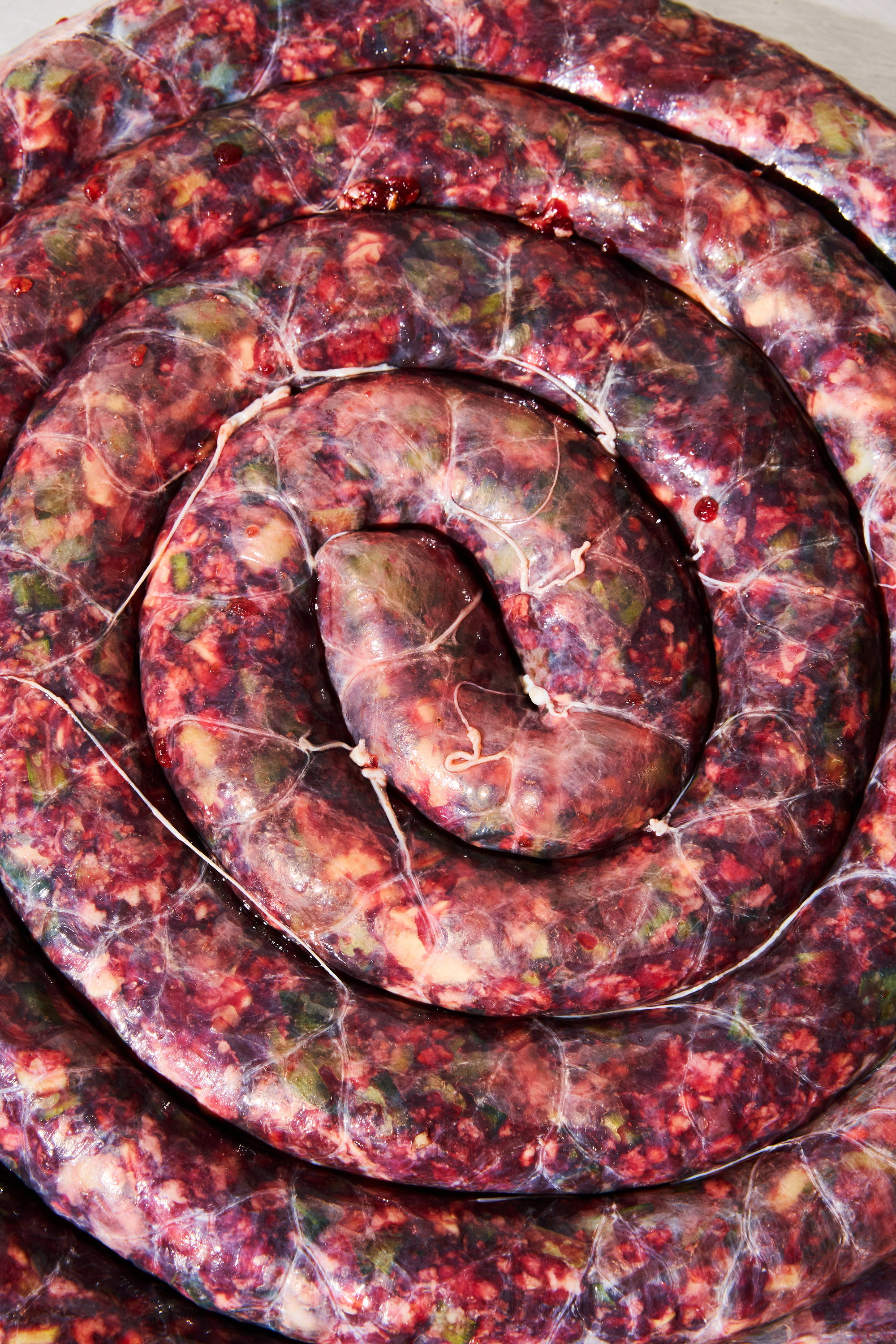
Image: Amber Fouts
When Park first opened the restaurant, there was another dish on the menu—jeon, a pancake. Two days in, he axed it. “It was actually pulling my attention away from the gukbap,” he says. “Since then, I’ve put everything into the things that complete the bowl—the broth, the kimchi, the soondae, the dumplings.”
That simplicity, of the menu and the space, supports the peacefulness of eating at Busan Jeong. Elegant boxes with traditional Korean-style metal chopsticks and spoons are preset on each table, along with a matching ceramic set of condiment containers, a thermos of water, and teacups. Everything you could ever need sits close at hand; the restaurant seems to answer questions before they arise.
When the heavy black bowl arrives on its own little platform, I lean in and take a deep breath of the pork-scented steam rising toward my face. It’s a moment that needs no instruction or translation. I take a few sips of the creamy broth plain, then stir in hot sauce until the soup glows faintly pink.
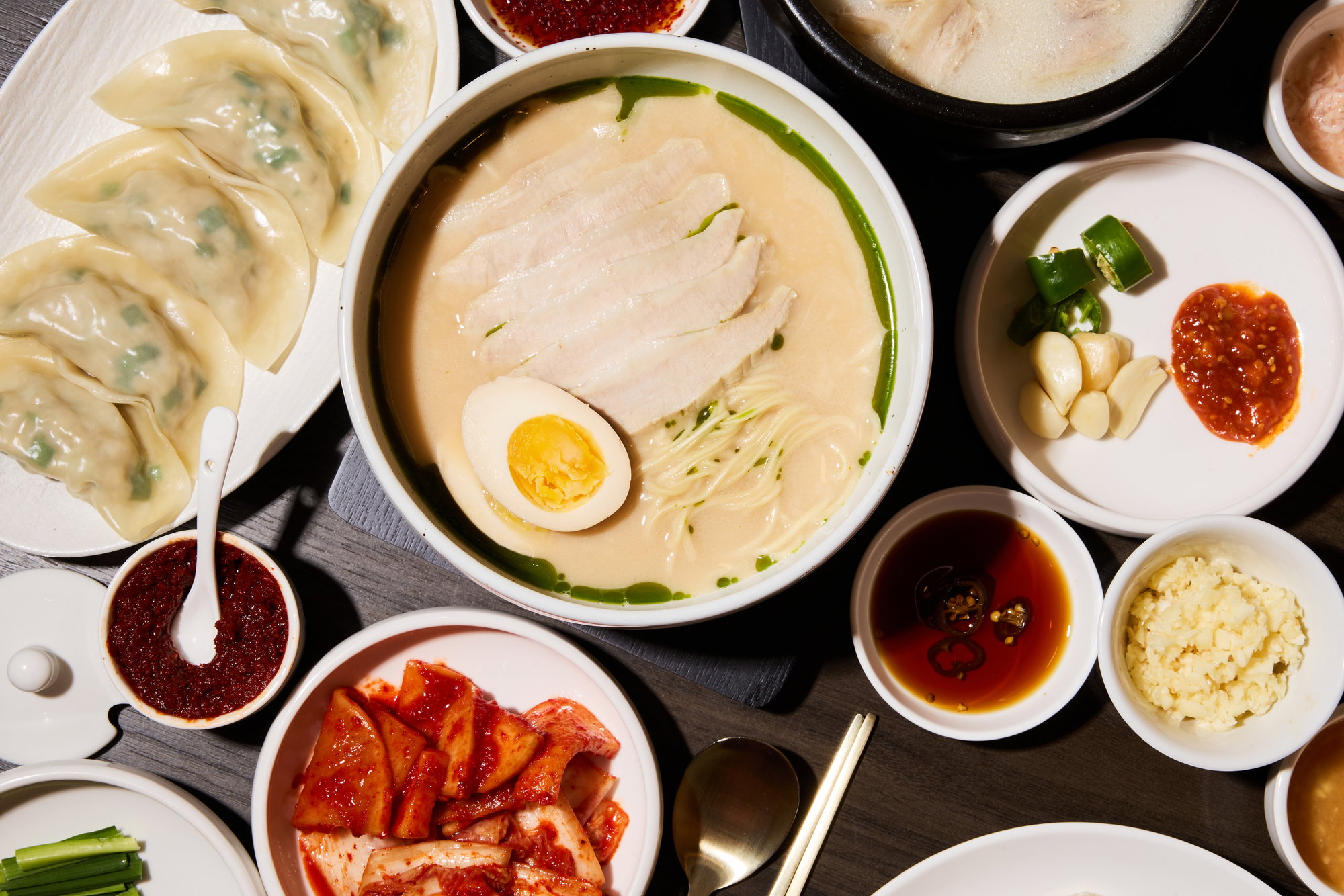
Image: Amber Fouts
A tabletop placard with tiny line illustrations and near-poetic instructions for “how to enjoy” the soup is the opposite of the world outside, where ubiquitous AI-generated fliers are cluttered with too many fonts and too many colors. Some of those tips are more helpful than others—I need no nudge to add spicy sauce, though I do take the suggestion to dip the meat from the soup into pickled chili, which arrived just before the soup, along with rice, a bowl of chopped garlic, and plates of kimchi and garlic chives.
The beauty of the dish, and perhaps its most innately comforting feature, is that it leaves the final seasoning up to the diner. The green strips of garlic chives float about, giving it an aura of abstract art; the sound of the soup, still bubbling away on the table long after it left the kitchen, plays a universal lullaby. In the era of enshittification, Busan Jeong is a soothing balm, a restaurant that feels like it improves on what came before, improves the restaurant scene in the city, and improves my day after I eat there.
Published in the Best New Restaurants 2026 issue of Seattle Met.
|
|
|