My Fat Big White and Silver Star Weekend
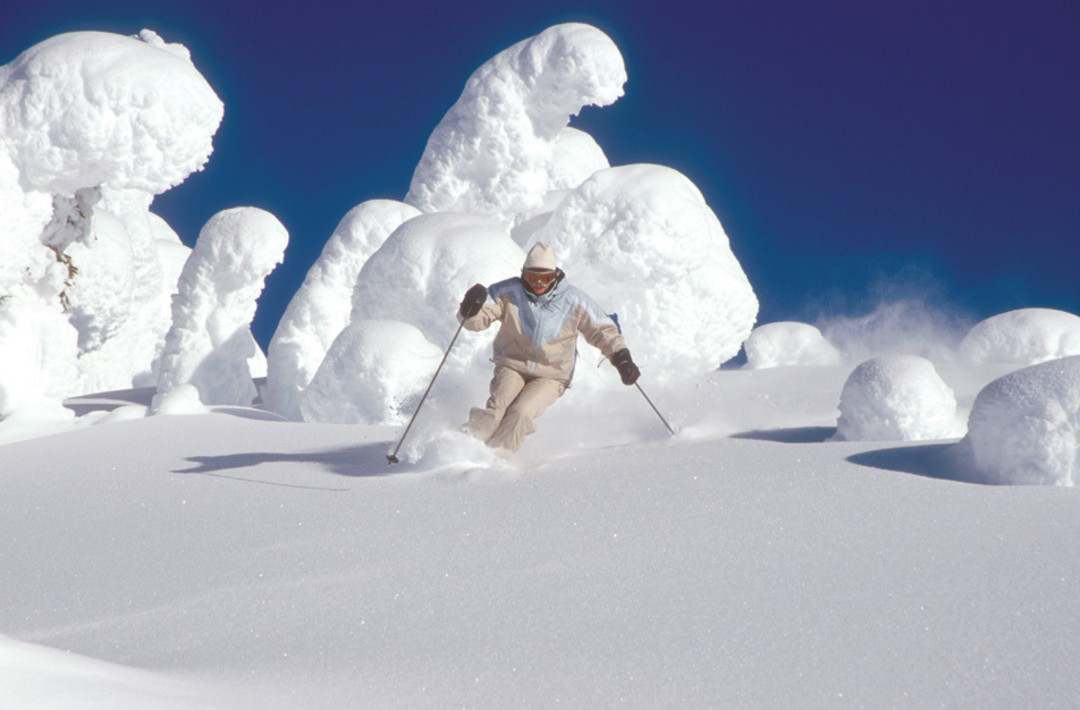
Image: Big White Ski Resort
SO HOW MUCH DOES it cost us to drive this thing?” my friend Laura wanted to know. We were riding shotgun, wedged in the cab of a metallic-blue Sno-Cat, blasting our way to dinner at Paradise Camp, a restaurant housed in a rustic cabin at British Columbia’s Silver Star Mountain Resort. Our driver, Mike, said we could try it if we liked, demonstrating the Cat’s steering mechanism. But before we took the controls the conversation shifted to Mike’s must-haves on the Paradise Camp menu: ginger prawns, rack of lamb, and baked Alaska. Before long the boxy clapboard restaurant swung into view. The building had a false front as if in a John Ford western. The sign read: “Hot Meals and Refreshments.”
“Don’t forget the baked Alaska!” Mike yelled, dropping us at the cabin’s front door and plowing off in a blizzard of exhaust. We kicked the snow from our boots and stepped inside, where persimmon-painted rooms were warmed by a wood-burning stove, and a dozen lantern-lit tables were set with linens and stemware. Chef Jason Folk personally delivered the wine list. We ordered two glasses of Okanagan Valley cabernet franc and toasted our weekend’s adventures.
These interior ranges are home to a growing number of resorts where intermediate and novice snow hounds can sample the region’s legendary light, dry snowfall.
Silver Star and its sister ski resort Big White are set in BC’s Monashee Mountains. While the Monashees—like neighbors the Purcells, Selkirks, and Cariboos—have earned a reputation as a place where helicopters ferry in hard-core skiers for romps through knee-deep powder, these interior ranges are also home to a growing number of resorts where intermediate and novice snow hounds can sample the region’s legendary light, dry snowfall. Both are less crowded and hectic than Whistler, and their slow pace and near-bucolic vibe (not a lot of loud dance clubs in these parts) make them exceedingly family friendly. So Laura and I flew north to check them out.
We began our reconnaissance at Big White after an easy flight via Horizon Air to Kelowna, BC (alternatively, the drive from Seattle is six hours). Big White rises from the high plains east of Kelowna (270 miles northeast of Vancouver), and the resort, laid out on the mountain’s tiered slopes, is almost fully self-contained. More than 17,000 beds fill some 30 ski-in/ski-out lodges and condos, which climb on linked terraces toward a central snow plaza. Owned by an Australian family, the resort draws a surprising number of skiers from Down Under, as well as England, Hawaii, and Japan.
Big White’s big draw? An annual average of 295 inches of snow. Storms tend to converge on the bald mountain and then (unlike on the peaks to the west) actually clear—exposing 118 trails spread over 2,800 acres. The terrain is mostly intermediate, but rises quickly above the tree line. On our second day, we woke to blue skies and three inches of powder so dry you’d swear you were in Utah. After a leisurely breakfast in our slope-side condo, we grabbed our skis and glided a few hundred feet to the lift, just out the back door.
There was no line, and minutes later we were testing our powder legs on wide-open runs. We whooped it up, carving loopy S-turns between well-spaced trees caked in snow. These trees, Big White’s famous “Snow Ghosts,” are frosted with so much condensation they freeze into small towers of ice. We glided among them, laughing.
{page break}
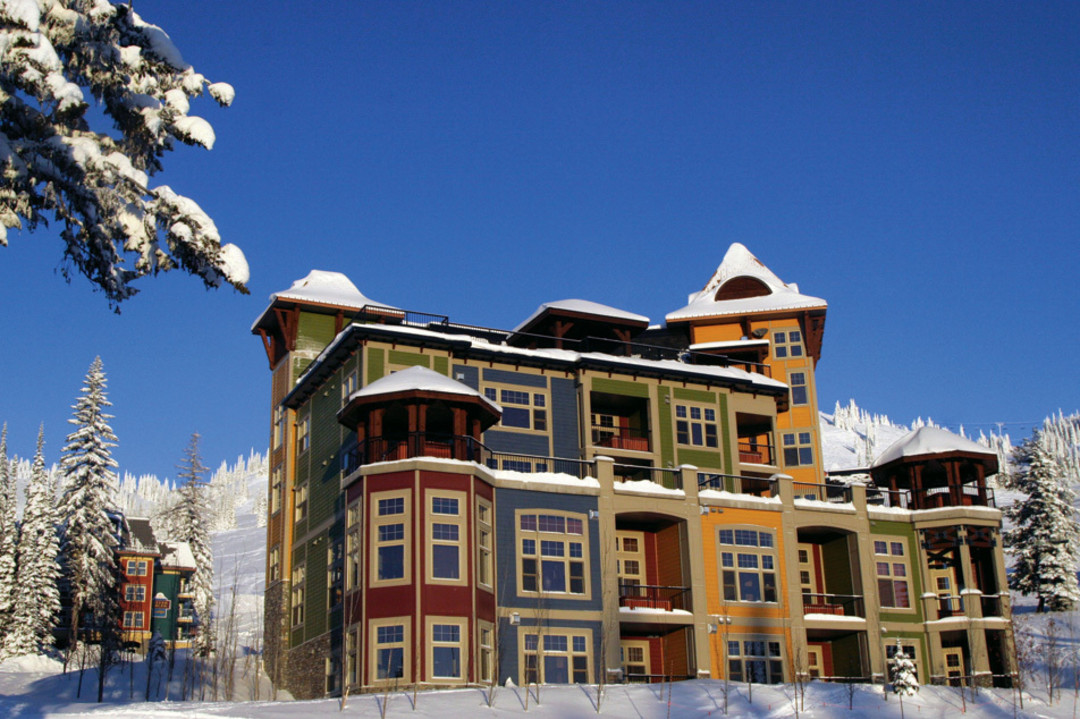
Image: Silver Star Mountain Resort
The next day we caught the intermountain shuttle north to Silver Star. The drive took just over two hours, which allowed additional time to recover from the previous night and Big White’s signature drink, the Gunbarrel Coffee. Only in Canada, we agreed, would you be served Grand Marnier “flamed” down the double barrels of a shotgun, into a goblet of coffee and mixed with brandy, cacao, and cream. Our entire night, in fact, had been refreshingly not politically correct, from the glassy-eyed gazes of deceased forest friends (moose, elk, deer, even beaver) staring down from wood-paneled dining-room walls, to the flaming Gunbarrel Coffee show. “Um, I don’t know if you’ve noticed,” Laura said, “but there are definitely fewer rules up here.”
By noon we checked into a one-bedroom suite at Silver Star’s Snowbird Lodge, a few steps from the compact base village. We were, at first, dumbstruck by Silver Star, which has a Disneyesque, Victorian theme: lilac, purple, turquoise, lemon-yellow, and peach storefronts connected by boardwalks. And the Snowbird, billed as Silver Star’s first slope-side luxury lodging, fell short of our expectations for the price ($356 American a night). The small kitchen has maple cabinets and the requisite granite counters; there is a gas fireplace topped by a slick flat-screen television, but the entire unit feels utilitarian and lacks soul.
Once we ventured out into the village and onto the slopes, however, Silver Star grew on us. The mountain offers a huge mix of terrain: There’s a gentle front side with acres of sweetly groomed greens and blues, and a north-facing backside, Putnam Creek, with a serious lineup of short, steep faces, bump runs, and glades. Kids can entertain themselves for days on the front, or if they’re up for black and double-black diamonds, they can race you down Head Wall or Holy Smokes on the back of the mountain.
The next morning Laura headed home, but I had the day to play on Putnam Creek. After skiing to Paradise Camp, where a friendly group invited me to join them beside the Franklin stove, I headed off again just as the temperature dropped and the snow started to firm. Everything was exquisitely silent and deserted. It was like having the BC backcountry all to myself. I skied past Head Wall and Rusty Whistle, Quicksilver, and Gong Show. All short, steep faces, wide open and deserted. I finally settled on Pipeline, stopped for a moment to drink in the stillness, and dropped in.


