When Artists Curate an Exhibition, Should They Include Their Own Work?
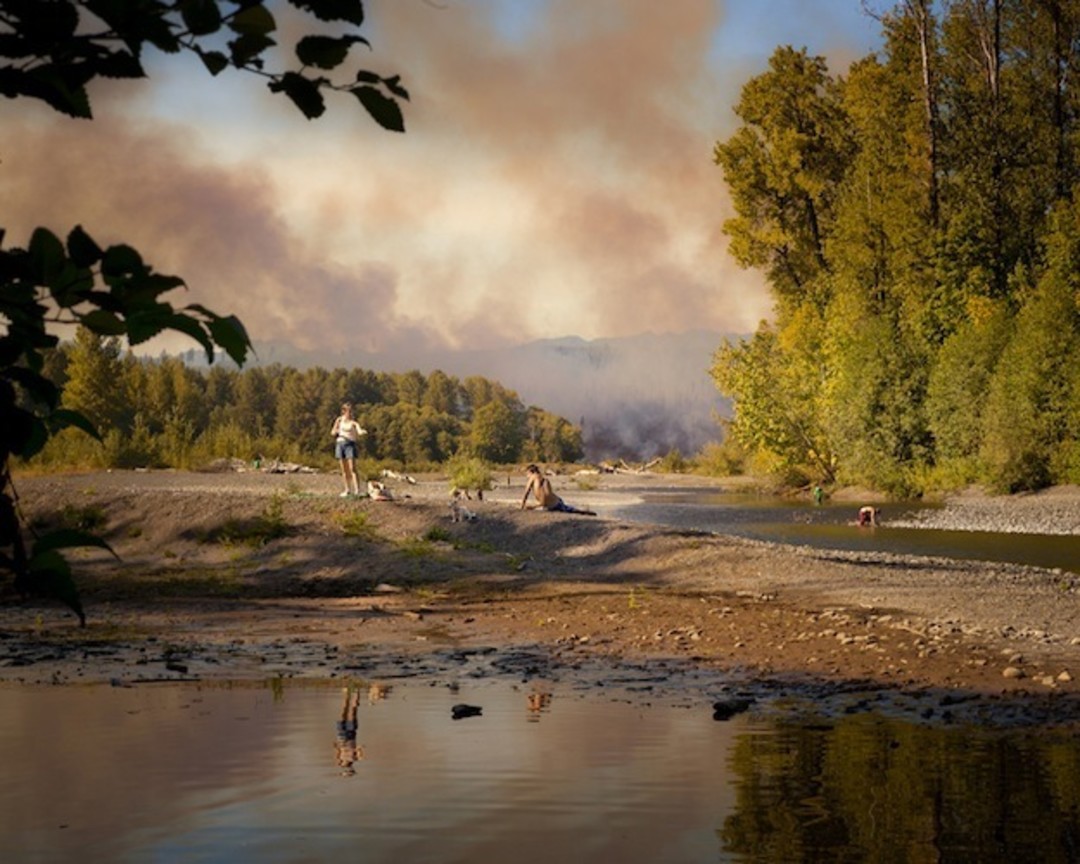
Steve Davis, "Summer on the Skokomish," 2011, archival inkjet print, Ed. of 4, 27 x 34 in.
Image: James Harris Gallery
Okay, here’s our art question for today: When an artist curates an exhibition, is it good practice to include his or her own work?
Commentaries: Artists Respond to the Land, billed as the first annual summer invitational at Prographica, raises the question. Curated by artists Kimberly Clark and Philip Govedare, the show includes a number of well-known painters and photographers—Michael Brophy, Zhi Lin, Laura McPhee, Glenn Rudolph, Paul Havas—and some truly stellar work. It’s well worth a visit for the photography alone. Glenn Rudolph’s photographs 5000 Crows, Tukwila, and Veterans Day are among the most ominous landscape scenes you can imagine, in true Rudolph documentary style. Steve Davis’s archival inkjet print, Summer on the Skokomish, is equally captivating. With its eerie blush of bruise-colored smoke hovering over a scene of people dallying along the riverbank, it feels oddly reminiscent of Manet’s iconic Le déjeuner sur l’herbe.
There is plenty to like in the show, yet I found myself squirming.
Prographica opened a couple years ago in Madrona and is run by artist and UW professor emeritus Norman Lundin. The focus of the gallery is contemporary works on paper. Lundin is represented by Francine Seders Gallery and to avoid a conflict of interest won’t show his own work at Prographica. For Commentaries, though, he asked his former UW colleague, Govedare, and his gallery assistant, Clark, to curate—and to include their own paintings.
First let me say that artists as guest curators bring a fresh eye and unexpected choices. If Prographica were an artist cooperative gallery, it would come with the mission to have artists promoting themselves and curating shows of their own work. But Prographica isn’t a co-op. Lundin believes it’s a tough time for artists and saw this as a way to help out Clark and Govedare. His basic argument was that if the artist/curator’s work fit the standards of the show, all's well. Though they aren’t standouts, Govedare’s several ink-on-paper landscapes are finely tuned; and the exuberant burst of color of Clark’s work, particularly the delicate oil on paper Tomorrow They Would Fall III, adds an idyllic slant to a show where some of the images suggest a landscape gone to hell.
For me, it’s not so much a question of why they shouldn’t include themselves, but why should they? Whether or not the work fits the standards of the show, its inclusion comes across as self-serving. It’s hard to see how this type of show helps the artist’s careers. If they list on their resume that they exhibited their work with an impressive group of artists, they also have to say that they selected the show. If they don’t, then it becomes an ethical violation.
If Lundin really wants to help out an artist, it would be better for him to curate a show that shines the best light on that person. It's cleaner all around and keeps the playing field level. No artists can be objective about their own work.
Commentaries: Artists Respond to the Land
Thru Sept 1, Prographica, 3419 E Denny Way


