Lord of the Reins
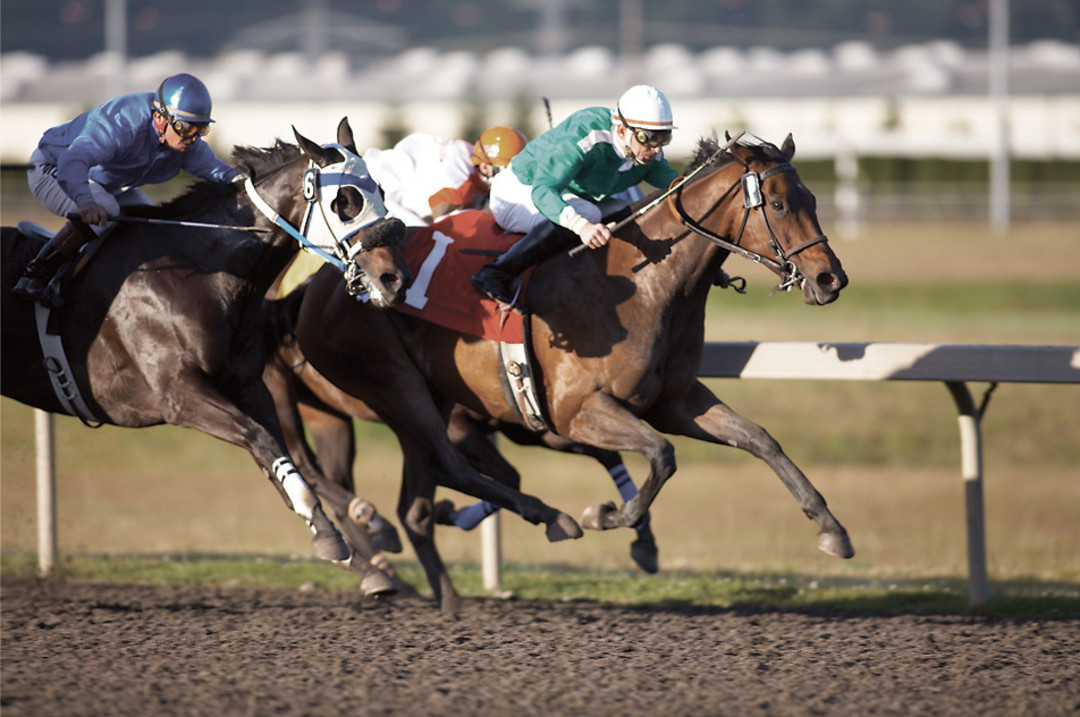
Image: Jules Frazier
FATHER, BLESS THESE JOCKEYS. The track chaplain prays with eyes shut so tight his brow ripples into little mounds. Father, bless the horses. He worries a baseball cap in his hands. They aren’t big hands, and he’s not a particularly large man, but the track chaplain is a giant among his acolytes: Hawkish, dark-eyed Joe Crispin, five foot four, 110 pounds, up from Vancouver, Washington, bows his head. Broad-faced Gary Baze, 52 years old, back from his third retirement, kneels on one knee. Bless this race. Twenty minutes before start, every rider in the jockey kitchen and rec room dressed in white—white shirt, white knickers, barefoot. Bald Juan Gutierrez, who began riding horses on his abuelo’s ranch outside Mexico City when he was eight. Tiny Kevin Radke, beset with injuries for the past four seasons—broken wrist, broken ribs. Bless their bones.
Next to Radke stands the best rider of them all: Ricky Frazier, who they say can look three, four yards into the future and see a horse’s next move before the animal’s ancient instincts tell it what to do. Ricky Frazier, 43, practically born in a backstretch barn in Arkansas, the son of a jockey. He keeps his head bowed. Father, bless them all.
Ten minutes later Frazier’s the sole jockey in the rec room. He looks out the window toward the paddock as his fellow riders, now in brightly colored silks, take their mounts for the first race; he’s not scheduled to ride until the second. On the rec room TV, the same scene: live feed of the jockeys climbing atop sinewy thoroughbreds and steering them onto the dirt track before a crowd of several thousand. The stands crawl with fans squinting under an unforgiving sun—a rare 90-degree day at Emerald Downs in Auburn in the middle of May. Kids on dads’ shoulders, collegians on dates, teen girls dolled like rodeo queens, and, most notably, vaqueros, off-duty Mexican stable hands in sharp-angled cowboy hats and alligator-skin boots, cellphones holstered on their leather belts—all eyes on the one-mile oval that rings a soggy, duck-filled marsh. A faded Mount Rainier looms at the south end of the track like a ghost. Deeper inside the $83 million, six-story complex, flabby men belching Coors Light huddle around monitors, clench betting tickets, and cheer horses in telecast races from around the country—“C’mon motherfucker, yeah baby, c’mon!”
Studying the TV in the jockey room, Frazier watches his fellow riders ease their steeds to the starting gate. Whether he’s in a race or not, he plays the same game: Read the horses and try to predict the outcome. His head holds the secrets of thousands of contests won and lost—the knowledge of what he did right, what went deadly wrong. His eyes, the color of Lake Washington on a -seldom-seen sunny day, stare through the screen. Twenty-eight years of races, and he remembers them all. Including that very first one.
{page break}

Image: Jules Frazier
Eagle Train wasn’t a fast horse. She wore every loss on her chestnut frame like chains—25 races in fourth place or worse by the time she was five. But her age and experience meant she was less flighty than her stable mates. Roy Frazier trusted the mare not to make any lethal mistakes in a race and, one breezy May afternoon in 1980 at Kentucky’s Churchill Downs, the trainer put his teenage son on her back.
By then Ricky had been galloping horses for years—first at the family’s home track, Oaklawn Park in Hot Springs, Arkansas, and then at tracks in Louisiana and Nebraska. When he was no higher than a horse’s belly his reward for cleaning the stalls was a trip around the turf atop a thoroughbred with his father, a retired jockey, on another horse, holding the halter. By age 14, a wiry, pale-skinned Ricky, with a tuft of thick brown hair hooding those piercing blue peepers, worked alone, conditioning up to 15 horses a day, readying them for races—all the while listening to his father and jockeys around the track talk shop. Winning isn’t just about speed, he learned. It’s about the rider’s ability to control that speed, peeling off reserves of the animal’s energy at just the right moment. Also, fear. If fear is a part of your vocabulary you won’t win. Throughout his career Frazier would live by this code, no matter the circumstance: no fear.
Once Roy knew his son was ready, he entered him in a race at Churchill Downs, home of the Kentucky Derby. On May 23, 1980, Ricky rode Eagle Train into the number 10 position in the gate. On her back the mare held just 107 pounds—the teenage rider plus saddle. The bell rang. The gate swung open. Frazier and the mare thundered down the stretch and into the first turn. The jockey was in shock. Training for a race and actually being in one were two different things, and he felt suddenly as if he were watching the race instead of participating in it. He and Eagle Train were at the back of the pack. Another jockey slid alongside him, an old rider who use to race against his father. “Ricky,” the old jock shouted, “Ricky, you got any horse left?” What? “Got any horse left?” Yeah. “Well, you better get ridin’,” the jock said, pointing to the fast fading field of other thoroughbreds. Frazier snapped out of his daze and dug his heels into the mare and sped off, overtaking half the field. When they crossed the wire—the finish line—Eagle Train was in fifth place.
The loss didn’t faze the novice jockey. He rode in 341 more races by year’s end, winning 27. He rolled up to New York where as an apprentice jockey—they’re known as a “bug boys” for the asterisk that appears next to their names in race programs—he had the second most wins of any apprentice rider at Aqueduct’s 1981 season. Track after track, year after year, Roy Frazier’s son kept riding and winning. Round and round on ovals all over the eastern seaboard and in the South.
In October of 1984, Frazier, just 20, became the first jockey in the history of Louisiana Downs to win seven races on the same day. But in the middle of a race two weeks later at the Fair Grounds in New Orleans, another thoroughbred slammed into his mount so hard the horse crossed its legs and tumbled, causing a multihorse collision. He took a hoof to the head and landed at the bottom of the pileup. When the horses cleared out, Frazier lay lifeless on the track. He couldn’t feel or move his arms. He was rushed to the hospital, his skull cracked and his neck broken. The doctors told him he’d never ride again.
For the next two weeks he lay partially paralyzed, and for the next four months he wore a metal halo to hold his head in place. Defying doctor’s orders, he was back in the saddle two days after the halo came off. Ricky Frazier thought he was unstoppable.
{page break}
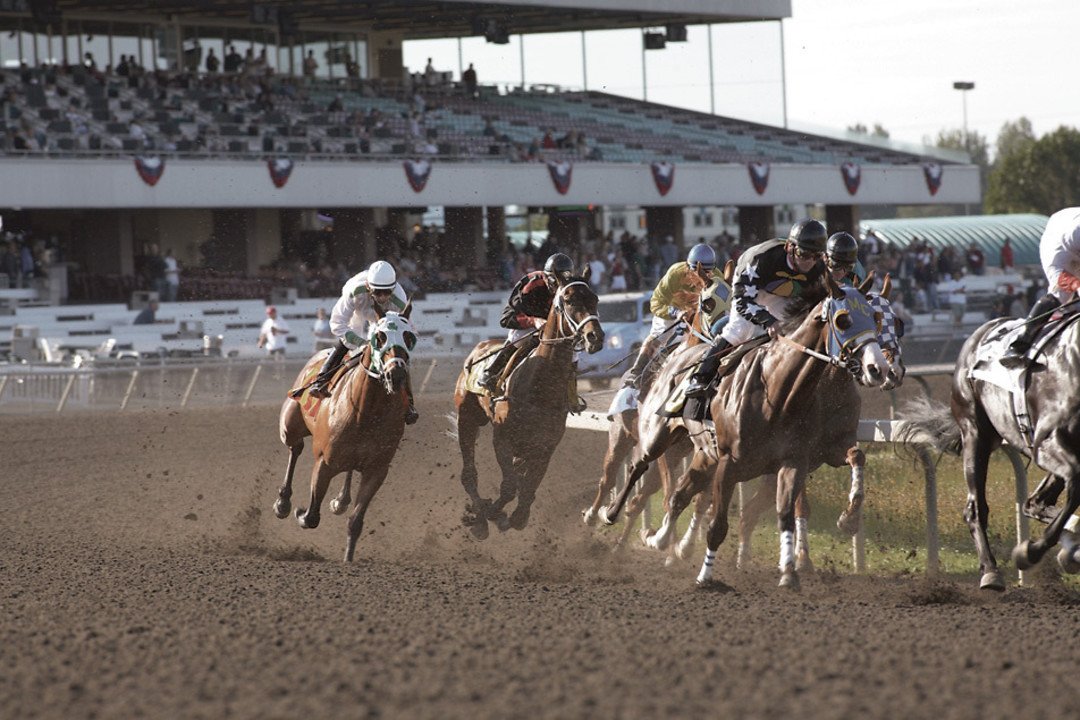
Image: Jules Frazier
There had never been an event in U.S. racing history like the Final Fourteen, a high-stakes contest in which the top two thoroughbreds from seven regions in the nation battled it out over a blistering mile and one-eighth. Race day was October 14, 1990, at Bay Meadows in San Mateo, California. Among the jockeys in the historic contest was the now 26-year-old, five-foot-six rider from Hot Springs, Arkansas. Despite a few twists in his personal life—he divorced his wife with whom he’d had a son—Frazier had spent the past five years in top form. He had moved to California, where the prize money and prestige were greater than at the small tracks he rode in the South. In his first two seasons in the San Francisco Bay Area he ranked among the top five riders at local tracks.
This impressive reinsmanship earned him a mount in the Final Fourteen aboard Allijeba, a roan Kentucky-bred gelding that had finished second at the qualifying race at Kentucky’s Turfway Park a month earlier. His horse wasn’t expected to win, but $250,000 was on the line, and Bay Meadows was the state’s longest continuously operating racetrack. If he conquered the Final Fourteen, Frazier would make an indelible impression on the California racing circuit.
Frazier and Allijeba entered the starting gate among a fierce field of competitors, most notably Tex’s Zing, who was favored to win; the Illinois-bred horse had won his last five races. There was trouble right away. When the gates crashed open the rest of the horses left Allijeba in their dust. Undaunted, Frazier and his mount inched their way up to eighth place and held strong through the first turn. In the second turn Frazier leaned into Allijeba and swung wide toward the outside of the field and began to pick off the competitors one by one. He could see the pacesetter, Rob An Plunder, at the front of the pack and gunned for him. He passed Take A Flight and was gaining fast on Rob An Plunder. But he had company. Tex’s Zing had also rallied from behind. Frazier urged Allijeba on as they slid alongside the lead horse. Allijeba’s head passed Rob An Plunder’s hindquarters, then his midsection, shoulder, neck. Allijeba overcame Rob An Plunder, but so did Tex’s Zing. The finish line rushed at them. It was Tex’s Zing and Allijeba side by side, trading first and second positions every fraction of a second as their heads bobbed and their powerful muscles roiled under their jockeys. They flew across the wire together. There was a pause as the track stewards examined the photo finish. Allijeba by a nose! California, it seemed, belonged to Ricky Frazier.
But outside the winners circle there were rumblings among the stewards. Something was wrong. Frazier stood on the scale for his postrace weigh-in and clocked in at three pounds less than he had before the race—123 pounds instead of 126. The jockey couldn’t explain the discrepancy. The stewards made a decision: Frazier and Allijeba were disqualified. The victory was Tex’s Zing’s. The track refunded money to everyone who bet on Frazier’s mount. He hadn’t cheated, he said. He’d had no contact with his tack between weigh-ins. Some other factor was at play—variation in the scales, weight lost after sweating through a race, or the saddle cloth was switched between weigh-ins. Besides, he had no incentive for cheating; as everyone in racing knows, a weight discrepancy between weigh-ins is cause for automatic disqualification. Unconvinced, race officials hit him with a six-month suspension. He fled California.
It didn’t matter. Six weeks later stewards at Fair Grounds in New Orleans pulled Frazier from a race. As long as he was suspended in California, no track in the country would let him ride. He took his case to court and convinced a judge that there were many other factors that could’ve led to the weight discrepancy. The judge reduced his penalty from suspension to probation, which allowed Frazier to race. But his reputation was tarnished, his life in a tailspin. In 1992 he won fewer than 50 races, his worst record since his first season. Roy Frazier’s son considered giving up horses for good.
{page break}
The day Longacres closed, September 21, 1992, was the worst in Vern Gibson’s life. Opened in 1933 near the corner of Interstates 5 and 405 in Renton, Longacres Park was both the pride and lifeblood of Northwest horsemanship for generations. And now it would be bulldozed. Citing financial difficulties owners Michael and Kenneth Alhadeff sold the track to Boeing, which bought the land to build a customer-service facility.
The son of a trainer, Gibson had spent much of his childhood living in horsemen’s quarters across the street from the Longacres track and had raced there as a jockey in the 1960s. He was now a valet (the t is pronounced in the racing world), which meant he kept riders’ tack (saddles, blankets, bridles) and wardrobe in order and saddled horses. He knew every inch of the place: the checkered floor in the jockey’s room, the rows of poplar trees that bracketed the oval, the whole bucolic tradition that unfolded in the backstretch every day. Back there were men—yes, mostly men—who lived so close to the horses they would wake at the first sound of trouble, men who would rise from their tack-room bunks before dawn to feed the animals and exercise them on the soft soil, a mix of clay and glacial till. The end of Longacres meant the end of a 15,000-person equine economy—trainers; breeders, groomsmen from Mexico; farriers from nearby ranches scratching out a living; jockeys hanging on tight as the twentieth century bucked through history. It was as if the real estate gods had deemed Vern Gibson’s life antiquated and inconsequential and shed their grace on Boeing and its flying machines—replacing one of the oldest forms of transportation with the newest.
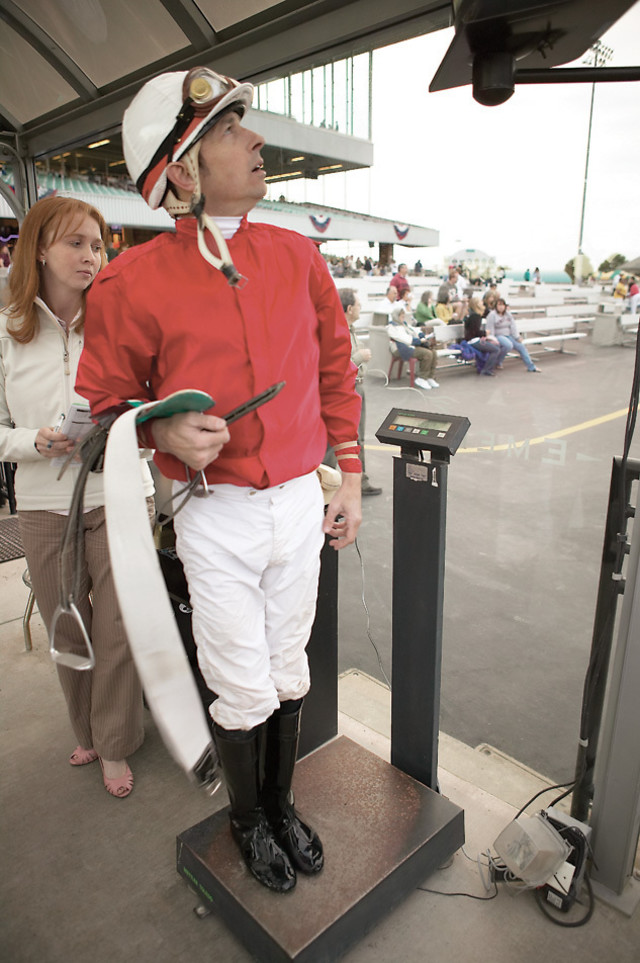
Image: Jules Frazier
Now Gibson watched as the horses lined up for the track’s final race. Gary Stevens—a rider from Caldwell, Idaho, who today is the Michael Jordan of jockeys—would win the final contest atop Native Rustler. But that’s not what would stick out in Gibson’s mind. Before Stevens crossed the wire, before some 23,000 fans spilled off the bleachers and onto the oval to collect jars of keepsake soil, before the breeders, trainers, farriers, and jockeys slipped off to other parts of the country, Gibson listened closely to the last words to ever come from announcer Gary Henson’s microphone: “These horses belong to you. Listen to their final thunder.” And for the first and last time a race at Longacres transpired without comment. The hushed crowd heard the hooves pound the track. The sound would visit Gibson in his dreams for years to come, and he’d awake in tears. Racing in Western Washington was over.
Two thousand miles away, Ricky Frazier was limping through his career. Nineteen ninety-three was another year with few wins (62 compared to 165 just four years earlier). But slowly Frazier came back. He bounced around the circuit, in Delaware, New York, Texas, and Chicago.
In 1995 he and Roy entered a promising colt, Itron, in the prestigious second race of the Triple Crown, the Preakness. Itron had impressed crowds in Texas and Louisiana, winning nine out of 16 races. The horse was a long shot in the national race, but the Fraziers drove the 1,600 miles from Retama Park, in Texas, to Pimlico field in Baltimore with high hopes. Gary Stevens, the rider who won that last quiet race at Washington’s Long-acres, entered the Preakness, too, aboard Thunder Gulch, a colt he’d reined to victory in the Kentucky Derby two weeks earlier.
Frazier rode Itron into the gate. And then, in front of 88,000 spectators, the horse panicked and flipped over. The jockey was able to calm the animal down, but one and three-sixteenths of a mile later, Itron gave a lackluster trot across the finish line, dead last—40 lengths behind the winner and 17 behind the second-to-last finisher. Gary Stevens on Thunder Gulch took third. The Fraziers, embarrassed, slunk back to Texas. But the Preakness gave Ricky just the boost he needed. For the first time in a long while, his career had momentum.
{page break}
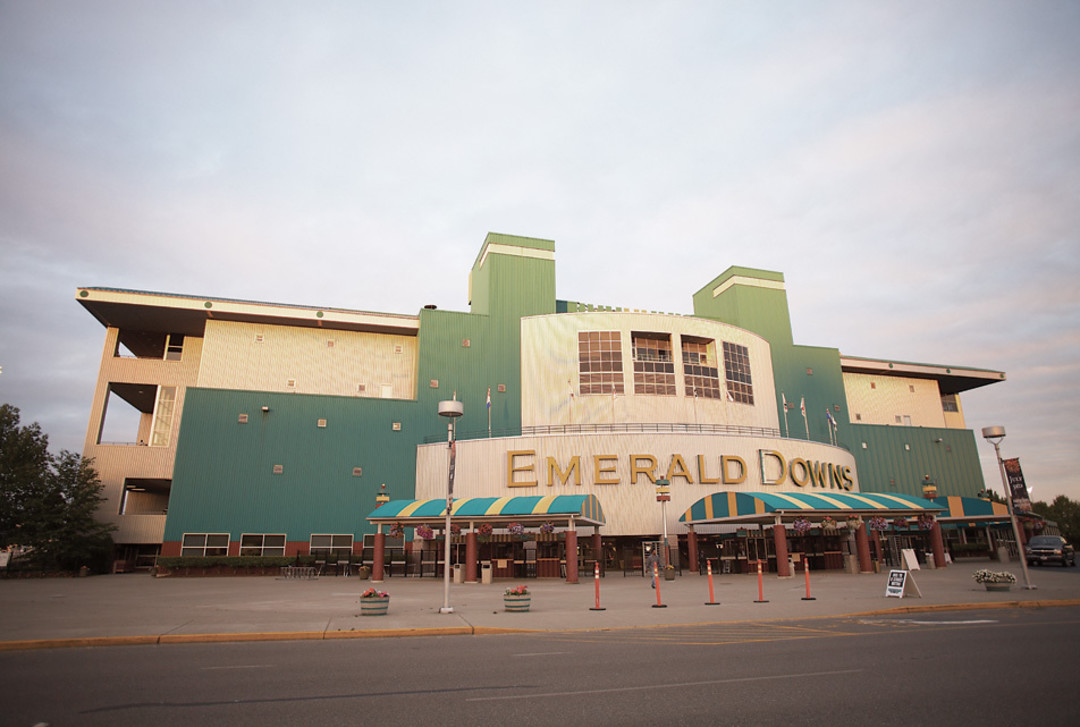
Image: Jules Frazier
The Green River Valley, a lush and flood-prone watershed in Auburn, seemed like an unlikely place to resurrect thoroughbred racing in the Northwest. But even before the last pony crossed the wire on Long-acres’ final day, that’s exactly what Ron Crockett was plotting. Racing had been a part of Crockett’s life for most of his 53 years; as a teenager his best friend at Renton High School worked as a parking attendant at Longacres and Crockett helped him kill time by throwing around a football. One day young Crockett thought, what the hell, and entered the stadium. He watched a race. He bet on some horses. He was hooked. By the time of the track’s twilight 40 years later Crockett was a prominent fixture in the stands: an airplane-industry titan who owned a few ponies and smoked a big cigar. In 1970 he had started Tramco, a small airplane repair business at Paine Field in Everett. By 1988, when Crockett sold the company to BF Goodrich, Tramco employed 2,600 people and, according to news accounts at the time, made nearly $50 million in sales a year.
When Longacres was shuttered -Crockett and his investors proposed a new track eight miles south. He believed he could erect a new facility for $54 million. But there was a problem. The track would displace 53 acres of wetlands—habitat shared by ducks, bald eagles, and blue herons. The U.S. Fish and Wildlife Service stepped in and told Crockett his dream of resuscitating thoroughbred racing in the state would have to happen somewhere else.
Crockett didn’t budge. He hired lawyers, he paid for environmental studies, he spent many late nights blowing cigar smoke, and he and the environmentalists reached an agreement. In addition to a number of green tweaks to the plan—a drain under the stables to keep manure out of the watershed and a marsh left unmolested in the infield—Crockett agreed to purchase and preserve 56 extra acres of wetlands half a mile from the proposed track site. Crockett got his permit, and Emerald Downs, one of the most eco-friendly racetracks in America—and the only one with a protected marsh in the infield—was built.
The facility included a six-story stadium with state-of-the-art video, food courts, and guest suites. The barn area included dorm rooms for stable hands, a day-care center for their children, and a chapel. The horse industry—including trainers and groomsmen who’d found work at the Yakima Meadows oval 140 miles east—slowly trickled back into Western Washington.
The track opened in June 1996. But the unforeseen legal battles and environmental upgrades had taken their toll. Crockett’s $54 million idea had cost $83 million, and the track had opened two years later than intended. He had some catching up to do. The first order of business was to get the fans back. Emerald Downs needed to attract great talent.
With the Preakness loss behind him, Frazier’s career was off and running. He returned to California and rebuilt his relationship with trainers who had turned their back on him after his suspension. He teamed up with -Daniel “Boone” McCanna, a jockey agent from Spokane, who went around to barns and talked trainers into putting Frazier on their thoroughbreds. McCanna would then get a cut of Frazier’s earnings. In 1999, Frazier won 155 races. Then he received a phone call that would change his life.
Hollywood was adapting Laura Hillenbrand’s Seabiscuit, the story of the Depression-era racehorse who defied all odds and became a favorite at tracks around the country. Tobey Maguire was to play Seabiscuit’s jockey, the oft-injured, oft-indigent Red Pollard. Would Ricky Frazier mind standing in as Maguire’s stunt double? In Los Angeles for eight months of moviemaking, Frazier ran into a familiar face: Gary Stevens, the Longacres champ and rider in the Preakness when Frazier’s mount shut down in the gate, was working on the set, too. And not just as a stuntman. -Stevens’s good looks landed him an acting role, playing the hugely successful jockey George Woolf, a friend and sometime rival of Maguire/Frazier’s tragic Red Pollard. But at the end of the Seabiscuit story, it is not Woolf but a broken-down Pollard and his aging, injured Seabiscuit who make one of the biggest comebacks in sports history.
The film made Frazier an instant celebrity on the racing circuit. He began autographing programs and posing for photos with fans. More importantly, he was winning races. Then in 2002, just before the starting bell at San Francisco’s Golden Gate racetrack, Frazier’s horse jumped around in the gate and smashed the jockey’s ankle. For the second time in his life Frazier was told he would never compete again. Surgeons riveted nine pins in his lower leg to give it the necessary strength. It was no use. No doctor would give him a clean bill of health. California track officials, once again, were through with Ricky Frazier.
{page break}
As the jockey debated his next move, another life-changing phone call reached his ear. Boone McCanna, his agent, had moved back to his home state of Washington to work at the new track in Auburn, Emerald Downs. “Ricky, you’ve got to come up here,” Boone said. “You’ll dominate.”
Frazier rolled into Auburn in 2003, midway through the eighth season at Emerald Downs. A year later Washington race fans got a good look at what the jockey could do in the saddle. He entered the Mount Rainier Breeder’s Handicap atop Poker Brad. The six-year-old horse had won the same race a year earlier but had lately shown signs of flagging, including a fifth-place finish three weeks earlier. He was not favored to win.
When the gate opened, favorite Gratitude Attack pounced for the lead, followed by Slewicide Cruise and Demon Warlock. Frazier and Poker Brad rounded the first turn in fourth place. On the backstretch the front-runners pulled farther away, their lead over Poker Brad growing by the second. But Frazier knew his horse and held steady. They rounded the third turn. The fourth. The leaders’ speed began to crumble. Frazier, on the outside, pulled the trigger: Poker Brad rocketed down the final stretch. Horse and rider tore past the frontrunners. Another late closer came from behind in hot pursuit, but it was too late. Poker Brad bounded over the wire two lengths ahead. Emerald Downs’ new jockey finished the season as the track’s winningest rider.
The next year, Frazier, then 41, was poised to make top jock again. He had just finished second in a midseason race when his mount, a two-year-old filly named Manner Ridge, broke her right leg, sending Frazier to the dirt. A trailing horse stepped on his face, knocking him unconscious and crushing his right cheekbone and sinus cavity. Medics rushed the track. A veterinarian euthanized Manner Ridge on the spot. Frazier awoke in the ambulance to see his son, 12-year-old Dylan, tears streaming down his face, holding a bloody handful of what looked like little white pebbles. “Here dad, here’s your teeth.”
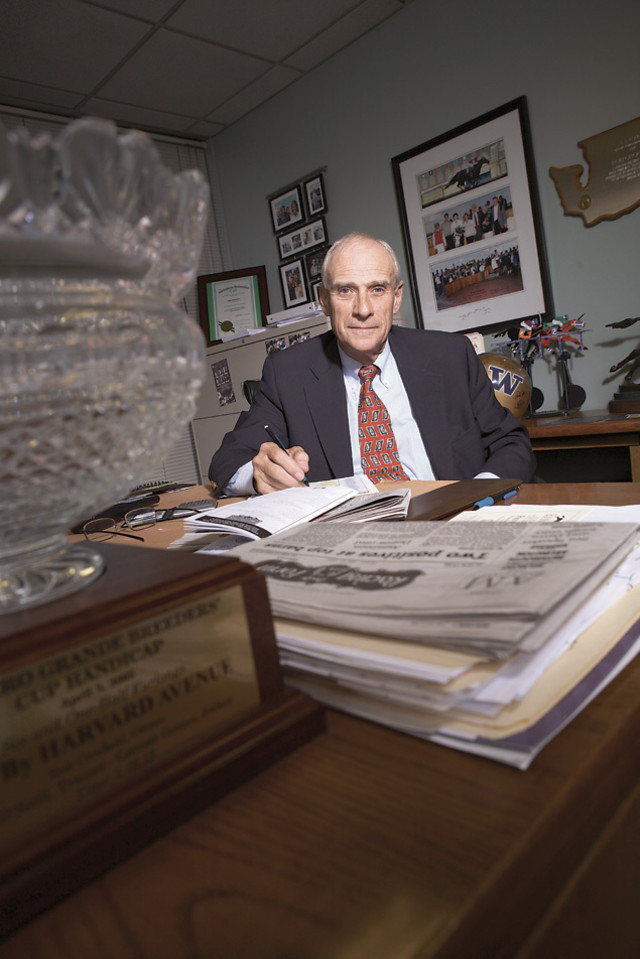
Image: Jules Frazier
Ron Crockett now runs Washington State thoroughbred racing from a first-floor office under the grandstand. A big picture window lets him watch fans stream into the six-story monument to his favorite sport. He’s still rarely seen without a cigar, but now he keeps it unlit, chomping away at the butt and using the tobacco wand in conversation to emphasize certain points: “Racing is a numbers game,” or “I don’t like to dwell on the past.” He’s surrounded by TV screens broadcasting races from around the country. He’ll stop you dead in a conversation if a pony he’s bet on, in Belmont or Hollywood Park or Santa Anita, is coming close to the wire. Crockett, now 69, has yet to make back the $83 million spent on the facility—competition with casinos has cut into profits—but, as Crockett says, running Emerald Downs is “more an avocation than a vocation.” He’s still that kid who dropped the football in the old Longacres parking lot to enter the stadium and never looked back.
A lot of the old Longacres folks are still around. There’s a familiar face down the hall from Crockett’s office, in the jock’s room, which looks like a workshop for making jockeys—12 sets of shiny black knee-high boots for each rider for every race; whips, saddles, and silks, all kept in immaculate condition by red-shirted valets.
Vern Gibson, the ex-jockey with vivid memories of Longacres’ final race, is now the personal valet for Ricky Frazier. At 63, Gibson is a lot older than most of the valets in the room. He’s short and gruff, with a mustache and wiry sideburns. One of the jokes among the younger valets is that Gibson famously let a buffalo beat him in a traveling show in which jockeys on quarter horses raced a trick bison.
Asked what he thinks of Emerald Downs’ top jockey, he shrugs, “He’s really good.” What more can he say? Frazier had the most wins at the track in 2006 and 2007. In early 2008 the Seattle Post-Intelligencer named Frazier one of its Sports Stars of the Year. He brings in the fans. There isn’t much more to tell, other than, at the moment, he’s not here. Not in the jockey room.
Emerald Downs’ top jock is outside, out past the paddock, past the crowds—the families straining for a look-see and the vaqueros looking tough—out across the marsh. He’s in the starting gate on the far side of the track, waiting in silence during those split seconds before the race begins, when his skull pulses with wisdom from nearly three decades of running around ovals with horses. The buzzer blares. The gate opens. Ricky Frazier rides again.